Categories
Uncategorized

How Can Commercial Pest Control Services Protect Food Processing Facilities from Cockroaches?

When people think about food safety, they often picture spotless stainless-steel equipment, workers wearing protective gear, and carefully monitored production lines. But behind the scenes, there’s another battle happening one that most consumers never see. It’s the fight against pests, especially cockroaches.

Cockroaches are among the most persistent and dangerous pests found in industrial food environments. They’re fast, adaptable, and incredibly good at hiding. In a food processing facility, even a small cockroach issue can quickly become a serious contamination risk.

So how can food manufacturers stay protected? That’s where structured pest management comes into play. Understanding how pest prevention works in these specialized environments can make all the difference between smooth compliance and costly disruptions.

Why Cockroaches Are a Serious Threat in Food Production Environments

Cockroaches aren’t just unpleasant to see. In food production, they represent a genuine operational and health risk.

These pests crawl through drains, dumpsters, sewage systems, wall voids, and machinery compartments. When they enter food processing zones, they can transfer bacteria, fungal spores, and other contaminants onto surfaces that may come into direct contact with food products.

A single cockroach sighting can trigger internal investigations, failed inspections, or even product recalls.

How Cockroaches Contaminate Food and Surfaces

Cockroaches contaminate environments in multiple ways:

  • Through droppings
  • Through shed skins
  • Through saliva deposits
  • Through egg capsules
  • Through physical contact with food-contact surfaces

Think of them as tiny biological delivery systems carrying unwanted microbes from one place to another.

Some studies have linked cockroaches to the spread of organisms such as Salmonella, E. coli, and other pathogens that food facilities work hard to eliminate.

Regulatory Risks Associated with Cockroach Infestations

Food facilities operate under strict standards. Whether a facility follows FDA regulations, HACCP protocols, or third-party auditing requirements, pest activity can create serious compliance concerns.

Even minor evidence of cockroach presence can lead to:

  • Failed inspections
  • Corrective action requests
  • Production downtime
  • Documentation reviews
  • Customer trust issues

In food manufacturing, reputation is fragile. One pest issue can ripple far beyond the facility walls.

Why Food Processing Facilities Attract Cockroaches

Why Food Processing Facilities Attract Cockroaches

You might wonder why would cockroaches target highly sanitized industrial environments?

The answer is simple: survival.

Even well-maintained facilities provide everything cockroaches need.

Moisture, Warmth, and Hidden Spaces

Cockroaches thrive where there is:

  • Consistent warmth
  • Humidity
  • Darkness
  • Protection from disturbance

Processing plants often have boiler rooms, equipment motors, refrigeration condensate lines, and plumbing systems that generate ideal conditions.

Behind every machine or inside every utility chase may be the perfect hiding place.

Food Residue and Organic Waste Accumulation

Even microscopic food particles can sustain cockroach populations.

Areas such as:

  • Conveyor systems
  • Floor drains
  • Ingredient storage rooms
  • Packaging stations
  • Waste compactors

can accumulate residue over time.

Cockroaches don’t need a buffet. Sometimes a few crumbs are enough.

Nighttime Activity and Undetected Movement

Cockroaches are primarily nocturnal.

That means they often emerge after shifts end, when lights go off and machinery quiets down.

By the time workers notice visible activity, the infestation may already be established.

Early Signs of Cockroach Activity in Processing Plants

Spotting early warning signs is essential.

Physical Evidence and Behavioral Indicators

Common indicators include:

  • Small dark droppings
  • Smear marks along walls
  • Musty odors
  • Egg capsules
  • Shed skins

Employees may also notice insects darting into cracks when lights switch on.

High-Risk Zones Within Processing Facilities

Cockroaches often concentrate in:

  • Utility rooms
  • Drainage systems
  • Electrical panels
  • Wall penetrations
  • Storage shelving
  • Loading docks

These areas should be inspected regularly.

How Commercial Pest Control Programs Work in Food Facilities

A food facility requires far more than occasional spraying.

Effective pest management involves a systematic process.

Inspection and Facility Assessment

Professionals begin by evaluating:

  • Structural vulnerabilities
  • Moisture sources
  • Sanitation gaps
  • Entry points
  • Historical pest activity

This creates a baseline for action.

Monitoring and Population Tracking

Monitoring tools may include:

  • Sticky traps
  • Digital sensors
  • Pheromone monitors
  • Trend analysis reports

These systems help identify where activity is increasing before infestations become visible.

Targeted Treatment Strategies

Once activity is confirmed, treatment is carefully planned.

Instead of broad chemical applications, professionals focus on:

  • Cracks
  • Voids
  • Equipment bases
  • Utility penetrations

Precision matters.

Non-Contaminating Treatment Methods

Food-safe environments often require methods such as:

  • Gel baiting
  • Insect growth regulators
  • Dust formulations
  • Mechanical exclusion
  • Vacuum removal

The goal is always control without compromising food safety.

Integrated Pest Management for Food Safety

Integrated Pest Management, or IPM, is often considered the gold standard.

It combines prevention, monitoring, correction, and documentation.

Sanitation-Based Prevention

Sanitation removes what cockroaches need most:

  • Food
  • Water
  • Shelter

Routine cleaning under equipment, around drains, and behind storage racks dramatically reduces risk.

Structural Exclusion Methods

Cockroaches enter through surprisingly small spaces.

Facilities often seal:

  • Pipe penetrations
  • Floor cracks
  • Door gaps
  • Wall voids
  • Cable openings

A building with fewer access points becomes harder to invade.

Employee Awareness and Reporting Systems

Workers are often the first line of defense.

Training employees to report:

  • Unusual odors
  • Droppings
  • Insect sightings
  • Moisture leaks

can lead to faster intervention.

Seasonal Challenges in Cockroach Management

Cockroach pressure doesn’t stay the same year-round.

During warmer months, populations may expand rapidly.

Rainfall can also drive cockroaches indoors from exterior breeding sites.

Seasonal monitoring helps facilities stay ahead instead of reacting after activity appears.

Documentation and Compliance Requirements

Food facilities need proof—not assumptions.

A robust pest management program includes:

  • Inspection logs
  • Trend reports
  • Corrective action records
  • Monitoring maps
  • Service documentation

Auditors want evidence that pest prevention is active, measurable, and continuously improving.

How EntoLogic Pest Solutions Supports Commercial Facilities

Professionals such as EntoLogic Pest Solutions understand that food processing environments require specialized strategies.

Facilities need more than pest removal; they need risk management.

By combining inspection protocols, monitoring systems, sanitation recommendations, and exclusion planning, providers can help maintain a safer production environment.

The Role of commercial pest control services pembroke pines in Food Protection

Facilities seeking structured prevention often explore solutions such as commercial pest control services pembroke pines to support operational hygiene.

These programs typically focus on:

  • Early detection
  • Risk reduction
  • Facility mapping
  • Compliance support
  • Long-term prevention

Instead of waiting for visible infestations, proactive monitoring keeps facilities one step ahead.

Long-Term Benefits of Preventive Pest Management

Preventive programs create measurable advantages:

  • Reduced contamination risk
  • Fewer emergency shutdowns
  • Improved audit readiness
  • Better employee confidence
  • Stronger brand protection

It’s like maintaining an engine you don’t wait for smoke before checking the oil.

Common Mistakes Food Facilities Make

Even well-managed plants can overlook critical details.

Common mistakes include:

  • Ignoring minor moisture leaks
  • Delaying crack repairs
  • Overlooking drains
  • Storing cardboard too long
  • Inconsistent monitoring

Small oversights often create big pest opportunities.

Building a Cockroach-Resistant Processing Environment

Cockroach prevention isn’t about one treatment.

It’s about creating an environment where survival becomes difficult.

That means combining:

  • Structural maintenance
  • Consistent sanitation
  • Employee awareness
  • Professional monitoring
  • Data-driven interventions

When these systems work together, cockroaches struggle to gain a foothold.

EntoLogic Pest Solutions Serving the SilverLakes Community and Beyond in Pembroke Pines

EntoLogic Pest Solutions is dedicated to serving the diverse needs of the local community of Pembroke Pines, including individuals residing in neighbourhoods like SilverLakes. With its convenient location near landmarks such as the Panther Run Elementary School and major intersections like NW 172nd Ave and Pines Blvd (coordinates: 26.0102129, -80.3751102), we offer commercial pest control services in pembroke pines.

Get commercial pest control services at SilverLakes Now
Call Us or Contact Us: +1 469-425-8406

Navigate from SilverLakes to EntoLogic Pest Solutions Now

<iframe src=”https://www.google.com/maps/embed?pb=!1m18!1m12!1m3!1d22911.570428078296!2d-80.39787688864291!3d26.01197744234838!2m3!1f0!2f0!3f0!3m2!1i1024!2i768!4f13.1!3m3!1m2!1s0x88d9a142ec5fad1d%3A0x697ba02842ac00e0!2sSilver%20Lake!5e0!3m2!1sen!2sus!4v1778686700708!5m2!1sen!2sus” width=”600″ height=”450″ style=”border:0;” allowfullscreen=”” loading=”lazy” referrerpolicy=”no-referrer-when-downgrade”></iframe>

Cockroaches pose one of the most serious pest threats inside food processing facilities. Their ability to hide, reproduce quickly, and spread contaminants makes them a major concern for food safety, regulatory compliance, and operational continuity. Effective prevention requires much more than occasional treatments; it demands continuous inspection, sanitation, exclusion, monitoring, and strategic intervention. With structured programs, trained teams, and specialized expertise from providers such as EntoLogic Pest Solutions, facilities can create stronger defenses and maintain safer production environments for the long term.

How Can Commercial Pest Control Services Protect Food Processing Facilities from Cockroaches?

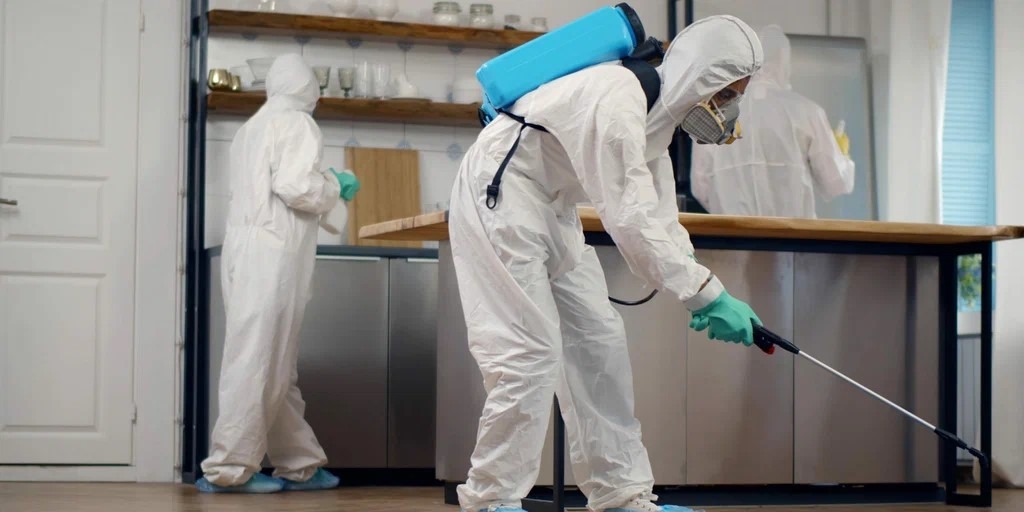
[image] A split image: on the left, a close-up of a cockroach on a sterile food processing surface; on the right, a professional pest control technician applying treatment.

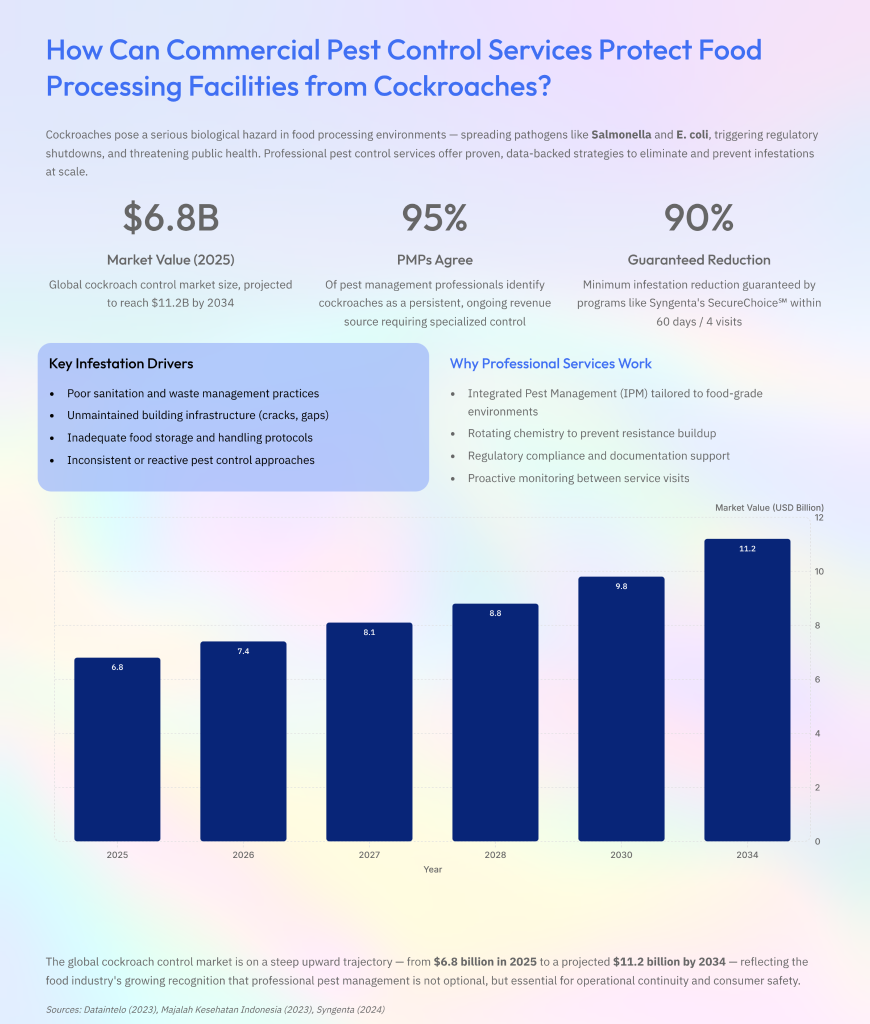
  • The Cockroach Threat: Cockroaches are more than just a nuisance; they are significant vectors for pathogens like Salmonella and E. coli, capable of contaminating food and surfaces, leading to severe health risks and potential facility closures.
  • Market Value of Control: The global cockroach control market was valued at $6.8 billion in 2025 and is projected to reach $11.2 billion by 2034, indicating the immense and growing investment in managing these pests. (Source: Dataintelo, 2023)
  • Key Infestation Drivers: Poor sanitation, unmaintained building conditions, inadequate food management, and improper pest control practices are primary triggers for cockroach density in food handling establishments. (Source: Majalah Kesehatan Indonesia, 2023)
  • Professional Intervention is Crucial: A 2024 report indicates that 95% of pest management professionals (PMPs) recognize cockroaches as a steady source of revenue due to their persistent nature, underscoring the need for specialized, ongoing control strategies. (Source: Syngenta, 2024)
  • Guaranteed Reduction: Professional services, like Syngenta’s SecureChoice℠ Cockroach Assurance Program, guarantee at least a 90% reduction in infestations within the first four customer visits over a 60-day period, demonstrating the efficacy of expert pest control. (Source: Syngenta, 2024)
How Can Commercial Pest Control Services Protect Food Processing Facilities from Cockroaches?

Sources: Dataintelo (2023), Majalah Kesehatan Indonesia (2023), Syngenta (2024)

FAQs

1. Why are cockroaches especially dangerous in food processing facilities?

Cockroaches can carry bacteria, contaminate surfaces, and spread pathogens through droppings, saliva, and physical contact with food-contact areas.

2. What areas in a processing plant attract cockroaches the most?

Drains, utility rooms, warm machinery spaces, storage areas, waste handling zones, and moisture-prone areas are common hotspots.

3. How often should food facilities be inspected for cockroach activity?

Inspection frequency depends on facility size and risk level, but many operations benefit from scheduled routine inspections combined with ongoing monitoring.

4. Can sanitation alone eliminate cockroach problems?

Sanitation is essential, but long-term control usually requires monitoring, structural exclusion, and targeted treatment strategies.

5. What makes preventive pest management better than reactive treatment?

Preventive programs detect issues early, reduce contamination risks, improve compliance readiness, and minimize costly disruptions before infestations become visible.
Categories
Uncategorized

How Does a Rodent Control Service Identify Hidden Rat Entry Points in Your Property?

How Does a Rodent Control Service Identify Hidden Rat Entry Points in Your Property?

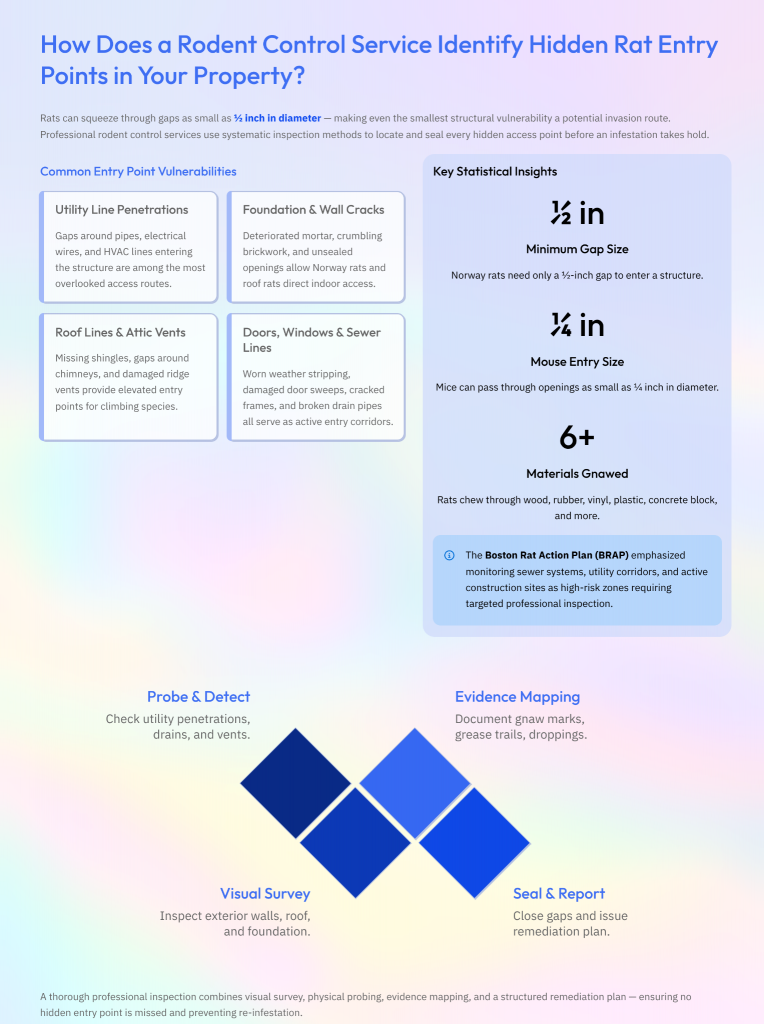
Rats rarely walk through the front door. They slip through forgotten cracks, hidden voids, roof gaps, utility penetrations, and structural weaknesses that many property owners never notice. That is exactly why identifying entry points is one of the most important parts of any professional inspection.

When experts from EntoLogic Pest Solutions perform an inspection related to rodent control service pembroke pines, the goal is not simply to find rodents it is to understand how they are getting inside in the first place. Like detectives reading invisible footprints, pest professionals follow physical evidence, structural patterns, and behavioral clues to uncover hidden access points.

So how exactly does a professional rodent inspection reveal what most people miss? Let’s explore the process in detail.

Why Do Rats Enter Properties in the First Place?

Rats are opportunistic survivors. They enter structures for three main reasons:

  • Food
  • Water
  • Shelter

A home, office, warehouse, or commercial building can offer all three.

Even a tiny crumb under an appliance or condensation around a pipe can become an invitation. Once rats discover a reliable resource, they often return repeatedly, following the same pathways.

Think of your property as a fortress. If food is the treasure, rats are constantly searching for the smallest crack in the castle wall.

Why Hidden Entry Points Are So Difficult to Detect

Most people look for obvious holes. Rats rarely use obvious holes.

Instead, they exploit:

  • Expansion joints
  • Utility penetrations
  • Roofline separations
  • Drain openings
  • Crawl space vents
  • Weathered siding gaps

What makes this challenging is that rats can compress their bodies dramatically. Some species can squeeze through openings as small as half an inch.

That means a gap no bigger than your thumb may function like a front gate.

Why Professional Inspection Matters

A trained inspector does more than search for holes.

They study:

  • Movement patterns
  • Structural vulnerabilities
  • Rodent biology
  • Environmental conditions

Professionals involved in rodent control service in pembroke pines understand that the entry point is often nowhere near where the rats are seen.

You might hear scratching in the attic, but the access point could be near the foundation.

That’s why inspections follow a systematic process.

Behavioral Patterns That Reveal Rat Activity

Behavioral Patterns That Reveal Rat Activity

Movement Routes

Rats prefer predictable pathways.

They usually move:

  • Along walls
  • Behind insulation
  • Under cabinets
  • Inside pipe chases

These movement habits help inspectors narrow down likely entry zones.

Travel Consistency

Rats tend to use the same route repeatedly.

This repeated movement creates:

  • Smudge marks
  • Grease trails
  • Dust disruptions

These clues act like invisible arrows.

Common Signs That Suggest Hidden Access Points

Before finding an entry hole, inspectors often find evidence.

Key signs include:

  • Droppings
  • Gnawed wood
  • Chewed wiring
  • Torn insulation
  • Nesting materials
  • Scratching sounds

Each clue helps create a behavioral map.

How a Rodent Inspection Usually Begins

Exterior Property Assessment

The outside inspection often comes first.

Why?

Because rodents usually enter from outside.

Inspectors walk the perimeter looking for:

  • Foundation cracks
  • Damaged vents
  • Pipe penetrations
  • Siding gaps
  • Roof damage

Every inch matters.

Interior Structural Evaluation

After the exterior, the interior inspection begins.

Common inspection areas include:

  • Attics
  • Basements
  • Crawl spaces
  • Utility rooms
  • Kitchens
  • Storage rooms

The goal is to connect internal evidence with external vulnerabilities.

Areas Professionals Examine First

Rooflines, Eaves, and Attic Vents

Roof areas are common access points.

Inspectors look for:

  • Missing shingles
  • Loose fascia boards
  • Damaged soffits
  • Open vent screens

A single warped vent can become an express lane for rodents.

Foundation Gaps and Utility Openings

Rats often enter near the ground.

Professionals inspect:

  • Plumbing penetrations
  • Cable entries
  • Gas line openings
  • Concrete cracks

Even sealed openings may degrade over time.

Crawl Spaces and Basements

Dark, humid spaces attract rodents.

Inspectors check for:

  • Moisture damage
  • Loose vent covers
  • Insulation disturbance
  • Soil burrowing

Garages, Storage Areas, and Sheds

Garages often contain clutter, warmth, and easy access.

Entry points may exist around:

  • Garage door corners
  • Weather stripping
  • Storage wall penetrations

How Rats Use Building Features to Enter

Rats are excellent climbers.

They may climb:

  • Brick walls
  • Utility lines
  • Tree branches
  • Downspouts

Once elevated, they exploit structural weaknesses.

Plumbing and Drain Connections

Drain systems can become hidden highways.

Inspectors evaluate:

  • Floor drains
  • Sewer vents
  • Pipe collars
  • Drainage exits

HVAC Systems and Vent Penetrations

Heating and cooling systems create openings through walls.

These penetrations often become overlooked access points.

Hidden Utility Line Vulnerabilities

Electrical and communication lines frequently pass through unsealed holes.

Over time, weathering enlarges these spaces.

Tools Used to Identify Concealed Entry Points

Modern inspections rely on specialized tools.

Flashlights, Mirrors, and Inspection Cameras

These tools help examine:

  • Tight wall cavities
  • Roof voids
  • Under-floor spaces

A small camera can reveal activity deep inside structural voids.

Tracking Dust and Motion Detection

Professionals may use:

  • Tracking powder
  • UV lighting
  • Motion sensors

These methods confirm active travel routes.

Biological Clues Professionals Follow

Rodents leave biological evidence everywhere.

Droppings, Rub Marks, and Gnaw Evidence

Fresh droppings indicate recent activity.

Rub marks appear because rats repeatedly brush surfaces with oily fur.

Gnaw marks reveal:

  • Access attempts
  • Territory establishment
  • Material preference

Grease Trails and Nesting Materials

Inspectors may find:

  • Shredded paper
  • Fabric fibers
  • Plant matter

Nesting materials often lead back toward entry routes.

How Seasonal Changes Affect Entry Activity

Weather changes influence rodent behavior.

During heavy rain, cold periods, or excessive heat, rats seek stable shelter.

Seasonal pressure increases inspections around:

  • Roof drainage areas
  • Flood-prone foundations
  • Ventilation openings

This is especially relevant in warm, humid environments where rodent control service pembroke pines inspections often account for moisture-driven movement patterns.

Structural Weak Points in Older Properties

Older buildings often develop vulnerabilities such as:

  • Settling cracks
  • Decayed wood
  • Rusted vent screens
  • Loose masonry joints

These imperfections create silent opportunities.

Professionals from EntoLogic Pest Solutions often pay close attention to aging materials because rodents can widen existing weaknesses through gnawing.

How Landscaping Can Create Hidden Access

Your landscaping may unintentionally help rodents.

Potential risk factors include:

  • Tree branches touching roofs
  • Dense shrubs near walls
  • Wood piles
  • Mulch accumulation

Think of landscaping as a bridge system.

If branches touch the roof, rats may never need to touch the ground.

How Moisture Problems Attract Rodents

Water attracts life including rodents.

Inspectors look for:

  • Leaking irrigation
  • Condensation lines
  • Roof leaks
  • Poor drainage

Moisture supports insect populations too, which can indirectly attract rodents.

How Entry Points Are Documented

Professional inspections usually include detailed mapping.

Inspectors document:

  • Entry size
  • Location
  • Activity level
  • Structural condition

Photos, measurements, and diagrams help prioritize repairs.

This structured approach is common during comprehensive rodent control service pembroke pines inspections.

Preventive Recommendations After Inspection

Once entry points are identified, professionals typically recommend:

  • Structural sealing
  • Vent screening
  • Pipe gap repairs
  • Vegetation management
  • Moisture correction
  • Storage improvements

The goal is exclusion keeping rodents out before they establish activity.

EntoLogic Pest Solutions Serving the SilverLakes Community and Beyond in Pembroke Pines

EntoLogic Pest Solutions is dedicated to serving the diverse needs of the local community of Pembroke Pines, including individuals residing in neighbourhoods like SilverLakes. With its convenient location near landmarks such as the Western Union and major intersections like NW 172nd Ave and Pines Blvd (coordinates: 26.0102129, -80.3726066), we offer rodent control services.

Get rodent control services at SilverLakes Now
Call Us or Contact Us: +1 469-425-8406

Navigate from SilverLakes to EntoLogic Pest Solutions Now

Finding hidden rat entry points is part science, part investigation, and part understanding rodent behavior. Rats rarely choose obvious entrances. Instead, they exploit forgotten structural gaps, weathered materials, utility penetrations, and environmental conditions that most property owners overlook.

That’s why experienced professionals like EntoLogic Pest Solutions approach every rodent control service pembroke pines inspection with a systematic process studying biology, structure, and environmental clues together. By identifying not just where rodents are, but how they arrived, property owners gain a clearer path toward long-term prevention.

The Unseen Threats: Where Rats Gain Access

  • Tiny Openings, Big Problems: Rats can squeeze through gaps as small as 1/2 inch in diameter (Norway rats) and mice through 1/4 inch. This means even seemingly insignificant cracks in foundations, walls, or around utility lines can be major entry points.
    • Source: extension.missouri.edu
  • Gnawing Through Defenses: Rats can gnaw through a surprising range of materials including wood, rubber, vinyl, plastic, and even concrete block, creating new entry points where none existed.
    • Source: extensionpubs.unl.edu
  • Common Vulnerabilities: Professional services look for:
    • Utility Line Penetrations: Gaps around pipes, electrical wires, and HVAC lines entering the structure.
    • Foundation & Wall Cracks: Deteriorated mortar, crumbling brickwork, and unsealed openings.
    • Roof Lines & Vents: Missing shingles, gaps around chimneys, and attic/ridge vents.
    • Doors & Windows: Worn weather stripping, damaged door sweeps, and cracked frames.
    • Sewer & Drain Pipes: Access through broken pipes or plumbing.
    • Source: pctonline.com, ratsprevention.com
  • The Boston Rat Action Plan (BRAP) Insight: A comprehensive plan assessed various neighborhoods and infrastructures, highlighting the critical need to monitor and control infestations in sewers and utility systems, and to address construction/demolition site vulnerabilities.
The Unseen Threats: Where Rats Gain Access

Sources: extension.missouri.edu, extensionpubs.unl.edu, pctonline.com, ratsprevention.com, content.boston.gov

FAQs

1. How small of an opening can a rat use to enter a building?

Many rats can squeeze through openings as small as half an inch, depending on the species and age.

2. Do rats always enter near the area where they are seen?

No. Rats often travel long distances inside wall voids, ceilings, or crawl spaces before becoming visible.

3. Can rats enter through plumbing systems?

Yes. Damaged drains, sewer connections, and unsealed pipe penetrations can create access routes.

4. Are rooflines common rat entry points?

Absolutely. Roof vents, soffits, fascia gaps, and damaged shingles frequently become elevated entry areas.

5. How often should a property be inspected for rodent entry points?

Many properties benefit from seasonal inspections, especially older structures or buildings located near vegetation, water sources, or food storage areas.

Categories
Uncategorized

When Should You Start Residential Pest Control Treatments in Spring?

When Should You Start Residential Pest Control Treatments in Spring?

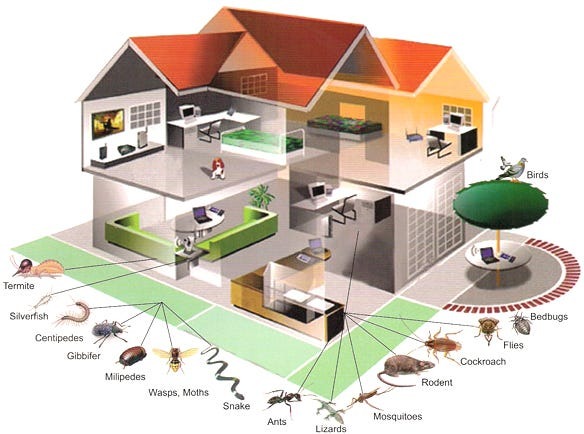
Spring feels like a fresh start. Flowers bloom, temperatures rise, and homeowners begin spending more time outdoors. But while people enjoy the warmer weather, pests become active too. Ants start marching across kitchen counters, mosquitoes begin breeding in standing water, and termites quietly search for new places to invade.

That’s why spring is one of the most critical seasons for pest prevention. Waiting until you already see insects inside your home is a little like waiting for smoke before checking for fire. By then, the problem may already be growing behind the scenes.

For homeowners looking into residential pest control pembroke pines solutions, understanding the right timing can make a major difference. Companies like EntoLogic Pest Solutions often emphasize preventive care because spring is when pest populations begin expanding rapidly.

Why Spring Is the Most Important Season for Pest Activity

Winter forces many pests into survival mode. Some hide underground, others settle into wall voids, attics, or damp crawl spaces. But once temperatures begin climbing in spring, pests wake up hungry and ready to reproduce.

Think of spring as the grand opening of pest season.

Insects and rodents become more active because warmer conditions help them find food, water, and nesting areas more easily. This is especially true in warm and humid climates where pest activity rarely fully disappears during winter.

Spring also marks breeding season for many pests. A small issue in March can quickly become a major infestation by summer if left untreated.

Understanding the Pest Life Cycle in Spring

How Rising Temperatures Affect Pest Behavior

Temperature changes directly influence insect metabolism and movement. As the air warms, pests become more mobile and begin searching for shelter and food sources.

Ant colonies expand rapidly during spring. Mosquito eggs begin hatching. Termites swarm to establish new colonies. Roaches move toward moisture-rich environments.

It’s almost like nature flips a switch.

The earlier pest control measures begin, the easier it becomes to interrupt these cycles before populations explode.

Why Moisture Creates Ideal Pest Conditions

Spring rain creates another major factor: moisture.

Wet soil, puddles, leaking gutters, and humid air provide excellent breeding conditions for insects. Mosquitoes can reproduce in tiny amounts of standing water, while termites thrive in damp wood conditions.

Even indoor humidity can attract pests into bathrooms, kitchens, and laundry areas.

Signs Your Home Needs Spring Pest Control

When Should You Start Residential Pest Control Treatments in Spring?

Sometimes pests announce themselves loudly. Other times, they work quietly behind the walls.

Here are common signs homeowners should watch for during spring.

Indoor Warning Signs

  • Small ant trails near sinks or food
  • Droppings in cabinets or storage areas
  • Scratching noises in walls
  • Musty odors from hidden infestations
  • Dead insects near windowsills
  • Increased sightings of roaches at night

If you notice these signs repeatedly, pests may already be establishing nests nearby.

Outdoor Warning Signs

Outside your home, warning signs can include:

  • Mud tubes along foundations
  • Mosquito activity around standing water
  • Damaged plants or grass
  • Ant hills near walkways
  • Wood damage around decks or fences

These outdoor issues often become indoor infestations later if ignored.

The Best Time to Begin Residential Pest Control Treatments

The best time to start spring pest control is usually early spring — before pest populations peak.

Many homeowners wait until late spring or summer because that’s when pests become noticeable. But prevention works best before infestations become visible.
Imagine trying to stop weeds after they spread across your entire lawn. Early action always requires less effort.

Early Spring vs Late Spring Treatments

Early spring treatments focus on prevention. These applications target pests before nesting and reproduction intensify.

Late spring treatments often become reactive instead of preventive because colonies are already active and growing.

Starting earlier can help reduce:

  • Indoor infestations
  • Structural damage
  • Mosquito breeding
  • Seasonal pest population growth

Why Timing Matters for Prevention

Timing matters because pests multiply quickly.

A single termite colony can contain thousands of insects. Mosquitoes reproduce rapidly in warm conditions. Ant colonies expand continuously during spring and summer.

Early intervention disrupts this growth cycle before it becomes difficult to control.

Common Spring Pests Homeowners Encounter

Different pests become active at different points in spring.

Ants

Ants are among the first pests homeowners notice during spring. Rising temperatures push worker ants to search for food and water indoors.

Kitchens become prime targets because crumbs and moisture attract colonies quickly.

Mosquitoes

Mosquito activity increases dramatically after spring rain. Standing water in flowerpots, gutters, birdbaths, and yard debris becomes breeding territory.

Besides being annoying, mosquitoes can also carry harmful diseases.

Termites

Spring termite swarms are a major concern for homeowners. Swarming termites leave colonies to establish new nests, often targeting homes with moisture problems or untreated wood.

Unfortunately, termite damage often remains hidden until it becomes severe.

Roaches

Cockroaches thrive in warm, humid environments. Spring conditions increase their movement and breeding activity.

They commonly hide in:

  • Kitchens
  • Bathrooms
  • Basements
  • Utility rooms
  • Drains

Because roaches reproduce quickly, small infestations can grow fast.

Why Preventive Pest Control Works Better Than Reactive Treatments

Preventive pest control is similar to regular home maintenance. Fixing a small roof leak early costs far less than repairing major water damage later.

The same principle applies to pests.

Preventive treatments focus on stopping infestations before pests establish nests or colonies. Reactive treatments, on the other hand, address problems after they become noticeable.

Prevention typically involves:

  • Barrier treatments
  • Moisture reduction
  • Entry-point sealing
  • Routine inspections
  • Yard maintenance

This proactive approach often reduces long-term pest pressure significantly.

How Weather Conditions Influence Pest Problems

Weather patterns strongly affect pest populations each spring.

Warm Winters and Increased Pest Populations

Mild winters allow more pests to survive into spring. Instead of dying off during cold months, insects remain active longer and reproduce earlier.

This can create heavier infestations during spring and summer.

Rainfall and Moisture Issues

Heavy rain increases standing water and soil moisture, both of which support pest activity.

Moisture-related issues often attract:

  • Mosquitoes
  • Termites
  • Roaches
  • Silverfish
  • Earwigs

Managing drainage and humidity becomes essential during wet seasons.

How Often Should Spring Pest Treatments Be Scheduled?

Treatment frequency depends on several factors:

  • Climate
  • Home location
  • Existing pest activity
  • Landscaping conditions
  • Nearby water sources

Some homes benefit from quarterly treatments, while others may require more frequent inspections during peak seasons.

Consistent monitoring is often more effective than one-time treatments because pest activity changes throughout the year.

Indoor and Outdoor Areas That Need Attention

Pests rarely stay in one location. Effective spring prevention involves inspecting both indoor and outdoor environments.

Kitchens and Bathrooms

These areas provide two things pests love most: food and water.

Even small leaks under sinks can attract ants and roaches. Regular cleaning and moisture control help reduce activity significantly.

Garages and Storage Spaces

Garages often become overlooked pest hiding spots. Cardboard boxes, clutter, and dark corners create ideal nesting environments.

Rodents and spiders commonly settle in these areas during spring.

Yards and Landscaping

Your yard acts like the first line of defense.

Overgrown vegetation, standing water, mulch buildup, and wood piles can all encourage pest activity near the home.

Keeping landscaping trimmed and clean helps reduce shelter opportunities for insects and rodents.

Natural Ways to Reduce Pest Activity During Spring

Professional treatments are important, but homeowners can also support prevention naturally.

Helpful habits include:

  • Eliminating standing water
  • Sealing cracks and gaps
  • Storing food properly
  • Repairing leaks quickly
  • Cleaning gutters regularly
  • Trimming bushes away from the home
  • Removing yard debris

These small actions work like closing the door before pests walk inside.

Mistakes Homeowners Make With Spring Pest Prevention

Many homeowners accidentally make pest problems worse without realizing it.

Common mistakes include:

  • Waiting until infestations become severe
  • Ignoring moisture issues
  • Leaving pet food exposed
  • Storing firewood against the home
  • Skipping routine inspections
  • Assuming one treatment solves everything

Pest control works best as an ongoing strategy rather than a one-time reaction.

The Role of Professional Inspections in Spring

Professional inspections help identify hidden issues before visible infestations appear.

Experienced technicians often spot warning signs homeowners miss, including:

  • Entry points
  • Moisture damage
  • Early termite activity
  • Nesting locations
  • Vulnerable structural areas

For homeowners researching residential pest control in pembroke pines services, routine inspections can help maintain a healthier living environment year-round.

Professionals from companies like EntoLogic Pest Solutions frequently evaluate environmental conditions around the property to identify factors contributing to pest activity.

How Residential Pest Control Pembroke Pines Homeowners Use Helps Year-Round

Spring may be the starting point, but pest control should continue throughout the year.

Different seasons bring different pest challenges:

  • Spring: ants, termites, mosquitoes
  • Summer: flies, roaches, fleas
  • Fall: rodents seeking shelter
  • Winter: indoor nesting activity

Consistent maintenance helps reduce seasonal infestations before they grow.

In humid climates, year-round prevention becomes especially valuable because pests remain active longer than in colder regions.

Why Early Action Matters More Than Waiting

The biggest mistake homeowners make is assuming pests are only a summer issue.

By the time insects become highly visible, colonies may already be established inside walls, crawl spaces, or yards.

Early spring treatments work like setting up a protective shield around the home before pest pressure intensifies.

It’s easier to prevent a problem than to undo one that has already spread.

That’s why many pest professionals recommend beginning treatments as temperatures consistently rise in early spring rather than waiting until infestations become obvious.

EntoLogic Pest Solutions Serving the SilverLakes Community and Beyond in Pembroke Pines

EntoLogic Pest Solutions is dedicated to serving the diverse needs of the local community of Pembroke Pines, including individuals residing in neighbourhoods like SilverLakes. With its convenient location near landmarks such as the Panther Run Elementary School and major intersections like NW 172nd Ave and Pines Blvd (coordinates: 26.0102129, -80.3751102), we offer residential pest control services.

Get residential pest control services at SilverLakes Now
Call Us or Contact Us: +1 469-425-8406

Navigate from SilverLakes to EntoLogic Pest Solutions Now

Spring is the ideal time to begin residential pest control treatments because it aligns with the start of increased pest activity and reproduction cycles. Early prevention helps reduce infestations, protects property, and minimizes long-term pest problems before they escalate during warmer months.

From ants and mosquitoes to termites and roaches, spring pests become active quickly once temperatures rise and moisture levels increase. Homeowners who take preventive steps early often experience fewer pest-related headaches later in the year.

For those exploring residential pest control pembroke pines solutions, understanding seasonal timing can play a major role in maintaining a healthier and more comfortable home environment. Companies like EntoLogic Pest Solutions often stress the importance of preventive inspections and ongoing monitoring because spring sets the tone for pest activity throughout the rest of the year.

When Should You Start Residential Pest Control Treatments in Spring?

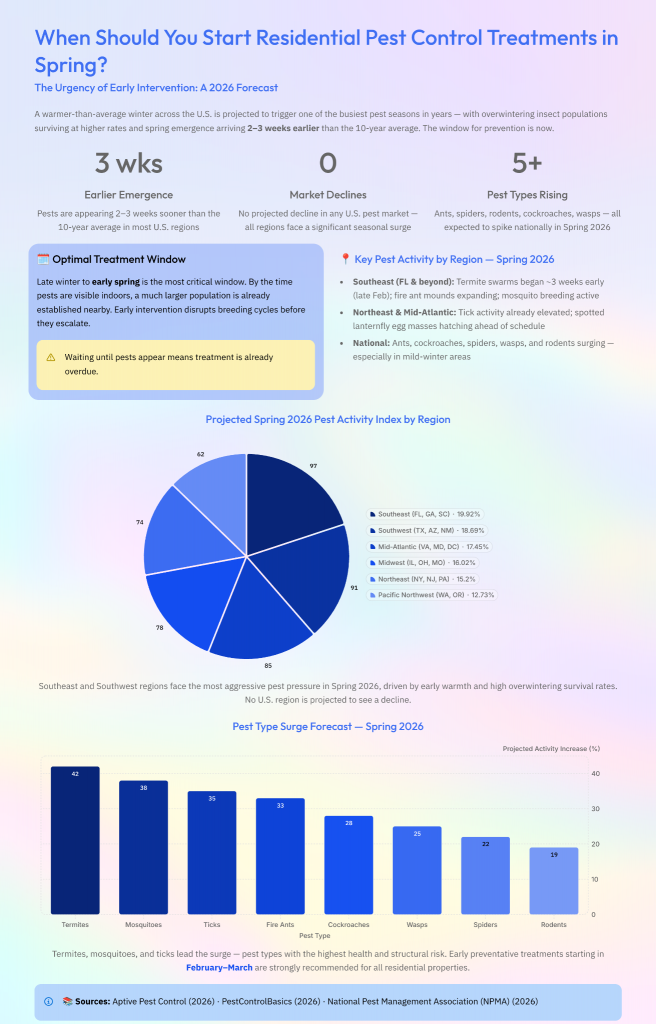
  • Widespread Seasonal Surge: A warmer-than-average winter across the U.S. is predicted to cause one of the busiest pest seasons in years, with no projected declines in any market. (Aptive Pest Control, 2026)
  • Earlier Emergence: Overwintering insect populations survived at higher rates, leading to spring emergence 2-3 weeks earlier than the 10-year average in many regions. (PestControlBasics, 2026)
  • Key Pest Activity by Region (Spring 2026):
    • Southeast: Termite swarm season began ~3 weeks early (late Feb in FL); Fire ants are highly active with larger mounds; Mosquito breeding is underway due to standing water and early warmth. (PestControlBasics, 2026)
    • Northeast & Mid-Atlantic: Tick activity is already elevated; Spotted lanternfly egg masses are hatching. (PestControlBasics, 2026)
    • National Trends: Ants, spiders, rodents, cockroaches, and wasps are all expected to see a significant rise, particularly in areas with milder winters. (Aptive Pest Control, 2026)
  • The Cost of Waiting: By the time pests are visible indoors, a larger population is often nearby. Winter and early spring are the most critical windows for preventative action. (Aptive Pest Control, 2026)
When Should You Start Residential Pest Control Treatments in Spring?

Sources: Aptive Pest Control (2026), PestControlBasics (2026), National Pest Management Association (NPMA) (2026)

FAQs

1. What month should spring pest control treatments begin?

Most homeowners should begin treatments in early spring, typically when temperatures consistently start warming up and pests become more active.

2. Why do pests become more active during spring?

Warmer temperatures, increased moisture, and breeding cycles make spring an ideal season for pest activity and reproduction.

3. Can spring rain increase pest problems?

Yes. Rain creates standing water and moisture buildup that attract mosquitoes, termites, roaches, and other pests.

4. Is preventive pest control more effective than reactive treatments?

Preventive treatments are usually more effective because they stop infestations before colonies grow and spread.

5. How can homeowners naturally reduce spring pest activity?

Reducing moisture, sealing entry points, cleaning regularly, trimming landscaping, and eliminating standing water can help lower pest activity naturally.

Categories
Uncategorized

How Do Bed Bugs Control Services Prevent Reinfestation After Initial Treatment?

Bed bugs are among the most difficult household pests to eliminate completely. Their ability to hide in tiny spaces, survive for extended periods without feeding, and spread unnoticed makes reinfestation a serious concern for homeowners. After an initial treatment, many people wonder whether the problem is truly over or if the pests might return weeks or months later.

Professional pest control companies use multiple prevention strategies to reduce the chances of reinfestation. These methods involve detailed inspections, heat applications, monitoring systems, sanitation guidance, and long-term preventive practices. Rather than relying on a single solution, experts focus on eliminating bed bugs at every life stage while also reducing the environmental conditions that allow infestations to reappear.

For homeowners researching bed bugs control services pembroke pines, understanding how prevention works is essential. Companies such as EntoLogic Pest Solutions often emphasize long-term management because successful bed bug control involves more than simply removing visible insects.

Understanding Why Bed Bugs Return After Treatment

Reinfestation is one of the most common challenges associated with bed bug control. Even after successful treatment, certain factors can allow bed bugs to return.

Hidden Bed Bug Eggs and Resistant Populations

Bed bug eggs are extremely small and often hidden deep within furniture seams, wall cracks, electrical outlets, and other concealed areas. If some eggs survive treatment, newly hatched bed bugs can restart the infestation.

Another challenge involves pesticide resistance. Some bed bug populations have adapted to certain chemical treatments over time, making elimination more difficult if treatment plans are not comprehensive.

Because of these risks, pest control professionals often combine multiple treatment methods to improve effectiveness and reduce survival rates.

Reintroduction Through Personal Belongings

Bed bugs are excellent hitchhikers. They commonly travel through:

  • Luggage
  • Clothing
  • Backpacks
  • Used furniture
  • Bedding materials

A homeowner may unknowingly bring bed bugs back into the property after travel or contact with infested environments. This is why prevention strategies extend beyond the treatment itself.

The Importance of Professional Inspection

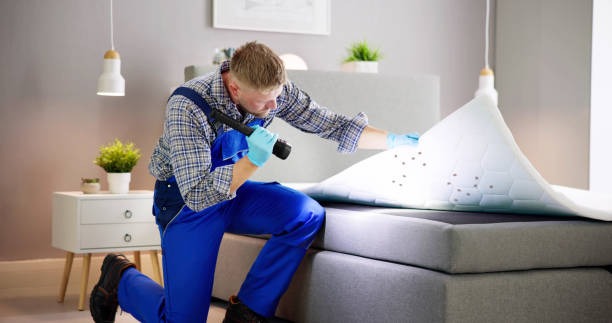
Inspections are a critical part of preventing future infestations. Without identifying all hiding places, some bed bugs may survive and continue reproducing.

Identifying High-Risk Areas in the Home

Professional inspectors carefully examine areas where bed bugs commonly hide, including:

  • Mattress seams
  • Bed frames
  • Upholstered furniture
  • Carpet edges
  • Baseboards
  • Nightstands
  • Curtains
  • Cracks in walls

A detailed inspection helps technicians determine the extent of the infestation and select the most effective treatment plan.

Cracks, Furniture, and Bedding Zones

Bed bugs prefer dark and narrow spaces located near sleeping areas. Tiny crevices in wooden furniture or behind wall decorations can become ideal hiding locations.

Inspectors use specialized tools such as flashlights and monitoring devices to locate these concealed areas. Thorough inspections reduce the risk of hidden bed bugs surviving treatment.

How Heat Treatments Help Reduce Reinfestation Risks

How Heat Treatments Help Reduce Reinfestation Risks

Heat treatment is one of the most effective non-chemical approaches for controlling bed bugs.

Eliminating Bed Bugs at Every Life Stage

One major advantage of heat remediation is its ability to destroy:

  • Adult bed bugs
  • Nymphs
  • Eggs

When room temperatures are raised to lethal levels, bed bugs cannot survive regardless of where they are hiding. Heat penetrates mattresses, furniture, wall voids, and other difficult-to-reach spaces.

Many experts discussing bed bugs control services in pembroke pines consider heat treatment valuable because it targets the entire infestation at once instead of relying solely on surface-level applications.

Follow-Up Treatments and Monitoring Strategies

Bed bug prevention does not stop after the initial extermination process. Continuous monitoring is necessary to confirm long-term success.

Scheduled Monitoring Visits

Many professional pest management companies schedule follow-up visits after treatment. These visits help technicians evaluate whether any remaining activity exists.

Follow-up inspections may include:

  • Visual examinations
  • Trap inspections
  • Spot treatments
  • Monitoring device evaluations

Routine monitoring helps detect problems early before a full reinfestation develops.

Bed Bug Detection Tools and Traps

Several monitoring tools assist with ongoing prevention efforts, including:

  • Bed leg interceptors
  • Sticky monitoring traps
  • Carbon dioxide monitors
  • Passive detection systems

These tools help identify low-level activity that may otherwise remain unnoticed for long periods.

Preventive Cleaning and Sanitation Practices

Sanitation alone does not eliminate bed bugs, but it plays an important role in reducing hiding spots and improving treatment effectiveness.

Reducing Clutter Around Sleeping Areas

Excess clutter creates ideal hiding places for bed bugs. Piles of clothing, storage containers, and unused furniture make inspections more difficult and provide protection for surviving insects.

Reducing clutter can help:

  • Improve visibility during inspections
  • Limit hiding locations
  • Simplify cleaning routines
  • Increase treatment efficiency

Organized living spaces are easier to monitor for future activity.

Proper Laundering Techniques

Heat exposure is highly effective against bed bugs hiding in fabrics.

Recommended laundering steps include:

  1. Washing infested fabrics in hot water
  2. Drying clothing and bedding on high heat
  3. Storing cleaned items in sealed bags
  4. Avoiding contact with untreated materials

Proper laundering helps prevent surviving bed bugs from spreading throughout the home.

Mattress and Furniture Protection Methods

Physical barriers can significantly reduce the likelihood of reinfestation.

Mattress Encasements and Protective Covers

Special mattress encasements trap surviving bed bugs inside while preventing new infestations from entering the mattress.

Benefits include:

  • Easier inspections
  • Fewer hiding spots
  • Long-term mattress protection
  • Improved sanitation management

Protective covers are especially useful after professional treatment because they provide an additional layer of defense.

The Role of Resident Education in Bed Bug Prevention

Homeowner awareness is a major factor in preventing recurring infestations.

Recognizing Early Warning Signs

Early detection can stop a small problem from becoming a severe infestation.

Common warning signs include:

  • Small reddish insects
  • Dark stains on bedding
  • Shed skins
  • Tiny eggs
  • Bite patterns on exposed skin

Recognizing these signs early allows homeowners to respond before the infestation spreads further.

Education is frequently emphasized by providers offering bed bugs control services pembroke pines because informed residents are better equipped to avoid future infestations.

How Multi-Unit Housing Increases Reinfestation Risks

Shared housing environments create unique challenges for bed bug prevention.

Coordinated Treatment Approaches

Bed bugs can move between units through:

  • Electrical conduits
  • Plumbing systems
  • Wall voids
  • Hallways

Treating only one apartment while neighboring units remain infested can lead to recurring problems.

Coordinated inspections and treatment strategies throughout the building are often necessary to achieve long-term control.

Integrated Pest Management and Long-Term Control

Modern bed bug prevention often relies on Integrated Pest Management (IPM).

Chemical and Non-Chemical Prevention Techniques

IPM combines several strategies, including:

  • Heat remediation
  • Vacuuming
  • Steam treatment
  • Monitoring systems
  • Limited pesticide applications
  • Resident education

This layered approach increases effectiveness while reducing reliance on a single treatment method.

Companies such as EntoLogic Pest Solutions may incorporate integrated techniques because long-term prevention requires flexibility and continuous monitoring.

Seasonal Factors That Influence Bed Bug Activity

Although bed bugs remain active indoors throughout the year, certain seasons increase exposure risks.

Travel periods often contribute to infestations because bed bugs spread through:

  • Hotels
  • Airports
  • Public transportation
  • Vacation rentals

Increased travel during holidays and summer vacations can unintentionally introduce bed bugs into homes.

Preventive travel habits include:

  • Inspecting hotel mattresses
  • Keeping luggage elevated
  • Washing travel clothing immediately
  • Avoiding uninspected secondhand furniture

These precautions reduce the likelihood of bringing bed bugs home.

Choosing Experienced Professionals for Effective Prevention

Experience plays an important role in long-term bed bug management.

Why Experience Matters in Pembroke Pines

Warm climates such as Pembroke Pines can create favorable conditions for year-round bed bug activity. Local expertise helps professionals understand common infestation trends and effective treatment timing.

Experienced pest control providers know how to:

  • Identify hidden infestation zones
  • Select appropriate treatment methods
  • Implement follow-up strategies
  • Educate residents on prevention practices

For homeowners researching bed bugs control services pembroke pines, understanding the value of professional expertise can help explain why comprehensive prevention plans are essential for long-term control.

EntoLogic Pest Solutions Serving the SilverLakes Community and Beyond in Pembroke Pines

EntoLogic Pest Solutions is dedicated to serving the diverse needs of the local community of Pembroke Pines, including individuals residing in neighbourhoods like SilverLakes. With its convenient location near landmarks such as the Western Union and major intersections like NW 172nd Ave and Pines Blvd (coordinates: 26.0079629, -80.3751102), we offer bed bugs control services services.

Get bed bugs control services services at SilverLakes Now
Call Us or Contact Us: +1 469-425-8406

Navigate from SilverLakes to EntoLogic Pest Solutions Now

Preventing bed bug reinfestation requires a comprehensive and ongoing strategy. Successful pest control services focus not only on eliminating existing bed bugs but also on preventing future outbreaks through inspections, monitoring, sanitation, education, and integrated treatment methods.

Reinfestation can happen through hidden eggs, untreated neighboring units, travel exposure, or contaminated belongings. Because of this, long-term prevention depends on consistent follow-up care and proactive household practices.

Homeowners looking into bed bugs control services pembroke pines can benefit from understanding how these preventive methods work together to reduce the likelihood of recurring infestations. Companies like EntoLogic Pest Solutions often emphasize detailed inspections and long-term prevention because sustainable bed bug control requires both professional expertise and resident cooperation.

How Do Bed Bugs Control Services Prevent Reinfestation After Initial Treatment?

The Persistent Battle: From Eradication to Reinfestation

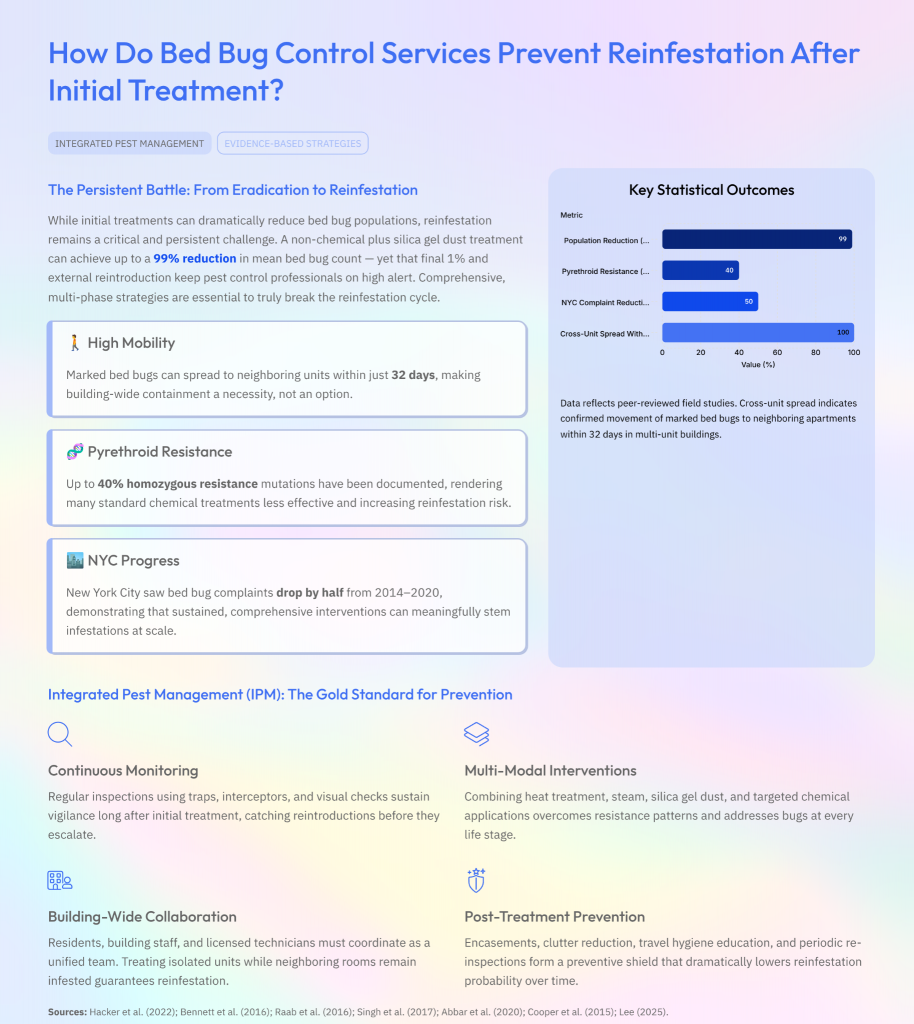
  • Initial Success vs. Lingering Threat: While initial treatments can significantly reduce bed bug populations (e.g., a 99% reduction in mean bed bug count observed with non-chemical plus silica gel dust treatment), reinfestation remains a critical challenge.
  • The Movement Factor: Bed bugs are highly mobile, with extensive movement observed within and between apartments. Studies show marked bed bugs can be found in neighboring units within 32 days, highlighting the difficulty of containing an infestation to a single treated area.
  • Resistance is Futile (for Bed Bugs): High rates of pyrethroid resistance (up to 40% homozygous for key mutations) mean that some treatments may be less effective, leading to chronic infestations and increased likelihood of reintroduction.
  • Integrated Pest Management (IPM) is Key: A building-wide, collaborative effort involving residents, staff, and technicians is crucial. This includes regular monitoring, a combination of non-chemical and chemical interventions, and crucially, continued periodic monitoring and preventive measures even after initial elimination to reduce reinfestation rates.
  • NYC’s Progress: Despite the challenges, New York City has seen a significant decrease in bed bug complaints (dropping by half from 2014-2020), suggesting that comprehensive interventions can stem the epidemic, though areas with high infestation tend to remain problematic.
How Do Bed Bug Control Services Prevent Reinfestation After Initial Treatment?

Sources: Hacker et al. (2022), Bennett et al. (2016), Raab et al. (2016), Singh et al. (2017), Abbar et al. (2020), Cooper et al. (2015), Lee (2025).

FAQs

1. How long should monitoring continue after bed bug treatment?

Monitoring should typically continue for several weeks after treatment to ensure that no surviving bed bugs remain active.

2. Can bed bugs survive inside furniture after treatment?

Yes, bed bugs can hide deep inside furniture if treatment does not fully reach those areas, which is why follow-up inspections are important.

3. Why are bed bug eggs difficult to eliminate?

Bed bug eggs are tiny, well-hidden, and resistant to some treatments, making them one of the biggest challenges in preventing reinfestation.

4. Do clean homes still get bed bugs?

Yes, bed bugs are not attracted to dirt or poor sanitation. They are attracted to human hosts and can infest both clean and cluttered environments.

5. What is the most effective long-term prevention method for bed bugs?

Integrated Pest Management, which combines inspections, heat treatment, monitoring, sanitation, and resident education, is considered one of the most effective long-term prevention approaches.

Categories
Uncategorized

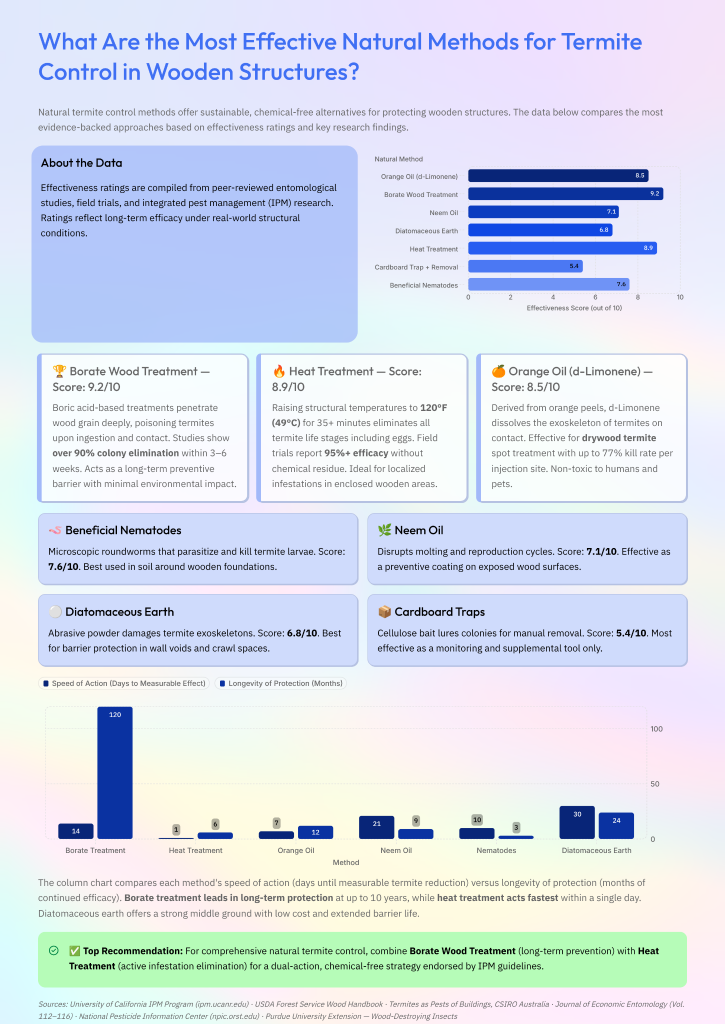
What Are the Most Effective Natural Methods for Termite Control in Wooden Structures?

What Are the Most Effective Natural Methods for Termite Control in Wooden Structures?

Termites are often called “silent destroyers,” and honestly, the nickname fits perfectly. These tiny insects can chew through wooden beams, flooring, furniture, and even support structures for months before anyone notices the damage. Wooden structures are especially vulnerable because termites feed on cellulose, the organic material found in wood and plant fibers.

When a structure offers moisture, warmth, and a reliable wood source, termites see it as the perfect buffet. Homes, sheds, fences, decks, and even wooden furniture become attractive targets when conditions are right.

Many homeowners searching for information about termite control pembroke pines are specifically interested in natural methods because they want to protect their homes without overloading indoor spaces with harsh chemicals. Natural termite management focuses on prevention, habitat modification, and low-toxicity treatment options that reduce termite activity while supporting healthier indoor environments.

The Role of Moisture in Termite Infestations

Moisture is one of the biggest factors behind termite activity. Damp wood becomes softer and easier for termites to tunnel through. Leaky pipes, clogged gutters, poor drainage, and humid crawl spaces can all create conditions termites love.

Think of moisture as an open invitation. Once termites detect damp wood, they often establish colonies nearby and begin expanding through structural areas.

Reducing moisture is one of the most effective natural termite prevention strategies because it removes a major survival requirement for termite colonies.

Common Types of Termites Found in Wooden Buildings

Different termite species behave differently. Understanding their habits helps determine the best natural control method.

  • Subterranean termites build colonies underground and travel through mud tubes.
  • Drywood termites infest dry wood directly without needing soil contact.
  • Dampwood termites prefer wood with high moisture levels.

Subterranean termites are often the most destructive because colonies can contain hundreds of thousands of workers.

Signs That Termites May Already Be Present

Signs That Termites May Already Be Present

Catching termite activity early can save homeowners significant repair costs. The earlier the infestation is detected, the easier it becomes to control naturally.

Mud Tubes and Hollow Wood

Subterranean termites build mud tubes along foundations, walls, or wooden beams to travel safely between food sources and their colonies. These tubes protect them from sunlight and dehydration.

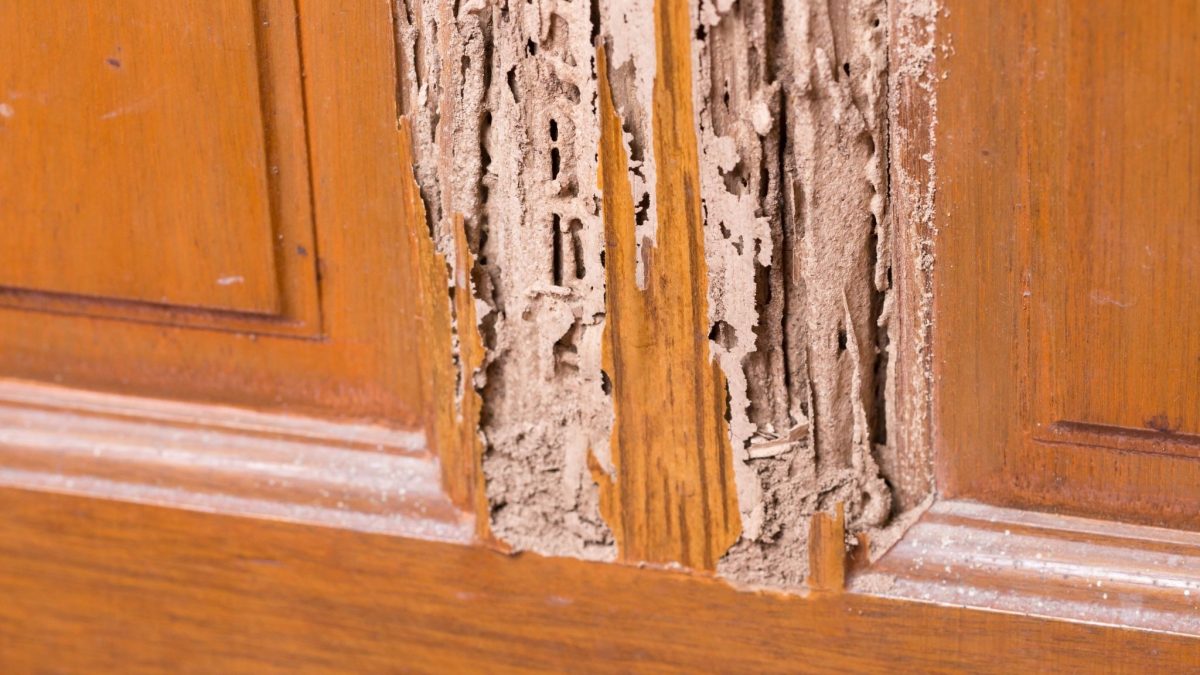
Another warning sign is hollow-sounding wood. If you tap on a wooden surface and it sounds empty or papery, termites may already be feeding inside.

You may also notice:

  • Cracked paint
  • Bubbling surfaces
  • Sagging floors
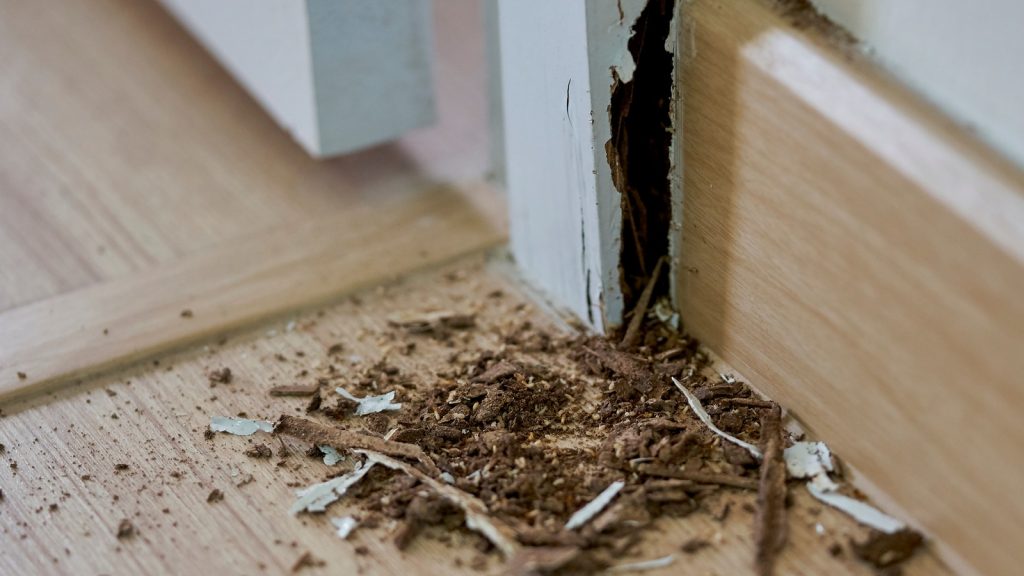
  • Tiny holes in wood
  • Discarded wings near windows

Swarming Termites Around Windows and Doors

Swarming termites usually appear during warm and humid seasons. These winged termites leave mature colonies to establish new nests.

Homeowners often mistake them for flying ants, but termite swarmers have straight antennae, equal-sized wings, and broader waists.

Seeing swarmers indoors is a major red flag because it may indicate an active infestation nearby.

Why Natural Termite Control Methods Matter

Natural termite control methods are gaining attention for good reason. Many people want safer alternatives that minimize environmental impact while still protecting wooden structures effectively.

Natural methods also encourage long-term prevention rather than relying solely on reactive treatments.

Reducing Chemical Exposure Indoors

Some traditional termite treatments involve strong chemical applications around foundations or inside walls. While these methods can be effective, many homeowners prefer reducing chemical exposure in living spaces.

Natural methods often use plant-based oils, biological controls, moisture reduction, and physical barriers instead.

This approach can be especially appealing for homes with children, pets, or individuals sensitive to strong odors and residues.

Supporting Long-Term Structural Health

Natural termite prevention is not just about killing insects. It also focuses on improving the condition of the structure itself.

Dry wood, proper ventilation, regular maintenance, and smart landscaping choices all contribute to a less termite-friendly environment.

In many cases, prevention becomes more effective than repeated treatment.

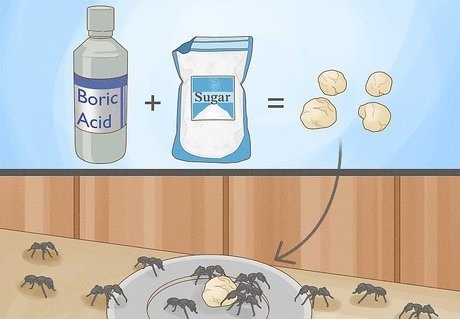
Boric Acid as a Natural Termite Treatment

Boric acid is one of the most widely used low-toxicity termite control solutions. It works by disrupting termites’ digestive systems and damaging their nervous systems.

When termites consume or contact boric acid, they eventually dehydrate and die.

How Boric Acid Works Against Termites

Boric acid is commonly available as powder or liquid spray. It can be applied to wooden surfaces, wall voids, crawl spaces, and affected furniture.

One major advantage is that boric acid penetrates wood fibers and remains active for long periods.

It works particularly well for localized infestations and preventive treatments.

Safe Application Tips for Wooden Structures

When using boric acid:

  1. Wear gloves and a dust mask during application.
  2. Apply evenly to dry wooden surfaces.
  3. Focus on cracks, joints, and hidden crevices.
  4. Keep children and pets away during treatment.
  5. Reapply if exposed to excessive moisture.

Although boric acid is considered lower in toxicity than many pesticides, it should still be handled carefully.

Orange Oil Treatments for Localized Infestations

Orange oil has become a popular natural termite treatment because it contains d-limonene, a compound extracted from citrus peels.

This compound breaks down termites’ exoskeletons and disrupts their respiratory systems.

Benefits and Limitations of Orange Oil

Orange oil treatments are often used for spot infestations in walls, furniture, or exposed wooden areas.

Benefits include:

  • Pleasant citrus scent
  • Lower environmental impact
  • Reduced chemical residue
  • Direct effectiveness on contact

However, orange oil usually works best for smaller infestations. It may not fully eliminate large underground colonies.

That’s why many termite control in pembroke pines discussions emphasize combining natural treatments with strong preventive practices.

Neem Oil for Sustainable Termite Prevention

Neem oil comes from the seeds of the neem tree and has long been used as a natural insect management solution.

It interferes with termites’ hormonal systems, making it harder for them to feed, grow, and reproduce.

Why Neem Oil Interrupts Termite Activity

Unlike fast-kill insecticides, neem oil works gradually. Termites exposed to neem compounds often stop feeding and eventually die.

Neem oil can be applied directly to wooden surfaces or mixed into sprays for targeted treatment.

Its slow-action approach may actually benefit long-term control because affected termites can spread exposure throughout parts of the colony.

Many eco-conscious property owners appreciate neem oil because it comes from a renewable plant source.

Cardboard Traps and DIY Monitoring Techniques

Cardboard traps are surprisingly simple but useful for termite monitoring.

Because cardboard contains cellulose, termites are naturally attracted to it.

When DIY Traps Are Most Effective

To create a cardboard trap:

  1. Wet several cardboard pieces.
  2. Stack them near suspected termite areas.
  3. Leave them undisturbed for a few days.
  4. Inspect for termite activity.
  5. Remove and dispose of infested cardboard.

These traps are best used for monitoring rather than complete elimination.

They help homeowners identify areas with active termite movement before damage becomes severe.

Beneficial Nematodes for Outdoor Termite Control

Beneficial nematodes are microscopic worms that naturally attack soil-dwelling pests, including termites.

They are often used in gardens, lawns, and foundation areas where subterranean termites may travel.

How Nematodes Attack Subterranean Termites

Once introduced into moist soil, nematodes search for termite hosts. After entering the termite body, they release bacteria that kill the insect.

This method works best in damp soil conditions and moderate temperatures.

Beneficial nematodes are attractive because they target pests without harming plants, pets, or humans.

They are commonly integrated into environmentally focused termite prevention programs.

Sunlight and Heat Exposure as Natural Solutions

Termites thrive in dark, humid environments. Exposure to direct sunlight and heat can make wooden structures far less inviting.

Why Termites Avoid Dry, Hot Conditions

Drywood termites especially struggle in areas with intense sunlight and low moisture.

Whenever possible:

  • Increase sunlight exposure around wooden areas.
  • Trim dense vegetation near structures.
  • Improve airflow in crawl spaces.
  • Reduce shade trapping moisture near foundations.

In some cases, heat treatments can also help eliminate localized termite infestations inside furniture or removable wooden objects.

Vinegar Solutions for Minor Termite Problems

Vinegar is another commonly discussed home remedy for termites.

While it is not a complete solution for large infestations, it may help reduce minor localized activity.

Combining Vinegar With Lemon Juice

A mixture of white vinegar and lemon juice creates an acidic solution that can damage termites upon contact.

Homeowners often spray this mixture into:

  • Small wood cracks
  • Baseboards
  • Window frames
  • Furniture joints

However, vinegar solutions work best as supplemental treatments rather than primary control methods.

Preventing Moisture Buildup Around Wooden Structures

If termites had a favorite word, it would probably be “moisture.” Eliminating excess water is one of the strongest natural defenses available.

Improving Ventilation and Drainage

Here are several highly effective moisture-control strategies:

  • Repair leaking pipes immediately.
  • Clean gutters regularly.
  • Direct downspouts away from foundations.
  • Use dehumidifiers in damp areas.
  • Improve crawl space ventilation.
  • Avoid standing water near wooden structures.

Good airflow keeps wood dry and reduces conditions that termites depend on.

Natural Wood Protection Methods

Protecting wood before termites arrive is often easier than dealing with an infestation later.

Preventive wood care can dramatically reduce long-term risk.

Choosing Termite-Resistant Wood Types

Certain wood species naturally resist termite damage better than others.

Examples include:

  • Cedar
  • Redwood
  • Teak
  • Cypress

These woods contain natural oils and compounds that termites dislike.

Although no wood is completely termite-proof, resistant materials can slow infestations significantly.

Applying Natural Sealants and Finishes

Natural wood sealants help create a protective barrier against moisture and insect intrusion.

Linseed oil, tung oil, and beeswax-based finishes are commonly used for wood preservation.

These finishes can:

  • Reduce moisture absorption
  • Protect wood fibers
  • Extend structural lifespan
  • Improve resistance to cracking

Routine maintenance is essential because worn sealants lose effectiveness over time.

Landscaping Adjustments That Reduce Termite Risk

The area surrounding a structure can either discourage termites or unintentionally attract them.

Landscaping choices play a bigger role in termite prevention than many homeowners realize.

Keeping Mulch and Firewood Away From Foundations

Wood piles, mulch, and decaying organic material create ideal termite habitats.

To reduce risk:

  • Store firewood away from buildings.
  • Keep mulch several inches from foundations.
  • Remove dead tree stumps.
  • Trim plants touching exterior walls.
  • Avoid excessive soil-to-wood contact.

These simple adjustments can greatly reduce opportunities for termite colonies to spread.

The Importance of Regular Inspections

Even the best prevention strategies require regular monitoring.

Termites often remain hidden for long periods, so inspections help identify problems before major damage occurs.

Seasonal Monitoring Strategies

Different seasons can influence termite behavior.

Spring and summer often bring increased termite swarming activity, while rainy periods may increase moisture-related risks.

Regular inspections should include:

  • Crawl spaces
  • Basements
  • Attics
  • Wooden decks
  • Exterior foundations
  • Window and door frames

Many property owners researching termite control pembroke pines focus heavily on prevention because early detection often reduces the need for aggressive intervention.

Common Mistakes Homeowners Make With Natural Termite Control

Natural termite control can be highly effective, but only when applied consistently and realistically.

One common mistake is relying on a single remedy for severe infestations. For example, vinegar sprays alone are unlikely to eliminate a large subterranean colony.

Other mistakes include:

  • Ignoring moisture issues
  • Failing to inspect hidden areas
  • Storing wood against structures
  • Skipping maintenance checks
  • Assuming termites disappear after temporary treatment

Natural control methods work best as part of a broader prevention strategy.

Integrating Professional Insight With Natural Prevention

Natural termite control does not mean homeowners must manage everything alone.

Educational resources from pest management professionals can help property owners better understand termite behavior, prevention techniques, and structural vulnerabilities.

For example, companies like EntoLogic Pest Solutions often emphasize the importance of combining prevention, monitoring, and early intervention to reduce long-term termite risk.

This balanced approach helps homeowners make informed decisions without relying entirely on reactive treatments.

In many cases, the most effective termite management plan includes:

  • Moisture control
  • Structural maintenance
  • Regular inspections
  • Habitat modification
  • Natural treatment applications
  • Ongoing monitoring

Think of termite prevention like maintaining a healthy garden. Small consistent actions usually work better than waiting for a crisis.

EntoLogic Pest Solutions Serving the Town Gate Community and Beyond in Pembroke Pines

EntoLogic Pest Solutions is dedicated to serving the diverse needs of the local community of Pembroke Pines, including individuals residing in neighbourhoods like Town Gate. With its convenient location near landmarks such as the Xtreme Gardens and major intersections like NW 172nd Ave and Pines Blvd (coordinates: 26.0102129, -80.3726066), we offer termite control services.

Get termite control services at Town Gate Now
Call Us or Contact Us: +1 469-425-8406

Navigate from Town Gate to EntoLogic Pest Solutions Now

Natural termite control methods can play a major role in protecting wooden structures when used strategically and consistently. Moisture reduction, boric acid treatments, neem oil, beneficial nematodes, sunlight exposure, and preventive wood care all contribute to a healthier, less termite-friendly environment.

The key is understanding that no single method works like magic overnight. Effective termite prevention is more like building layers of protection. Every improvement from better drainage to proper wood sealing  makes a structure less attractive to termites.

Homeowners interested in termite control pembroke pines often discover that long-term success comes from combining natural prevention methods with routine inspections and informed maintenance habits.

When wooden structures stay dry, well-maintained, and properly monitored, termites have a much harder time gaining a foothold.

FAQs

1. What is the safest natural method for termite control indoors?

Boric acid is commonly considered one of the safer low-toxicity options when applied properly. It can be effective for localized infestations while minimizing heavy chemical exposure.

2. Can vinegar completely eliminate termites?

Vinegar may help with minor termite activity, but it usually does not eliminate large colonies. It works better as a supplemental treatment.

3. How can moisture attract termites to wooden structures?

Moist wood becomes softer and easier for termites to consume. Damp conditions also support termite survival and colony expansion.

4. Are natural termite control methods effective for long-term prevention?

Yes, especially when combined with maintenance practices like proper drainage, ventilation, wood sealing, and regular inspections.

5. Why are regular inspections important for termite prevention?

Termites often remain hidden for long periods. Early detection helps reduce structural damage and allows faster intervention before infestations spread.

Categories
Uncategorized

How Does a Termite Control Company Protect Wooden Structures from Damage?

How Does a Termite Control Company Protect Wooden Structures from Damage?

Wooden structures bring warmth, strength, and timeless design into any property but they also come with a hidden risk. Termites, often called “silent destroyers,” can quietly eat away at wood for months or even years before the damage becomes visible. So how does a professional service actually prevent this from happening? Let’s walk through the real process behind how experts protect wood from termite destruction.

Understanding the Threat of Termites

Why Wooden Structures Are Vulnerable

Wood is rich in cellulose, which termites rely on as their primary food source. Think of your wooden beams, flooring, or furniture as an all-you-can-eat buffet from a termite’s perspective. Once they gain access, they don’t just nibble they tunnel deep inside, weakening structures from within.

Types of Termites That Cause Damage

Not all termites behave the same way. Subterranean termites build colonies underground and invade from below, drywood termites live directly inside wood, and dampwood termites prefer moist environments. Each type requires a different protection strategy, which is why professional expertise matters.

Early Signs of Termite Infestation

Visual Indicators

Termites rarely make a grand entrance. Instead, they leave subtle clues mud tubes on walls, piles of discarded wings, or tiny holes in wood. These signs may look harmless at first glance, but they often signal a much larger hidden problem.

Structural Warning Signs

Have you noticed doors sticking or floors sagging unexpectedly? These aren’t always construction issues. Hollow-sounding wood or bubbling paint can indicate internal termite damage already in progress.

The Role of a Termite Control Company

The Role of a Termite Control Company

Inspection and Assessment

A termite control company pembroke pines begins with a thorough inspection. Professionals carefully examine foundations, crawl spaces, wooden beams, and even outdoor areas that may invite termites. It’s not just a quick look it’s a detailed evaluation.

Risk Identification

Beyond spotting active termites, experts identify conditions that attract them. Moisture buildup, poor drainage, and wood-to-soil contact are all red flags. Addressing these risks early can stop infestations before they even begin.

Advanced Inspection Techniques

Moisture Detection Tools

Since termites thrive in damp conditions, moisture meters are used to detect hidden wet areas. These tools help pinpoint vulnerable spots that might otherwise go unnoticed.

Infrared Technology

Thermal imaging adds another layer of precision. By detecting temperature differences within walls and structures, professionals can locate termite activity without causing damage like seeing beneath the surface without breaking it open.

Preventive Measures for Wooden Structures

Soil Treatment Methods

Soil treatment creates a protective shield around a building. By applying termiticides into the ground, experts block subterranean termites from entering the structure in the first place.

Wood Treatment Applications

Surface Treatments

Surface treatments involve applying protective solutions directly onto wood. These treatments act as a deterrent, making wood less appealing to termites.

Injection Treatments

For deeper infestations, injection treatments deliver termiticides directly into wooden structures. This method targets termites already inside and prevents further spread.

Chemical Barriers Explained

Liquid Termiticides

Liquid termiticides form a continuous barrier in the soil around a structure. When termites attempt to cross it, they are eliminated before reaching the wood.

Non-Repellent Solutions

Non-repellent treatments are particularly effective because termites can’t detect them. They unknowingly carry the substance back to their colony, spreading it throughout the population and eliminating the source.

Baiting Systems for Long-Term Protection

How Bait Stations Work

Bait stations are strategically placed around a property. Termites consume the bait and share it with the colony, gradually leading to its collapse. It’s a slow but highly effective approach.

Monitoring and Maintenance

Ongoing monitoring is essential for success. Companies like EntoLogic Pest Solutions regularly inspect and maintain bait stations, ensuring consistent protection over time. 

Structural Modifications to Reduce Risk

Eliminating Moisture Sources

Leaky pipes, standing water, and clogged gutters create the perfect environment for termites. Fixing these issues reduces the chances of infestation significantly.

Improving Ventilation

Proper airflow in crawl spaces and attics keeps humidity levels low. Since termites thrive in moist conditions, better ventilation makes the environment less inviting.

Eco-Friendly Termite Control Methods

Biological Solutions

Some modern approaches use natural organisms or biological agents to control termite populations. These methods reduce reliance on harsh chemicals.

Low-Toxicity Treatments

Low-toxicity solutions provide effective protection while minimizing environmental impact. They are designed to be safer for both humans and pets.

Importance of Regular Maintenance

Scheduled Inspections

Even after treatment, regular inspections are crucial. Termites can return if conditions become favorable again, so ongoing vigilance is key.

Long-Term Protection Plans

A long-term strategy ensures continuous defense. Rather than reacting to infestations, maintenance plans focus on prevention and early detection.

Role of Professional Expertise

Knowledge of Local Termite Behavior

A termite control company in pembroke pines understands local termite species, climate conditions, and environmental factors. This knowledge allows for more effective and targeted solutions.

Customized Protection Strategies

Every structure is different. Professionals design customized plans based on specific risks, ensuring the most efficient protection possible.

Common Mistakes in Termite Prevention

Ignoring Early Signs

One of the biggest mistakes is overlooking early warning signs. By the time damage becomes visible, the infestation is often well-established.

DIY Limitations

DIY treatments may seem convenient, but they rarely address the full scope of the problem. Without proper tools and expertise, termites often return.

EntoLogic Pest Solutions Serving the Cooper City Community and Beyond in Pembroke Pines

EntoLogic Pest Solutions is dedicated to serving the diverse needs of the local community of Pembroke Pines, including individuals residing in neighbourhoods like Cooper City. With its convenient location near landmarks such as the University Mitsubishi and major intersections like S University Dr and SW 52nd PI (coordinates: 26.055236, -80.2524731), we offer termite control services.

Get termite control at Cooper City Now

Call Us or Contact Us: (954) 955-3031 

Navigate from Cooper City  to EntoLogic Pest Solutions Now

Protecting wooden structures from termites requires more than a one-time fix; it demands a strategic, ongoing approach. From detailed inspections and advanced detection tools to preventive treatments and structural improvements, a professional termite control service provides comprehensive protection. With the right expertise and consistent maintenance, wooden structures can remain strong, safe, and termite-free for years to come.

Protecting Your Investment: The Financial Impact of Termites and the Value of Professional Control

The Scale of the Problem:

  • $5 Billion: Estimated annual U.S. spending on termite control and repair.
  • $30 Billion: Estimated annual damage to crops and man-made structures in the U.S. by termites and similar pests.
  • 600,000: Number of homes in the U.S. damaged by termites each year.

The Cost of Neglect:

  • $3,000: Average cost for a homeowner to repair termite damage.
  • $1,000 – $10,000: Typical range for termite damage repair costs.
  • Up to $37,500: Potential cost for major structural repairs due to extensive termite damage.

Why Professional Termite Control is Crucial:

  • Early Detection: Termite colonies can take over five years to establish and cause significant damage. Professionals can identify infestations before they become catastrophic.
  • Comprehensive Treatment: Effective control requires specialized knowledge and products to eliminate colonies and prevent re-infestation.
  • Structural Integrity: Preventing extensive damage saves homeowners from costly repairs and potential demolition.
Protecting Your Investment: The Financial Impact of Termites and the Value of Professional Control

Sources: Orkin, Angi, Termite Specialist Authority, UF/IFAS Extension

FAQs

1. How often should termite inspections be conducted?
At least once a year, though high-risk environments may require more frequent checks.

2. What is the most effective termite prevention method?
A combination of soil treatment, baiting systems, and regular inspections offers the best results.

3. Are eco-friendly termite treatments effective?
Yes, modern eco-friendly solutions are designed to be both safe and highly effective.

4. Can termites return after treatment?
Yes, which is why ongoing monitoring and maintenance are essential.

5. Why is professional termite control more reliable than DIY methods?
Professionals use advanced tools, targeted treatments, and long-term strategies that address both current infestations and future risks.

Categories
Uncategorized

How Do Termite Control Services Prevent Future Infestations in Homes?

How Do Termite Control Services Prevent Future Infestations in Homes?

Understanding the Threat of Termites

Termites are often described as silent destroyers, and that label is not exaggerated. They quietly feed on cellulose-based materials like wood, compromising the integrity of a home over time. What makes them particularly concerning is not just their appetite, but their ability to remain unnoticed until the damage becomes severe.

Why Termites Are Hard to Detect

Termites don’t announce their presence. They operate behind walls, under flooring, and within wooden structures. Unlike ants or rodents, they rarely emerge into visible spaces. This hidden activity allows infestations to grow undetected for months or even years, making early prevention strategies critical.

Types of Termites That Invade Homes

Different termite species behave in different ways. Subterranean termites live in soil and build mud tubes to access homes. Drywood termites infest dry wood and don’t require soil contact. Dampwood termites prefer high-moisture environments. Each type requires a distinct preventive approach, which is why generalized solutions often fall short.

The Importance of Professional Termite Control

Professional termite control services are designed not only to eliminate active infestations but to create barriers against future invasions. For instance, termite control services pembroke pines focus heavily on long-term protection strategies rather than short-term fixes.

Limitations of DIY Termite Solutions

DIY termite treatments often address only the visible signs of infestation. It’s similar to patching a leaking pipe without fixing the source temporary relief without real resolution. Without targeting the colony, termites can quickly re-establish themselves.

Role of Expertise in Long-Term Prevention

Professionals, including teams like EntoLogic Pest Solutions, rely on in-depth knowledge of termite biology and environmental behavior. This allows them to predict infestation patterns and implement preventive measures that are both proactive and sustainable.

Inspection: The First Step Toward Prevention

Inspection: The First Step Toward Prevention

Effective termite prevention begins with a detailed inspection. Without understanding the extent of vulnerability, even the best treatments can miss the mark.

Comprehensive Property Assessments

A thorough inspection includes examining interior and exterior spaces such as crawl areas, basements, foundations, and attics. Inspectors look for subtle signs like wood damage, mud tubes, and moisture accumulation.

Identifying Entry Points and Risk Areas

Small cracks in foundations, gaps around utility lines, and areas where wood meets soil are common entry points. Identifying these weak spots early allows for targeted interventions that stop termites before they enter.

Customized Treatment Plans

No two homes face the exact same termite risk. A customized plan ensures that prevention strategies align with the specific needs of a property.

Tailoring Solutions to Infestation Severity

Light infestations may require localized treatments, while more severe cases demand comprehensive approaches involving soil treatments and baiting systems. Tailoring ensures efficiency and minimizes unnecessary interventions.

Environmental and Structural Considerations

Climate, humidity levels, building materials, and landscaping all influence termite activity. A well-designed plan considers these variables to create a more durable defense system.

Chemical Barriers and Soil Treatments

Chemical treatments remain one of the most effective ways to prevent termite entry.

How Termiticides Work

Termiticides are applied to the soil surrounding a home, forming a protective barrier. Some repel termites, while others are undetectable, allowing termites to pass through and carry the substance back to their colony.

Long-Term Effectiveness of Soil Treatments

When applied correctly, soil treatments can provide protection for several years. They act as a continuous shield, reducing the likelihood of new infestations.

Baiting Systems for Ongoing Protection

Baiting systems offer a dynamic approach to termite control, combining detection with elimination.

How Termite Baits Eliminate Colonies

Bait stations contain substances that disrupt termite growth and reproduction. Workers carry the bait back to the colony, gradually eliminating the entire population.

Monitoring and Maintenance of Bait Stations

Regular monitoring ensures that bait stations remain active and effective. Adjustments are made based on termite activity, ensuring consistent protection over time.

Structural Modifications to Prevent Infestations

Prevention isn’t only chemical it’s also structural. Making a home less attractive to termites is a powerful strategy.

Reducing Moisture and Wood Contact

Termites thrive in damp conditions. Fixing leaks, improving ventilation, and ensuring wood does not directly contact soil can significantly reduce risk.

Sealing Cracks and Entry Points

Sealing even the smallest openings prevents termites from gaining access. This simple step acts as a frontline defense against infestation.

Regular Monitoring and Follow-Ups

Consistency plays a crucial role in long-term termite prevention.

Scheduled Inspections

Routine inspections help identify new risks and ensure existing treatments remain effective.

Early Detection Benefits

Catching termite activity early reduces damage and simplifies treatment, saving both time and resources.

Preventive Education for Homeowners

Homeowners play an essential role in maintaining a termite-free environment.

Daily Habits That Reduce Risk

Simple actions like reducing indoor humidity, storing wood properly, and maintaining clean gutters can make a significant difference. Ant Pest Control also had a major inspection in this regard.

Landscaping and Yard Maintenance Tips

Proper yard maintenance, including trimming plants and ensuring proper drainage, minimizes conditions that attract termites.

Use of Advanced Technologies

Modern termite control incorporates advanced tools to improve detection and prevention.

Infrared and Moisture Detection Tools

These technologies help identify hidden termite activity without damaging structures.

Data-Driven Pest Management

By analyzing environmental data and infestation trends, professionals can anticipate risks and act before problems arise.

Eco-Friendly and Sustainable Approaches

Sustainability is becoming an important aspect of pest control.

Low-Toxicity Treatments

Modern solutions often use low-toxicity chemicals that are safer for humans and pets while still effective against termites.

Integrated Pest Management (IPM)

IPM combines chemical, biological, and structural methods to create a balanced and environmentally responsible approach.

The Role of Climate and Geography

Environmental conditions significantly influence termite behavior.

Why Certain Areas Are More Prone

Warm and humid climates provide ideal conditions for termites to thrive. This makes proactive prevention especially important in such regions.

Why Consistency Matters in Termite Control

Termite prevention is not a one-time effort it requires ongoing attention.

Long-Term Protection vs One-Time Treatment

While a single treatment may eliminate an existing colony, consistent monitoring and maintenance are necessary to prevent future infestations.

EntoLogic Pest Solutions Serving the Cooper City Community and Beyond in Pembroke Pines

EntoLogic Pest Solutions is dedicated to serving the diverse needs of the local community of Pembroke Pines, including individuals residing in neighbourhoods like Cooper City. With its convenient location near landmarks such as the University Mitsubishi and major intersections like S University Dr and SW 52nd PI (coordinates: 26.050736, -80.2524731), we offer termite control services.

Get termite control services at Cooper City Now

Call Us or Contact Us: (954) 955-3031 

Navigate from Cooper City  to EntoLogic Pest Solutions Now

Preventing termite infestations requires a comprehensive and layered approach. From detailed inspections and customized treatment plans to structural improvements and ongoing monitoring, every step plays a role in long-term protection. Informational strategies used in termite control services in pembroke pines highlight the importance of proactive care rather than reactive solutions. With the expertise of professionals like EntoLogic Pest Solutions, homeowners can better understand how to safeguard their properties against future infestations through consistent, informed practices.

How Do Termite Control Services Prevent Future Infestations in Homes?

The Growing Threat and Industry Response

  • Global Economic Impact: Termites cause an estimated $40 billion in economic damage annually, with subterranean termites accounting for about 80% of this impact.
    • [Chart: A bar graph showing the global economic impact of termites, with a prominent bar for $40 billion.]
  • Revenue Growth in Termite Control: Despite housing market fluctuations, the termite control market is experiencing significant growth.
    • 52% of pest management professionals (PMPs) reported that termite control revenue increased somewhat or significantly over the last three years (2025 PCT State of the Termite Control Market).
    • 44% of PMPs reported an increase in revenue from termite control services in the past three years (2024 PCT State of the Termite Control Market).
    • [Chart: A line graph showing an upward trend in termite control revenue, with markers at 52% and 44% for recent years.]
  • Professional Control is Key: Termites generally require a pest management professional for effective control, highlighting the essential role of these services in preventing future infestations and protecting property investments.

Sources: giecdn.blob.core.windows.net, edis.ifas.ufl.edu

FAQs

1. How often should a home be inspected for termites?

Homes should typically be inspected once a year, though high-risk areas may benefit from more frequent checks.

2. Can termites return after treatment?

Yes, without proper preventive measures and monitoring, termites can return even after treatment.

3. Are termite bait systems safe for households?

Most bait systems are designed to be secure and low-risk, making them safe for use around families and pets.

4. What conditions attract termites the most?

Moisture, wood-to-soil contact, and untreated wooden structures are primary attractants.

5. How long do termite prevention treatments last?

Depending on the method, treatments can last several years, especially when combined with regular maintenance.

Categories
Uncategorized

How Does Professional Ant Pest Control Ensure Long Term Prevention?

How Does Professional Ant Pest Control Ensure Long Term Prevention?

Why Ants Are More Than Just a Nuisance

At first glance, ants seem harmless, just tiny invaders marching across your kitchen counter. But look closer, and you’ll realize they’re far more than a minor inconvenience. Ants can contaminate food, damage structures, and in some cases, even cause painful bites. The real issue? They rarely travel alone.

The Hidden Complexity of Ant Colonies

An ant problem is never just about the ants you see. It’s about the thousands or even millions you don’t. Colonies operate like well-organized systems, with roles, communication networks, and survival strategies that make them incredibly resilient. That’s why simple DIY fixes often fall short, and why ant pest control pembroke pines requires a more strategic approach.

Understanding Professional Ant Pest Control

What Makes Professional Control Different

Professional ant control isn’t about spraying chemicals and hoping for the best. It’s a systematic process that begins with understanding the infestation and ends with long-term prevention. Experts analyze behavior, identify species, and tailor solutions accordingly.

Key Objectives of Long-Term Prevention

The goal isn’t just elimination, it’s prevention. That means targeting the root of the problem, disrupting colony systems, and ensuring ants don’t return. Think of it as solving the cause, not just treating the symptom.

The Biology of Ants and Why It Matters

The Biology of Ants and Why It Matters

Colony Structure and Behavior

Queen and Worker Roles

At the heart of every colony is the queen, responsible for reproduction. Workers handle everything else finding food, maintaining the nest, and protecting the colony. If the queen survives, the colony survives.

Nesting Habits

Ants nest in a variety of places: soil, walls, wood, and even electrical systems. Their adaptability makes them difficult to locate without proper inspection.

Foraging Patterns and Trails

Ants use pheromone trails to guide others to food sources. This is why you often see them moving in lines. Break the trail, and you disrupt the system but only temporarily unless the colony is addressed.

Common Causes of Ant Infestations

Food Sources and Moisture

Crumbs, spills, and even pet food can attract ants. Moisture from leaks or humidity also creates ideal conditions for nesting.

Structural Entry Points

Tiny cracks, gaps around windows, and poorly sealed doors act as entryways. Ants don’t need much space, just an opportunity. These can also be treated by commercial pest control services.

Inspection and Identification Process

Species Identification

Not all ants behave the same. Some prefer sugary foods, others are drawn to proteins. Identifying the species is crucial for choosing the right treatment.

Locating Nests and Colonies

Finding the nest is often the hardest part. Professionals use advanced techniques to trace trails and locate hidden colonies.

Strategic Treatment Methods

Baiting Systems

Baits are designed to attract ants, which then carry the poison back to the colony. This method targets the entire colony, including the queen.

Non-Repellent Solutions

Unlike traditional sprays, non-repellent treatments allow ants to move freely and spread the solution within the colony, increasing effectiveness.

Barrier Treatments

These create protective zones around structures, preventing ants from entering in the first place.

Importance of Integrated Pest Management (IPM)

Prevention Over Reaction

IPM focuses on long-term solutions by combining multiple strategies. It’s not about quick fixes—it’s about sustainable control.

Environmental Considerations

Modern pest control emphasizes safety, using methods that minimize environmental impact while remaining effective.

Monitoring and Follow-Up

Continuous Assessment

Ant control doesn’t end after treatment. Continuous monitoring ensures that any new activity is detected early.

Adjusting Treatment Plans

If conditions change, so should the strategy. Flexibility is key to maintaining long-term results.

Role of Sanitation and Maintenance

Eliminating Attractants

Keeping spaces clean reduces the chances of infestation. No food, no reason for ants to stay.

Sealing Entry Points

Blocking access points is one of the simplest yet most effective preventive measures.

Climate Influence on Ant Activity

Why Warm Regions Like Pembroke Pines Matter

Warm climates provide ideal conditions for ants to thrive year-round. In places like Pembroke Pines, infestations can occur at any time, making consistent pest management essential. This is why ant pest control in pembroke pines requires a proactive and ongoing approach.

Example Context: EntoLogic Pest Solutions

Approach to Long-Term Ant Prevention

EntoLogic Pest Solutions emphasizes a structured and preventive approach to ant control. By combining inspection, targeted treatments, and continuous monitoring, their methods align with long-term prevention strategies rather than temporary fixes.

Challenges in Long-Term Ant Control

Colony Relocation

When threatened, some ant species relocate their colonies, making them harder to eliminate completely.

Resistance and Reinfestation

Over time, ants can adapt to certain treatments. Additionally, new colonies may form nearby, leading to reinfestation if preventive measures aren’t maintained.

Future Trends in Ant Pest Control

Smart Monitoring Tools

Technology is transforming pest control. Smart systems can detect activity in real time, allowing faster and more precise responses.

Eco-Friendly Innovations

Sustainable solutions are becoming more common, focusing on reducing chemical use while maintaining effectiveness.

EntoLogic Pest Solutions Serving the Cooper City Community and Beyond in Pembroke Pines

EntoLogic Pest Solutions is dedicated to serving the diverse needs of the local community of Pembroke Pines, including individuals residing in neighbourhoods like Cooper City Fl. With its convenient location near landmarks such as the Denny’s Restaurant and major intersections like Private Rd and SW 82nd Ave (coordinates: 26.050736, -80.2524731), we offer ant pest control services.

Get ant pest control services Services at Cooper City Now

Call Us or Contact Us: (954) 955-3031 

Navigate from Cooper City  to EntoLogic Pest Solutions Now

Professional ant pest control goes far beyond eliminating visible ants. It’s about understanding their behavior, targeting their colonies, and creating conditions that prevent their return. Through strategies like Integrated Pest Management, continuous monitoring, and environmental adjustments, long-term prevention becomes achievable.

In regions with favorable climates for pests, maintaining this level of control is even more critical. A structured and informed approach ensures that infestations are not only managed but prevented from recurring.

How Does Professional Ant Pest Control Ensure Long-Term Prevention?

The Data Speaks: Professional Solutions Outperform DIY

  • Significant Infestation Reduction: Professional pest management professionals (PMPs) report that 47% saw an increase in ant infestations in their market area in 2024, yet 90% of PMPs’ ant control services have remained steady or grown, indicating effective long-term control strategies are in place. (Source: Syngenta State of the Ant Control Market Reports 2024 & 2025)
  • Economic Impact: The global ant control market is projected to grow from USD 1.5 billion in 2023 to approximately USD 2.8 billion by 2032, at a CAGR of 6.5%, demonstrating a strong demand for professional, long-term solutions. (Source: Dataintelo Ant Control Market Report)
  • Targeted, Colony-Level Control: Professional services emphasize baits and spot treatments that target the entire colony, including queens, leading to more complete and lasting control, unlike temporary indoor sprays. (Source: UC Statewide IPM Program)
  • Expertise in Species and Behavior: PMPs utilize advanced knowledge of ant species’ colony idiosyncrasies and behaviors to implement tailored, long-term prevention strategies, a level of detail often missed in DIY approaches. (Source: Syngenta State of the Ant Control Market Report 2024)
How Does Professional Ant Pest Control Ensure Long-Term Prevention?

Sources: UC Statewide IPM Program (ipm.ucanr.edu), Dataintelo (dataintelo.com), Syngenta (SyngentaPMP.com)

FAQs

1. Why do ants keep coming back after treatment?

Ants often return if the colony isn’t fully eliminated or if attractants remain in the environment.

2. How long does professional ant control last?

Results vary, but long-term prevention depends on continuous monitoring and maintenance.

3. Are bait systems more effective than sprays?

Yes, because baits target the entire colony rather than just the visible ants.

4. What role does cleanliness play in ant prevention?

Clean environments reduce food sources, making spaces less attractive to ants.

5. Can climate affect ant infestations?

Absolutely. Warm and humid climates support year-round ant activity, increasing the need for consistent control measures.

Categories
Uncategorized

What Role Do Commercial Pest Control Services Play in Food Safety Management?

What Role Do Commercial Pest Control Services Play in Food Safety Management?

Introduction to Food Safety and Pest Control

Why Food Safety Is a Critical Concern

Food safety is the backbone of any operation that handles, prepares, or distributes food. It’s not just about cleanliness it’s about preventing invisible risks that can cause serious health consequences. Contaminated food can lead to outbreaks, legal complications, and irreversible damage to a business’s reputation. In industries where trust is everything, even a small lapse can have wide-reaching consequences.

The Overlooked Threat: Pests

While hygiene protocols often focus on surfaces and storage, pests remain one of the most underestimated threats. Rodents, insects, and birds don’t just exist in the background, they actively compromise food safety. They invade unnoticed, contaminate silently, and multiply quickly. This is where commercial pest control services pembroke pines become essential in maintaining a controlled and safe environment.

Understanding Commercial Pest Control Services

Understanding Commercial Pest Control Services

What Are Commercial Pest Control Services?

Commercial pest control services in pembroke pines are structured systems designed specifically for businesses. Unlike basic treatments, these services focus on long-term prevention, compliance with regulations, and detailed monitoring. They are tailored to environments like restaurants, warehouses, and food processing units where the stakes are significantly higher.

Key Features of Professional Pest Management

Professional pest management includes regular inspections, customized strategies, and continuous monitoring. It also involves detailed documentation, which is critical during audits. These services go beyond eliminating pests, they create a sustainable system to keep them out permanently.

The Link Between Pests and Food Contamination

Types of Pests Common in Food Environments

Rodents

Rodents are among the most destructive pests in food environments. They chew through packaging, leave droppings, and spread harmful bacteria. Their ability to squeeze through tiny openings makes them particularly difficult to control without professional help.

Insects

Insects such as cockroaches, flies, and ants are highly mobile and can quickly spread contamination. They move between waste areas and food surfaces, carrying pathogens with them.

Birds

Birds often nest in storage or roofing areas. Their droppings can contaminate food and surfaces, introducing bacteria and parasites into the environment.

How Pests Spread Diseases

Pests act as carriers of disease-causing organisms. They travel through unsanitary areas and transfer pathogens onto food, equipment, and surfaces. This cross-contamination is one of the leading causes of foodborne illnesses.

Regulatory Standards and Compliance

Food Safety Regulations and Pest Control

Food safety regulations require strict pest management protocols. Systems like HACCP emphasize identifying and controlling hazards, including pests. Failure to meet these standards can result in penalties, closures, or legal action.

Role of Inspections and Audits

Inspections and audits are essential for ensuring compliance. Pest control reports provide documented evidence that a facility is actively managing risks, which is crucial during regulatory evaluations.

Preventive Pest Management Strategies

Integrated Pest Management (IPM)

Integrated Pest Management is a proactive approach that focuses on prevention rather than reaction. It combines multiple strategies biological, physical, and chemical to control pests effectively while minimizing risks.

Monitoring and Early Detection

Early detection is key to preventing infestations. Monitoring tools such as traps and sensors help identify pest activity before it becomes a larger issue.

Sanitation and Structural Maintenance

Maintaining cleanliness and repairing structural gaps significantly reduces pest access. Proper waste management and sealed entry points are simple yet powerful preventive measures.

Role of Commercial Pest Control Services in Risk Reduction

Identifying Vulnerabilities

Professionals assess the facility to identify weak points such as cracks, moisture buildup, or improper storage practices. These vulnerabilities are often the root cause of infestations.

Implementing Control Measures

Once risks are identified, targeted measures are implemented. These may include sealing entry points, installing traps, and applying safe treatments where necessary.

Documentation and Reporting

Detailed documentation ensures transparency and accountability. It also helps track pest activity trends and measure the effectiveness of control strategies over time.

Impact on Business Reputation and Consumer Trust

Public Health Implications

Pest-related contamination can lead to serious health risks. Even a single incident can result in widespread consequences, affecting both consumers and the business.

Brand Protection

In the digital age, reputation spreads quickly. A single pest sighting can lead to negative reviews and loss of customer trust. Effective pest control acts as a safeguard for brand integrity.

Technology and Innovation in Pest Control

Smart Monitoring Systems

Modern pest control uses digital tools to monitor activity in real time. These systems provide accurate data, allowing quicker and more effective responses.

Eco-Friendly Pest Solutions

There is a growing emphasis on environmentally friendly pest control methods. These solutions reduce chemical usage while maintaining high levels of effectiveness.

Case Context: Commercial Pest Control Services Pembroke Pines

Local Challenges in Pest Management

Pembroke Pines presents unique challenges due to its warm climate and humidity. These conditions create an ideal environment for pests to thrive year-round, making consistent pest management essential.

Example: EntoLogic Pest Solutions Approach

EntoLogic Pest Solutions focuses on preventive strategies tailored to food safety environments. Their approach includes continuous monitoring, compliance support, and customized plans that align with industry standards. This structured method highlights how professional services contribute directly to safer food handling practices.

Challenges in Pest Control Implementation

Resistance and Adaptation

Pests can develop resistance to certain treatments over time. This requires ongoing adjustments in pest control strategies to remain effective.

Environmental Factors

External factors such as weather, building design, and surrounding areas can influence pest behavior. Effective pest management must adapt to these changing conditions.

Future Trends in Pest Control and Food Safety

Automation and AI

Artificial intelligence is beginning to play a role in pest control by predicting activity patterns and optimizing treatment strategies.

Sustainable Practices

Sustainability is becoming a priority, with a shift toward methods that balance effectiveness with environmental responsibility.

EntoLogic Pest Solutions Serving the Cooper City Community and Beyond in Pembroke Pines

EntoLogic Pest Solutions is dedicated to serving the diverse needs of the local community of Pembroke Pines, including individuals residing in neighbourhoods like Cooper City. With its convenient location near landmarks such as the JW Pastry and major intersections like Privtate Rd and SW 82nd Ave (coordinates: 26.050736, -80.2524731), we offer commercial pest control services.

Get commercial pest control services Services at Cooper City Now

Call Us or Contact Us: (954) 955-3031 

Navigate from Cooper City  to EntoLogic Pest Solutions Now

Commercial pest control services play a fundamental role in food safety management. They help prevent contamination, ensure compliance, and protect public health. By addressing risks proactively and maintaining strict control measures, these services support the integrity of food systems.

In environments like Pembroke Pines, where pest activity is naturally high, integrating professional pest management into food safety strategies is not optional, it is essential. Businesses that prioritize this approach are better equipped to maintain standards, reduce risks, and build long-term trust.

What Role Do Commercial Pest Control Services Play in Food Safety Management?

[image] Split screen: Left side shows a magnified image of a cockroach on a food preparation surface. Right side shows a clean, professional kitchen with a pest control technician inspecting equipment. Text overlay on the right side: “Proactive Prevention: The Key to Food Safety.”

  • The High Cost of Contamination: Foodborne illnesses cost the U.S. an estimated $90.2 billion annually (Scharff, 2018), with pathogens like Salmonella, E. coli, and Norovirus being major contributors. Pests are significant vectors for these pathogens.
  • Regulatory Imperative: Food service establishments are high-risk categories. Failure to manage pests can lead to immediate closure orders, product recalls, and federal enforcement actions under frameworks like the FDA’s Food Safety Modernization Act (FSMA) and USDA’s FSIS regulations.
  • Pest Management as a Critical Control Point: Compliant pest control programs are structured around exclusion, monitoring, and intervention, mirroring HACCP principles. This is not discretionary but a core food safety control measure alongside sanitation and temperature management.
  • Impact of Professional Services: Commercial pest control services provide documented Pest Management Plans (PMPs), utilize EPA-registered agents, and implement systematic monitoring and intervention strategies, directly reducing the occurrence of foodborne illness risk factors and ensuring compliance.
What Role Do Commercial Pest Control Services Play in Food Safety Management?

Sources: USDA, FDA, Economic Research Service, National Pest Control Authority.

FAQs

1. Why are pests considered a major risk in food safety?

Pests carry harmful bacteria and can easily contaminate food and surfaces, leading to serious health risks.

2. What is Integrated Pest Management (IPM)?

It is a preventive approach that combines monitoring, sanitation, and targeted treatments to control pests effectively.

3. How often should pest control services be conducted in commercial spaces?

The frequency depends on the facility, but regular inspections—typically monthly—are recommended.

4. Do pest control services help with compliance?

Yes, they provide documentation and ensure that pest management practices meet regulatory standards.

5. Why is pest control more critical in warm climates?

Warm and humid conditions allow pests to reproduce and survive more easily, increasing the risk of infestations.