Ant Control & Elimination
South Florida is home to dozens of ant species — and most over-the-counter treatments make infestations worse by scattering colonies. EntoLogic identifies the species, targets the colony, and eliminates ants at the source.
Common Ant Species in South Florida Homes
Ant species identification matters more than most homeowners realize — the wrong treatment for the wrong species can split colonies and make things significantly worse.
Ghost Ants
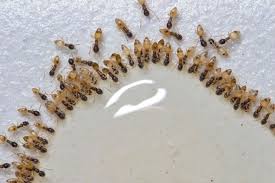
Tiny, pale ants that seem to appear out of nowhere — hence the name. Ghost ants are one of the most common indoor ants in South Florida and are notoriously difficult to eliminate with sprays alone. Bait-based treatment is essential.
Fire Ants
Aggressive, venomous, and widespread in South Florida lawns and landscapes. Fire ant mounds can appear overnight after rain. Stings are painful and dangerous for allergic individuals. We treat colonies directly and apply broadcast treatments for large infestations.
Carpenter Ants
Florida’s largest ant species. Carpenter ants don’t eat wood — they excavate it to build galleries, causing structural damage similar to termites. Often found in moisture-damaged wood around windows, rooflines, and bathrooms. Require localized treatment at the nest site.
Bigheaded Ants
Named for their disproportionately large heads, bigheaded ants are outdoor foragers that enter homes through cracks and gaps. They build large underground colonies and can quickly establish satellite nests inside. Common in South Florida landscapes and lawns.
Pharaoh Ants
A serious problem in multi-unit buildings, hospitals, and food service environments. Pharaoh ants form massive colonies with multiple queens and are notorious for budding — splitting into new colonies when threatened by sprays. Gel bait is the only reliable approach.
White-Footed Ants
Extremely common in South Florida, white-footed ants form massive colonies — sometimes millions of individuals — in trees, mulch, and wall voids. They don’t sting or bite but are one of the most persistent species to control due to colony size.
Why Store-Bought Sprays Often Make Things Worse
This is the most important thing to understand about ant control — and most homeowners learn it the hard way.
The Budding Problem
Many ant species — including ghost ants, pharaoh ants, and white-footed ants — respond to chemical threats by budding. When workers detect a repellent spray, they signal the queen to split the colony. One colony becomes two, three, or more. The infestation spreads rather than shrinks.
The Right Approach
For budding species, slow-acting bait is the only reliable solution. Workers carry bait back to the colony believing it’s food, share it with the queen and larvae, and eliminate the population from within. No budding, no scattering — just elimination.
Signs You Have an Ant Problem
Some ant activity is easy to miss until it becomes a full infestation. Here’s what to watch for.
- Ant trails leading to the kitchen, pantry, or pet food areas
- Tiny ants appearing in bathrooms, especially near moisture
- Winged ants (swarmers) indoors — a sign of a nearby established colony
- Fire ant mounds appearing in the lawn, especially after rain
- Sawdust-like frass near wood trim or windowsills (carpenter ants)
- Ants in electrical outlets, light switches, or around appliances
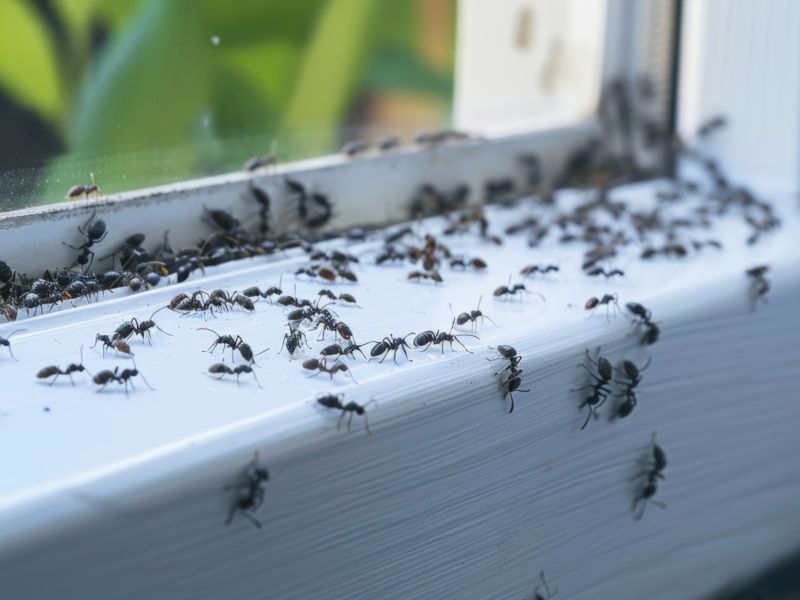
- Lines of ants along baseboards, counters, or door frames
- Ants in sealed food packaging — a sign of a large, established colony
Ant Control — Questions Answered
Ant Control Near You
We serve homeowners and businesses across South Florida. Click your city for local information.
Stop Ants at the Source
If sprays haven’t worked, it’s because they weren’t designed to. A free inspection lets us identify exactly which species you have and apply the treatment that actually targets the colony — not just what you can see.