Rodent Control & Exclusion
Roof rats and house mice are the most common rodent invaders in South Florida homes. They contaminate food, damage wiring, and carry disease. EntoLogic finds how they’re getting in, removes them, and seals the entry points for good.
Rodents Common to South Florida Homes
Each species behaves differently — knowing which rodent you’re dealing with determines the right treatment approach.
Roof Rats
By far the most common rodent in South Florida. Roof rats are agile climbers that enter homes through rooflines, soffits, vents, and overhanging tree branches. They nest in attics, walls, and ceiling spaces and are most active at night.
House Mice
Smaller than rats but no less destructive. House mice can squeeze through a gap the size of a dime and reproduce rapidly. They contaminate food, chew through packaging, and gnaw on electrical wiring — a leading cause of house fires.
Norway Rats
Larger and more aggressive than roof rats, Norway rats burrow along foundations, under slabs, and in overgrown landscaping. Less common than roof rats in South Florida but present near water, dumpsters, and dense vegetation.
Our Rodent Control Process
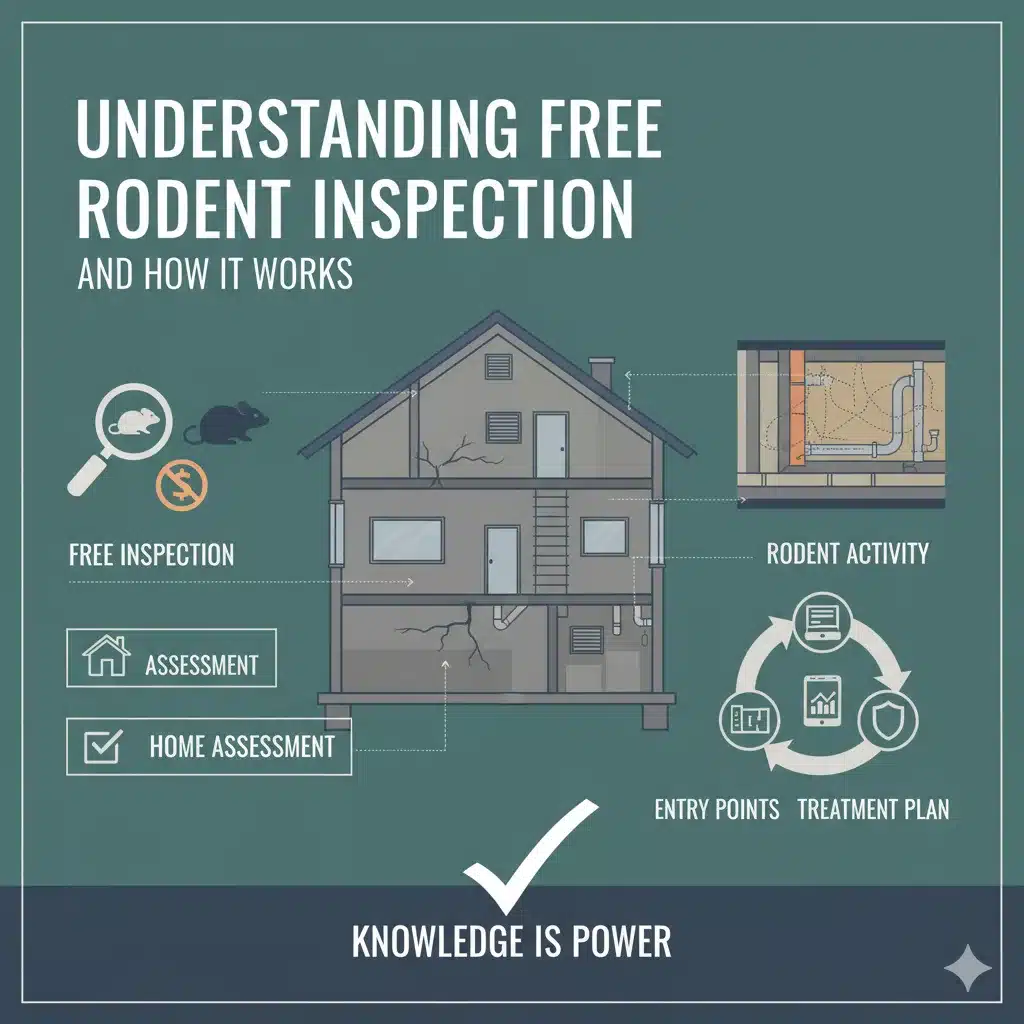
Trapping alone doesn’t solve a rodent problem — if the entry points aren’t sealed, more will follow. Our process addresses both.
Step 1 — Full Inspection
We inspect your attic, roofline, foundation, garage, and exterior perimeter. We identify active entry points, runways, droppings, gnaw marks, and nesting sites. You’ll get a clear picture of how bad the infestation is and where it’s centered.
Step 2 — Trapping & Elimination
We place snap traps, glue boards, or bait stations in the right locations based on rodent species and activity level. Trap placement is strategic — along runways and near entry points — not random. We check and service traps on follow-up visits.
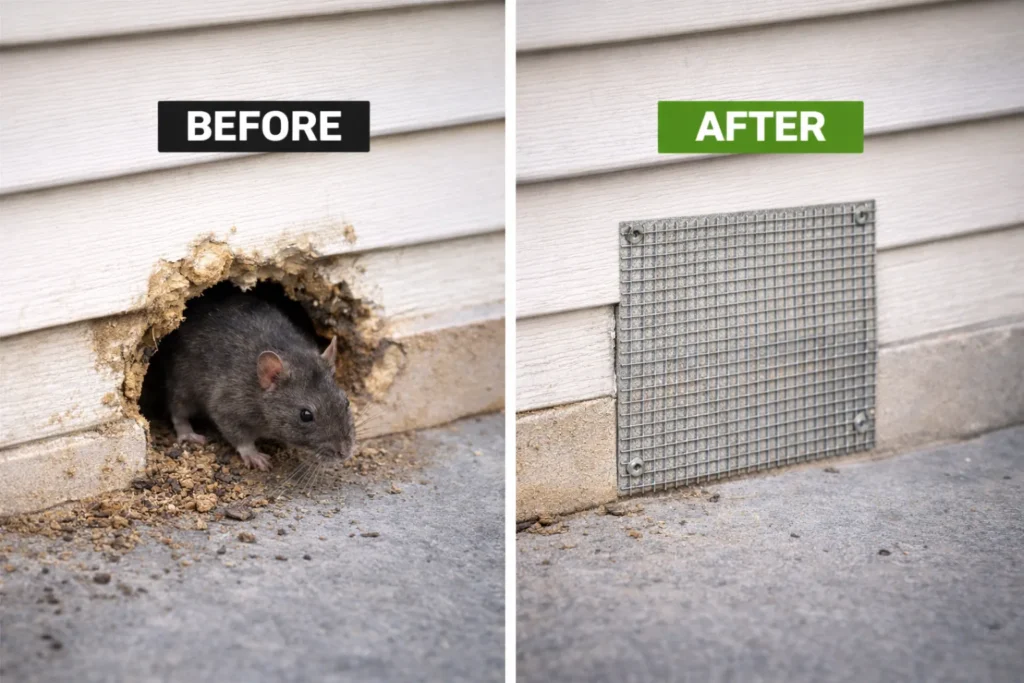
Step 3 — Exclusion & Sealing
Once the active population is under control, we seal entry points using appropriate materials — hardware cloth, steel wool, foam, or caulk depending on the gap. This is the step that prevents re-infestation and most companies skip it.
Step 4 — Sanitation Guidance
We walk you through practical changes that reduce rodent attractants — proper food storage, landscaping adjustments, clearing harborage areas, and trimming tree branches away from the roofline. Long-term prevention is built into every service.
Signs You Have Rodents
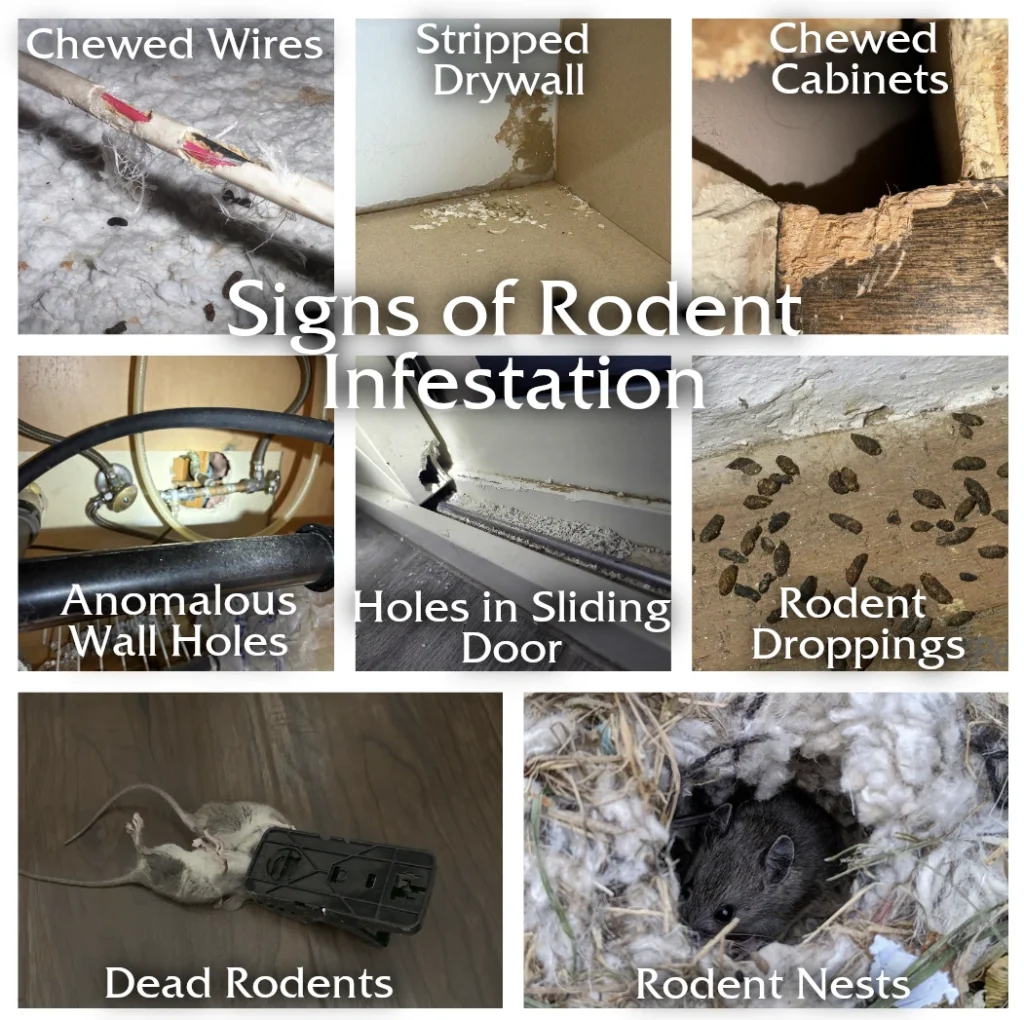
Rodents are nocturnal and secretive — most homeowners don’t realize they have a problem until it’s already significant. These are the early warning signs.
- Scratching, rustling, or scurrying sounds in the attic or walls at night
- Droppings along baseboards, in cabinets, or near the pantry
- Gnaw marks on food packaging, wood trim, or wiring insulation
- Grease marks or dark smudges along walls and baseboards
- Nesting material — shredded insulation, paper, or fabric — in hidden areas
- A musty, ammonia-like odor with no obvious source
- Pet behavior changes — barking or pawing at walls
- Visible entry holes or gaps along the roofline, soffits, or foundation
Rodent Control — Questions Answered
Rodent Control Near You
We serve homeowners and businesses across South Florida. Click your city for local information.
Hearing Something in the Attic?
Don’t wait — rodent populations grow fast and the damage compounds. A free inspection tells you exactly what you’re dealing with and what it’ll take to fix it permanently.