How Does Professional Ant Pest Control Ensure Long Term Prevention?
Why Ants Are More Than Just a Nuisance
At first glance, ants seem harmless, just tiny invaders marching across your kitchen counter. But look closer, and you’ll realize they’re far more than a minor inconvenience. Ants can contaminate food, damage structures, and in some cases, even cause painful bites. The real issue? They rarely travel alone.
The Hidden Complexity of Ant Colonies
An ant problem is never just about the ants you see. It’s about the thousands or even millions you don’t. Colonies operate like well-organized systems, with roles, communication networks, and survival strategies that make them incredibly resilient. That’s why simple DIY fixes often fall short, and why ant pest control pembroke pines requires a more strategic approach.
Understanding Professional Ant Pest Control
What Makes Professional Control Different
Professional ant control isn’t about spraying chemicals and hoping for the best. It’s a systematic process that begins with understanding the infestation and ends with long-term prevention. Experts analyze behavior, identify species, and tailor solutions accordingly.
Key Objectives of Long-Term Prevention
The goal isn’t just elimination, it’s prevention. That means targeting the root of the problem, disrupting colony systems, and ensuring ants don’t return. Think of it as solving the cause, not just treating the symptom.
The Biology of Ants and Why It Matters
Colony Structure and Behavior
Queen and Worker Roles
At the heart of every colony is the queen, responsible for reproduction. Workers handle everything else finding food, maintaining the nest, and protecting the colony. If the queen survives, the colony survives.
Nesting Habits
Ants nest in a variety of places: soil, walls, wood, and even electrical systems. Their adaptability makes them difficult to locate without proper inspection.
Foraging Patterns and Trails
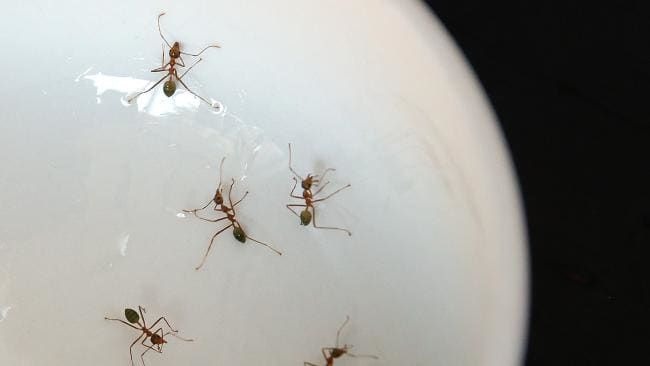
Ants use pheromone trails to guide others to food sources. This is why you often see them moving in lines. Break the trail, and you disrupt the system but only temporarily unless the colony is addressed.
Common Causes of Ant Infestations
Food Sources and Moisture
Crumbs, spills, and even pet food can attract ants. Moisture from leaks or humidity also creates ideal conditions for nesting.
Structural Entry Points
Tiny cracks, gaps around windows, and poorly sealed doors act as entryways. Ants don’t need much space, just an opportunity. These can also be treated by commercial pest control services.
Inspection and Identification Process
Species Identification
Not all ants behave the same. Some prefer sugary foods, others are drawn to proteins. Identifying the species is crucial for choosing the right treatment.
Locating Nests and Colonies
Finding the nest is often the hardest part. Professionals use advanced techniques to trace trails and locate hidden colonies.
Strategic Treatment Methods
Baiting Systems
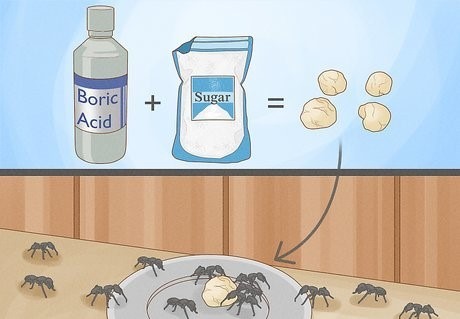
Baits are designed to attract ants, which then carry the poison back to the colony. This method targets the entire colony, including the queen.
Non-Repellent Solutions
Unlike traditional sprays, non-repellent treatments allow ants to move freely and spread the solution within the colony, increasing effectiveness.
Barrier Treatments
These create protective zones around structures, preventing ants from entering in the first place.
Importance of Integrated Pest Management (IPM)
Prevention Over Reaction
IPM focuses on long-term solutions by combining multiple strategies. It’s not about quick fixes—it’s about sustainable control.
Environmental Considerations
Modern pest control emphasizes safety, using methods that minimize environmental impact while remaining effective.
Monitoring and Follow-Up
Continuous Assessment
Ant control doesn’t end after treatment. Continuous monitoring ensures that any new activity is detected early.
Adjusting Treatment Plans
If conditions change, so should the strategy. Flexibility is key to maintaining long-term results.
Role of Sanitation and Maintenance
Eliminating Attractants
Keeping spaces clean reduces the chances of infestation. No food, no reason for ants to stay.
Sealing Entry Points
Blocking access points is one of the simplest yet most effective preventive measures.
Climate Influence on Ant Activity
Why Warm Regions Like Pembroke Pines Matter
Warm climates provide ideal conditions for ants to thrive year-round. In places like Pembroke Pines, infestations can occur at any time, making consistent pest management essential. This is why ant pest control in pembroke pines requires a proactive and ongoing approach.
Example Context: EntoLogic Pest Solutions
Approach to Long-Term Ant Prevention
EntoLogic Pest Solutions emphasizes a structured and preventive approach to ant control. By combining inspection, targeted treatments, and continuous monitoring, their methods align with long-term prevention strategies rather than temporary fixes.
Challenges in Long-Term Ant Control
Colony Relocation
When threatened, some ant species relocate their colonies, making them harder to eliminate completely.
Resistance and Reinfestation
Over time, ants can adapt to certain treatments. Additionally, new colonies may form nearby, leading to reinfestation if preventive measures aren’t maintained.
Future Trends in Ant Pest Control
Smart Monitoring Tools
Technology is transforming pest control. Smart systems can detect activity in real time, allowing faster and more precise responses.
Eco-Friendly Innovations
Sustainable solutions are becoming more common, focusing on reducing chemical use while maintaining effectiveness.
EntoLogic Pest Solutions Serving the Cooper City Community and Beyond in Pembroke Pines
EntoLogic Pest Solutions is dedicated to serving the diverse needs of the local community of Pembroke Pines, including individuals residing in neighbourhoods like Cooper City Fl. With its convenient location near landmarks such as the Denny’s Restaurant and major intersections like Private Rd and SW 82nd Ave (coordinates: 26.050736, -80.2524731), we offer ant pest control services.
Get ant pest control services Services at Cooper City Now
Call Us or Contact Us: (954) 955-3031
Navigate from Cooper City to EntoLogic Pest Solutions Now
Professional ant pest control goes far beyond eliminating visible ants. It’s about understanding their behavior, targeting their colonies, and creating conditions that prevent their return. Through strategies like Integrated Pest Management, continuous monitoring, and environmental adjustments, long-term prevention becomes achievable.
In regions with favorable climates for pests, maintaining this level of control is even more critical. A structured and informed approach ensures that infestations are not only managed but prevented from recurring.
How Does Professional Ant Pest Control Ensure Long-Term Prevention?
The Data Speaks: Professional Solutions Outperform DIY
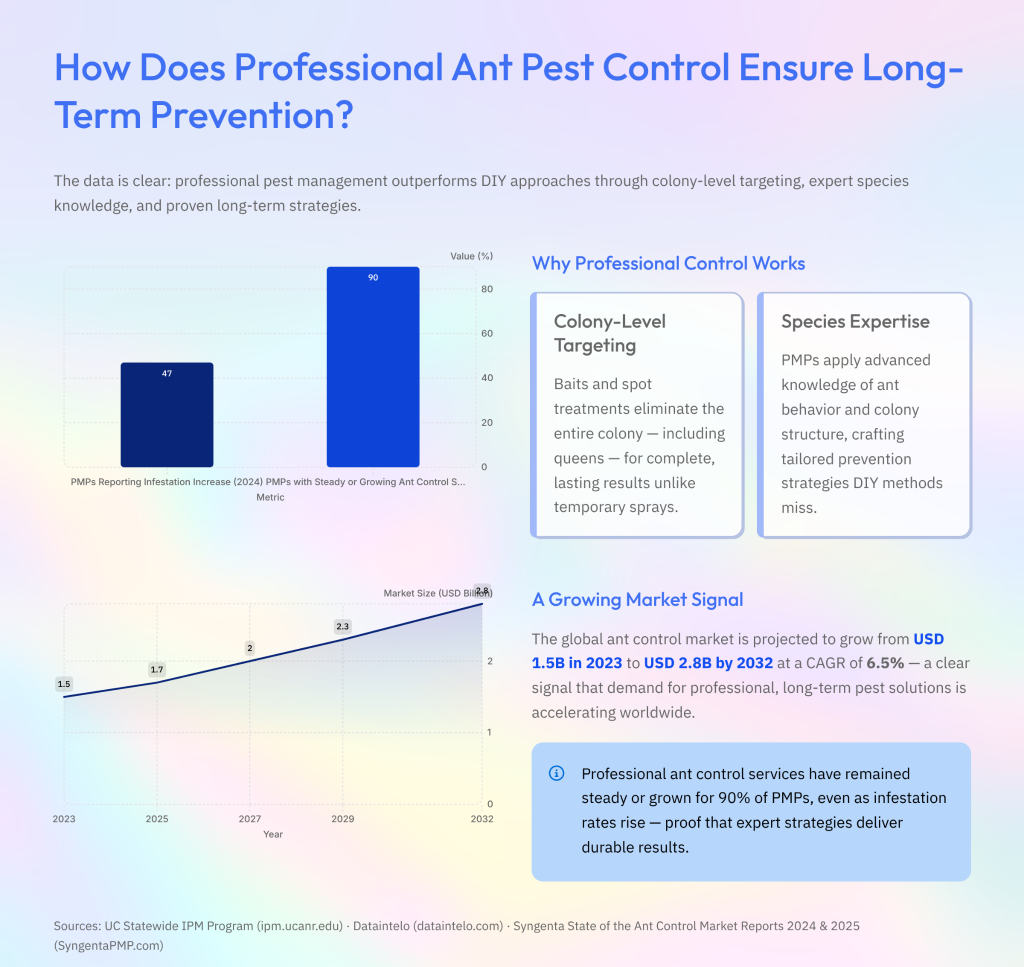
- Significant Infestation Reduction: Professional pest management professionals (PMPs) report that 47% saw an increase in ant infestations in their market area in 2024, yet 90% of PMPs’ ant control services have remained steady or grown, indicating effective long-term control strategies are in place. (Source: Syngenta State of the Ant Control Market Reports 2024 & 2025)
- Economic Impact: The global ant control market is projected to grow from USD 1.5 billion in 2023 to approximately USD 2.8 billion by 2032, at a CAGR of 6.5%, demonstrating a strong demand for professional, long-term solutions. (Source: Dataintelo Ant Control Market Report)
- Targeted, Colony-Level Control: Professional services emphasize baits and spot treatments that target the entire colony, including queens, leading to more complete and lasting control, unlike temporary indoor sprays. (Source: UC Statewide IPM Program)
- Expertise in Species and Behavior: PMPs utilize advanced knowledge of ant species’ colony idiosyncrasies and behaviors to implement tailored, long-term prevention strategies, a level of detail often missed in DIY approaches. (Source: Syngenta State of the Ant Control Market Report 2024)
Sources: UC Statewide IPM Program (ipm.ucanr.edu), Dataintelo (dataintelo.com), Syngenta (SyngentaPMP.com)
FAQs
1. Why do ants keep coming back after treatment?
Ants often return if the colony isn’t fully eliminated or if attractants remain in the environment.
2. How long does professional ant control last?
Results vary, but long-term prevention depends on continuous monitoring and maintenance.
3. Are bait systems more effective than sprays?
Yes, because baits target the entire colony rather than just the visible ants.
4. What role does cleanliness play in ant prevention?
Clean environments reduce food sources, making spaces less attractive to ants.
5. Can climate affect ant infestations?
Absolutely. Warm and humid climates support year-round ant activity, increasing the need for consistent control measures.
One reply on “How Does Professional Ant Pest Control Ensure Long Term Prevention?”
[…] humidity, storing wood properly, and maintaining clean gutters can make a significant difference. Ant Pest Control also had a major inspection in this […]