When people think about food safety, they often picture spotless stainless-steel equipment, workers wearing protective gear, and carefully monitored production lines. But behind the scenes, there’s another battle happening one that most consumers never see. It’s the fight against pests, especially cockroaches.
Cockroaches are among the most persistent and dangerous pests found in industrial food environments. They’re fast, adaptable, and incredibly good at hiding. In a food processing facility, even a small cockroach issue can quickly become a serious contamination risk.
So how can food manufacturers stay protected? That’s where structured pest management comes into play. Understanding how pest prevention works in these specialized environments can make all the difference between smooth compliance and costly disruptions.
Why Cockroaches Are a Serious Threat in Food Production Environments
Cockroaches aren’t just unpleasant to see. In food production, they represent a genuine operational and health risk.
These pests crawl through drains, dumpsters, sewage systems, wall voids, and machinery compartments. When they enter food processing zones, they can transfer bacteria, fungal spores, and other contaminants onto surfaces that may come into direct contact with food products.
A single cockroach sighting can trigger internal investigations, failed inspections, or even product recalls.
How Cockroaches Contaminate Food and Surfaces
Cockroaches contaminate environments in multiple ways:
- Through droppings
- Through shed skins
- Through saliva deposits
- Through egg capsules
- Through physical contact with food-contact surfaces
Think of them as tiny biological delivery systems carrying unwanted microbes from one place to another.
Some studies have linked cockroaches to the spread of organisms such as Salmonella, E. coli, and other pathogens that food facilities work hard to eliminate.
Regulatory Risks Associated with Cockroach Infestations
Food facilities operate under strict standards. Whether a facility follows FDA regulations, HACCP protocols, or third-party auditing requirements, pest activity can create serious compliance concerns.
Even minor evidence of cockroach presence can lead to:
- Failed inspections
- Corrective action requests
- Production downtime
- Documentation reviews
- Customer trust issues
In food manufacturing, reputation is fragile. One pest issue can ripple far beyond the facility walls.
Why Food Processing Facilities Attract Cockroaches

You might wonder why would cockroaches target highly sanitized industrial environments?
The answer is simple: survival.
Even well-maintained facilities provide everything cockroaches need.
Moisture, Warmth, and Hidden Spaces
Cockroaches thrive where there is:
- Consistent warmth
- Humidity
- Darkness
- Protection from disturbance
Processing plants often have boiler rooms, equipment motors, refrigeration condensate lines, and plumbing systems that generate ideal conditions.
Behind every machine or inside every utility chase may be the perfect hiding place.
Food Residue and Organic Waste Accumulation
Even microscopic food particles can sustain cockroach populations.
Areas such as:
- Conveyor systems
- Floor drains
- Ingredient storage rooms
- Packaging stations
- Waste compactors
can accumulate residue over time.
Cockroaches don’t need a buffet. Sometimes a few crumbs are enough.
Nighttime Activity and Undetected Movement
Cockroaches are primarily nocturnal.
That means they often emerge after shifts end, when lights go off and machinery quiets down.
By the time workers notice visible activity, the infestation may already be established.
Early Signs of Cockroach Activity in Processing Plants
Spotting early warning signs is essential.
Physical Evidence and Behavioral Indicators
Common indicators include:
- Small dark droppings
- Smear marks along walls
- Musty odors
- Egg capsules
- Shed skins
Employees may also notice insects darting into cracks when lights switch on.
High-Risk Zones Within Processing Facilities
Cockroaches often concentrate in:
- Utility rooms
- Drainage systems
- Electrical panels
- Wall penetrations
- Storage shelving
- Loading docks
These areas should be inspected regularly.
How Commercial Pest Control Programs Work in Food Facilities
A food facility requires far more than occasional spraying.
Effective pest management involves a systematic process.
Inspection and Facility Assessment
Professionals begin by evaluating:
- Structural vulnerabilities
- Moisture sources
- Sanitation gaps
- Entry points
- Historical pest activity
This creates a baseline for action.
Monitoring and Population Tracking
Monitoring tools may include:
- Sticky traps
- Digital sensors
- Pheromone monitors
- Trend analysis reports
These systems help identify where activity is increasing before infestations become visible.
Targeted Treatment Strategies
Once activity is confirmed, treatment is carefully planned.
Instead of broad chemical applications, professionals focus on:
- Cracks
- Voids
- Equipment bases
- Utility penetrations
Precision matters.
Non-Contaminating Treatment Methods
Food-safe environments often require methods such as:
- Gel baiting
- Insect growth regulators
- Dust formulations
- Mechanical exclusion
- Vacuum removal
The goal is always control without compromising food safety.
Integrated Pest Management for Food Safety
Integrated Pest Management, or IPM, is often considered the gold standard.
It combines prevention, monitoring, correction, and documentation.
Sanitation-Based Prevention
Sanitation removes what cockroaches need most:
- Food
- Water
- Shelter
Routine cleaning under equipment, around drains, and behind storage racks dramatically reduces risk.
Structural Exclusion Methods
Cockroaches enter through surprisingly small spaces.
Facilities often seal:
- Pipe penetrations
- Floor cracks
- Door gaps
- Wall voids
- Cable openings
A building with fewer access points becomes harder to invade.
Employee Awareness and Reporting Systems
Workers are often the first line of defense.
Training employees to report:
- Unusual odors
- Droppings
- Insect sightings
- Moisture leaks
can lead to faster intervention.
Seasonal Challenges in Cockroach Management
Cockroach pressure doesn’t stay the same year-round.
During warmer months, populations may expand rapidly.
Rainfall can also drive cockroaches indoors from exterior breeding sites.
Seasonal monitoring helps facilities stay ahead instead of reacting after activity appears.
Documentation and Compliance Requirements
Food facilities need proof—not assumptions.
A robust pest management program includes:
- Inspection logs
- Trend reports
- Corrective action records
- Monitoring maps
- Service documentation
Auditors want evidence that pest prevention is active, measurable, and continuously improving.
How EntoLogic Pest Solutions Supports Commercial Facilities
Professionals such as EntoLogic Pest Solutions understand that food processing environments require specialized strategies.
Facilities need more than pest removal; they need risk management.
By combining inspection protocols, monitoring systems, sanitation recommendations, and exclusion planning, providers can help maintain a safer production environment.
The Role of commercial pest control services pembroke pines in Food Protection
Facilities seeking structured prevention often explore solutions such as commercial pest control services pembroke pines to support operational hygiene.
These programs typically focus on:
- Early detection
- Risk reduction
- Facility mapping
- Compliance support
- Long-term prevention
Instead of waiting for visible infestations, proactive monitoring keeps facilities one step ahead.
Long-Term Benefits of Preventive Pest Management
Preventive programs create measurable advantages:
- Reduced contamination risk
- Fewer emergency shutdowns
- Improved audit readiness
- Better employee confidence
- Stronger brand protection
It’s like maintaining an engine you don’t wait for smoke before checking the oil.
Common Mistakes Food Facilities Make
Even well-managed plants can overlook critical details.
Common mistakes include:
- Ignoring minor moisture leaks
- Delaying crack repairs
- Overlooking drains
- Storing cardboard too long
- Inconsistent monitoring
Small oversights often create big pest opportunities.
Building a Cockroach-Resistant Processing Environment
Cockroach prevention isn’t about one treatment.
It’s about creating an environment where survival becomes difficult.
That means combining:
- Structural maintenance
- Consistent sanitation
- Employee awareness
- Professional monitoring
- Data-driven interventions
When these systems work together, cockroaches struggle to gain a foothold.
EntoLogic Pest Solutions Serving the SilverLakes Community and Beyond in Pembroke Pines
EntoLogic Pest Solutions is dedicated to serving the diverse needs of the local community of Pembroke Pines, including individuals residing in neighbourhoods like SilverLakes. With its convenient location near landmarks such as the Panther Run Elementary School and major intersections like NW 172nd Ave and Pines Blvd (coordinates: 26.0102129, -80.3751102), we offer commercial pest control services in pembroke pines.
Get commercial pest control services at SilverLakes Now
Call Us or Contact Us: +1 469-425-8406
Navigate from SilverLakes to EntoLogic Pest Solutions Now
<iframe src=”https://www.google.com/maps/embed?pb=!1m18!1m12!1m3!1d22911.570428078296!2d-80.39787688864291!3d26.01197744234838!2m3!1f0!2f0!3f0!3m2!1i1024!2i768!4f13.1!3m3!1m2!1s0x88d9a142ec5fad1d%3A0x697ba02842ac00e0!2sSilver%20Lake!5e0!3m2!1sen!2sus!4v1778686700708!5m2!1sen!2sus” width=”600″ height=”450″ style=”border:0;” allowfullscreen=”” loading=”lazy” referrerpolicy=”no-referrer-when-downgrade”></iframe>
Cockroaches pose one of the most serious pest threats inside food processing facilities. Their ability to hide, reproduce quickly, and spread contaminants makes them a major concern for food safety, regulatory compliance, and operational continuity. Effective prevention requires much more than occasional treatments; it demands continuous inspection, sanitation, exclusion, monitoring, and strategic intervention. With structured programs, trained teams, and specialized expertise from providers such as EntoLogic Pest Solutions, facilities can create stronger defenses and maintain safer production environments for the long term.
How Can Commercial Pest Control Services Protect Food Processing Facilities from Cockroaches?
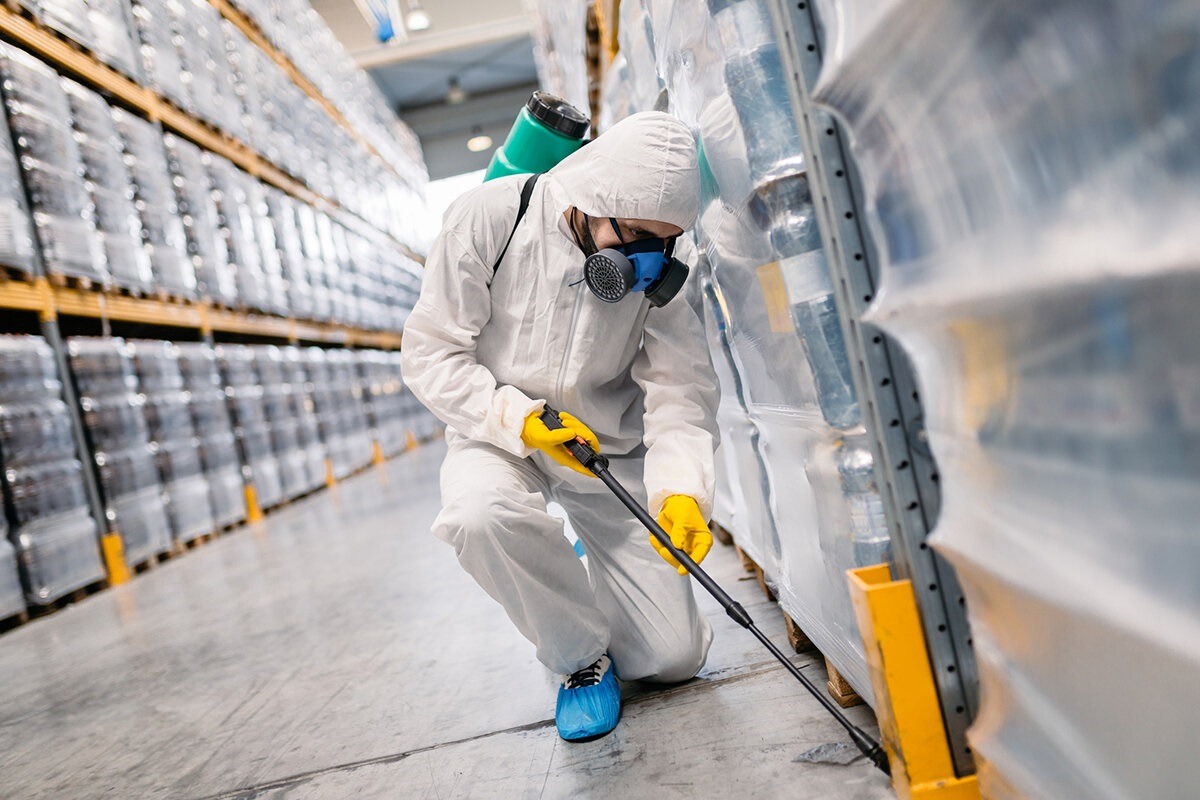
[image] A split image: on the left, a close-up of a cockroach on a sterile food processing surface; on the right, a professional pest control technician applying treatment.
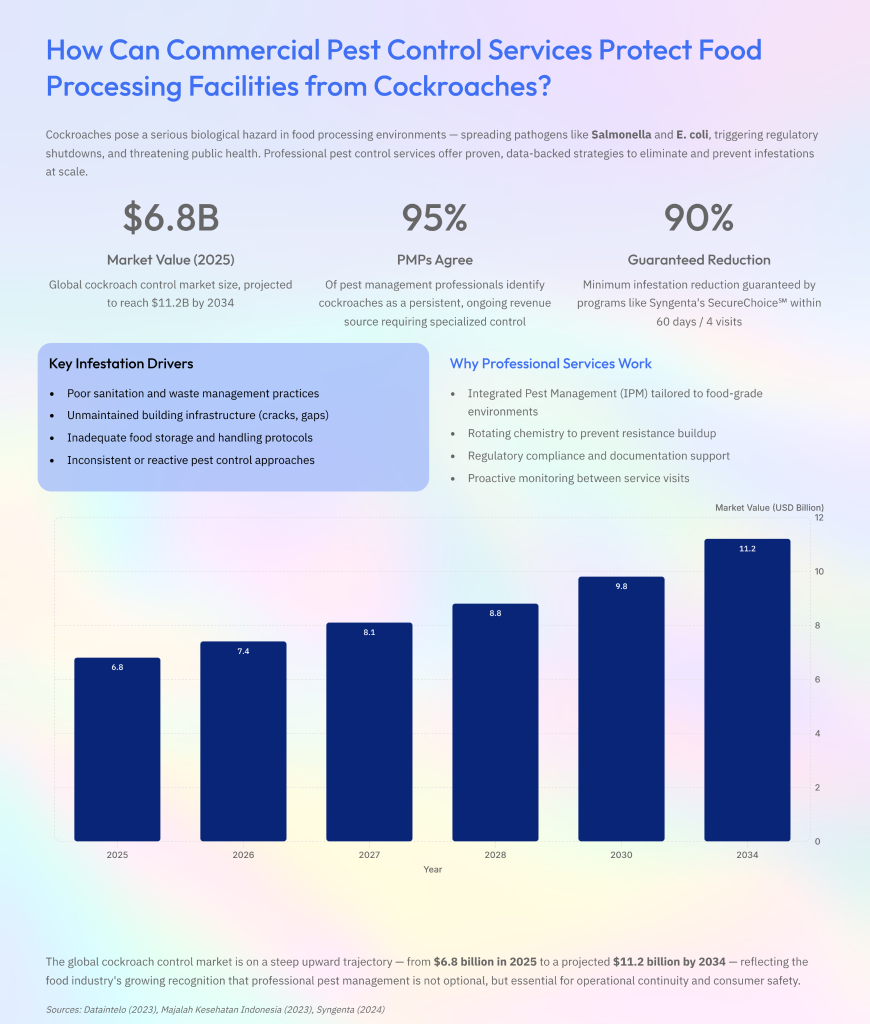
- The Cockroach Threat: Cockroaches are more than just a nuisance; they are significant vectors for pathogens like Salmonella and E. coli, capable of contaminating food and surfaces, leading to severe health risks and potential facility closures.
- Market Value of Control: The global cockroach control market was valued at $6.8 billion in 2025 and is projected to reach $11.2 billion by 2034, indicating the immense and growing investment in managing these pests. (Source: Dataintelo, 2023)
- Key Infestation Drivers: Poor sanitation, unmaintained building conditions, inadequate food management, and improper pest control practices are primary triggers for cockroach density in food handling establishments. (Source: Majalah Kesehatan Indonesia, 2023)
- Professional Intervention is Crucial: A 2024 report indicates that 95% of pest management professionals (PMPs) recognize cockroaches as a steady source of revenue due to their persistent nature, underscoring the need for specialized, ongoing control strategies. (Source: Syngenta, 2024)
- Guaranteed Reduction: Professional services, like Syngenta’s SecureChoice℠ Cockroach Assurance Program, guarantee at least a 90% reduction in infestations within the first four customer visits over a 60-day period, demonstrating the efficacy of expert pest control. (Source: Syngenta, 2024)
Sources: Dataintelo (2023), Majalah Kesehatan Indonesia (2023), Syngenta (2024)
FAQs
1. Why are cockroaches especially dangerous in food processing facilities?
Cockroaches can carry bacteria, contaminate surfaces, and spread pathogens through droppings, saliva, and physical contact with food-contact areas.
2. What areas in a processing plant attract cockroaches the most?
Drains, utility rooms, warm machinery spaces, storage areas, waste handling zones, and moisture-prone areas are common hotspots.
3. How often should food facilities be inspected for cockroach activity?
Inspection frequency depends on facility size and risk level, but many operations benefit from scheduled routine inspections combined with ongoing monitoring.
4. Can sanitation alone eliminate cockroach problems?
Sanitation is essential, but long-term control usually requires monitoring, structural exclusion, and targeted treatment strategies.
5. What makes preventive pest management better than reactive treatment?
Preventive programs detect issues early, reduce contamination risks, improve compliance readiness, and minimize costly disruptions before infestations become visible.