What Are the Most Effective Natural Methods for Termite Control in Wooden Structures?
Termites are often called “silent destroyers,” and honestly, the nickname fits perfectly. These tiny insects can chew through wooden beams, flooring, furniture, and even support structures for months before anyone notices the damage. Wooden structures are especially vulnerable because termites feed on cellulose, the organic material found in wood and plant fibers.
When a structure offers moisture, warmth, and a reliable wood source, termites see it as the perfect buffet. Homes, sheds, fences, decks, and even wooden furniture become attractive targets when conditions are right.
Many homeowners searching for information about termite control pembroke pines are specifically interested in natural methods because they want to protect their homes without overloading indoor spaces with harsh chemicals. Natural termite management focuses on prevention, habitat modification, and low-toxicity treatment options that reduce termite activity while supporting healthier indoor environments.
The Role of Moisture in Termite Infestations
Moisture is one of the biggest factors behind termite activity. Damp wood becomes softer and easier for termites to tunnel through. Leaky pipes, clogged gutters, poor drainage, and humid crawl spaces can all create conditions termites love.
Think of moisture as an open invitation. Once termites detect damp wood, they often establish colonies nearby and begin expanding through structural areas.
Reducing moisture is one of the most effective natural termite prevention strategies because it removes a major survival requirement for termite colonies.
Common Types of Termites Found in Wooden Buildings
Different termite species behave differently. Understanding their habits helps determine the best natural control method.
- Subterranean termites build colonies underground and travel through mud tubes.
- Drywood termites infest dry wood directly without needing soil contact.
- Dampwood termites prefer wood with high moisture levels.
Subterranean termites are often the most destructive because colonies can contain hundreds of thousands of workers.
Signs That Termites May Already Be Present
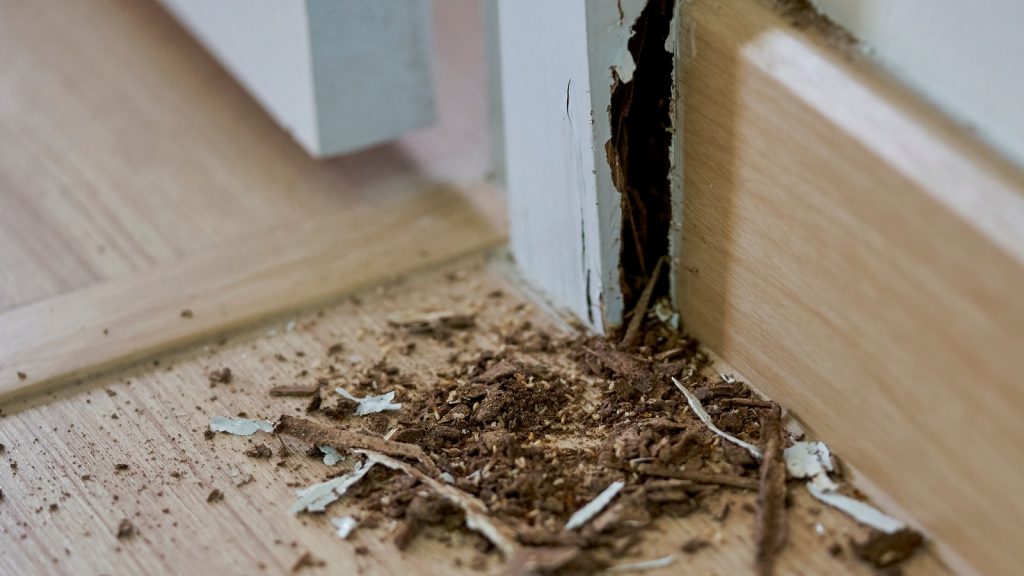
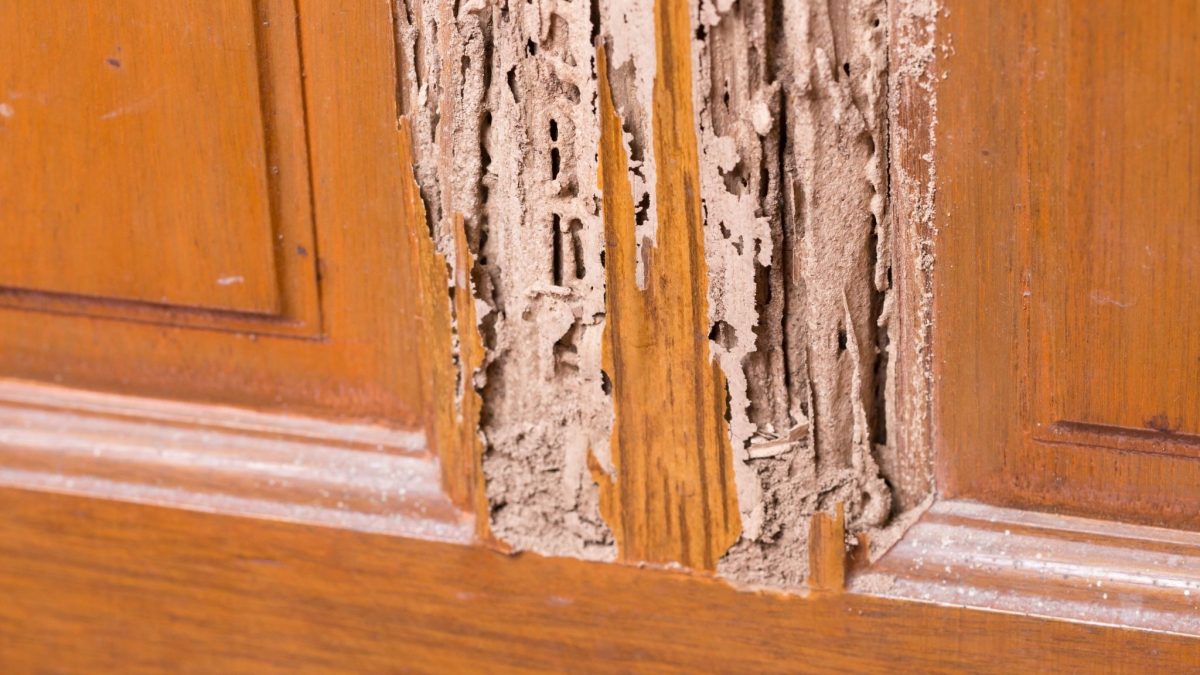
Catching termite activity early can save homeowners significant repair costs. The earlier the infestation is detected, the easier it becomes to control naturally.
Mud Tubes and Hollow Wood
Subterranean termites build mud tubes along foundations, walls, or wooden beams to travel safely between food sources and their colonies. These tubes protect them from sunlight and dehydration.
Another warning sign is hollow-sounding wood. If you tap on a wooden surface and it sounds empty or papery, termites may already be feeding inside.
You may also notice:
- Cracked paint
- Bubbling surfaces
- Sagging floors
- Tiny holes in wood
- Discarded wings near windows
Swarming Termites Around Windows and Doors
Swarming termites usually appear during warm and humid seasons. These winged termites leave mature colonies to establish new nests.
Homeowners often mistake them for flying ants, but termite swarmers have straight antennae, equal-sized wings, and broader waists.
Seeing swarmers indoors is a major red flag because it may indicate an active infestation nearby.
Why Natural Termite Control Methods Matter
Natural termite control methods are gaining attention for good reason. Many people want safer alternatives that minimize environmental impact while still protecting wooden structures effectively.
Natural methods also encourage long-term prevention rather than relying solely on reactive treatments.
Reducing Chemical Exposure Indoors
Some traditional termite treatments involve strong chemical applications around foundations or inside walls. While these methods can be effective, many homeowners prefer reducing chemical exposure in living spaces.
Natural methods often use plant-based oils, biological controls, moisture reduction, and physical barriers instead.
This approach can be especially appealing for homes with children, pets, or individuals sensitive to strong odors and residues.
Supporting Long-Term Structural Health
Natural termite prevention is not just about killing insects. It also focuses on improving the condition of the structure itself.
Dry wood, proper ventilation, regular maintenance, and smart landscaping choices all contribute to a less termite-friendly environment.
In many cases, prevention becomes more effective than repeated treatment.
Boric Acid as a Natural Termite Treatment
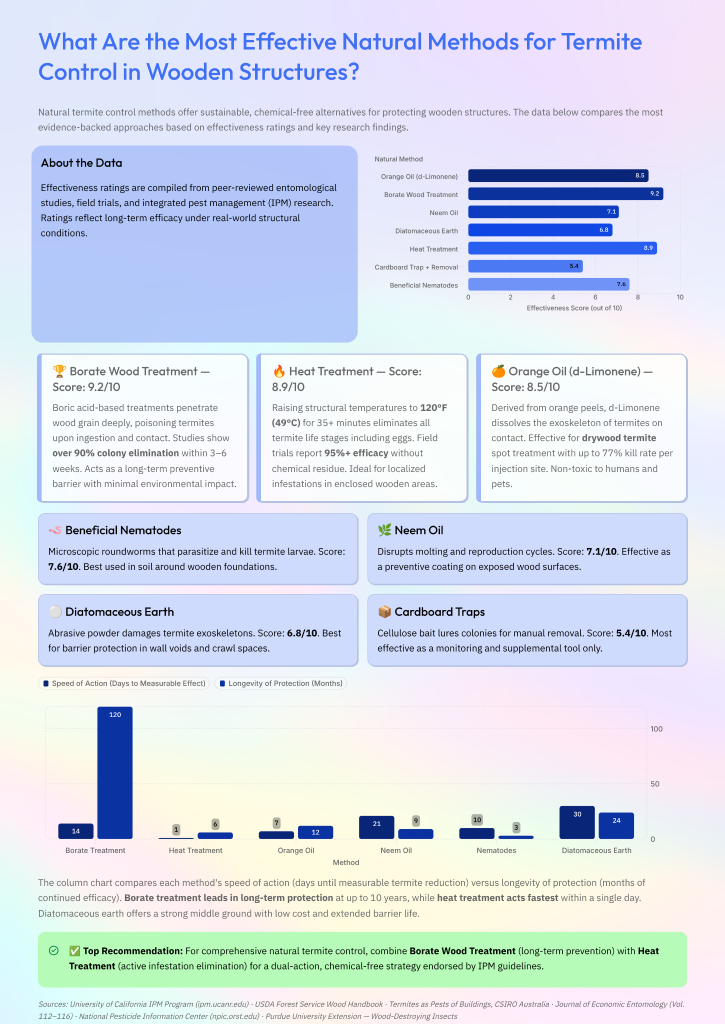
Boric acid is one of the most widely used low-toxicity termite control solutions. It works by disrupting termites’ digestive systems and damaging their nervous systems.
When termites consume or contact boric acid, they eventually dehydrate and die.
How Boric Acid Works Against Termites
Boric acid is commonly available as powder or liquid spray. It can be applied to wooden surfaces, wall voids, crawl spaces, and affected furniture.
One major advantage is that boric acid penetrates wood fibers and remains active for long periods.
It works particularly well for localized infestations and preventive treatments.
Safe Application Tips for Wooden Structures
When using boric acid:
- Wear gloves and a dust mask during application.
- Apply evenly to dry wooden surfaces.
- Focus on cracks, joints, and hidden crevices.
- Keep children and pets away during treatment.
- Reapply if exposed to excessive moisture.
Although boric acid is considered lower in toxicity than many pesticides, it should still be handled carefully.
Orange Oil Treatments for Localized Infestations
Orange oil has become a popular natural termite treatment because it contains d-limonene, a compound extracted from citrus peels.
This compound breaks down termites’ exoskeletons and disrupts their respiratory systems.
Benefits and Limitations of Orange Oil
Orange oil treatments are often used for spot infestations in walls, furniture, or exposed wooden areas.
Benefits include:
- Pleasant citrus scent
- Lower environmental impact
- Reduced chemical residue
- Direct effectiveness on contact
However, orange oil usually works best for smaller infestations. It may not fully eliminate large underground colonies.
That’s why many termite control in pembroke pines discussions emphasize combining natural treatments with strong preventive practices.
Neem Oil for Sustainable Termite Prevention
Neem oil comes from the seeds of the neem tree and has long been used as a natural insect management solution.
It interferes with termites’ hormonal systems, making it harder for them to feed, grow, and reproduce.
Why Neem Oil Interrupts Termite Activity
Unlike fast-kill insecticides, neem oil works gradually. Termites exposed to neem compounds often stop feeding and eventually die.
Neem oil can be applied directly to wooden surfaces or mixed into sprays for targeted treatment.
Its slow-action approach may actually benefit long-term control because affected termites can spread exposure throughout parts of the colony.
Many eco-conscious property owners appreciate neem oil because it comes from a renewable plant source.
Cardboard Traps and DIY Monitoring Techniques
Cardboard traps are surprisingly simple but useful for termite monitoring.
Because cardboard contains cellulose, termites are naturally attracted to it.
When DIY Traps Are Most Effective
To create a cardboard trap:
- Wet several cardboard pieces.
- Stack them near suspected termite areas.
- Leave them undisturbed for a few days.
- Inspect for termite activity.
- Remove and dispose of infested cardboard.
These traps are best used for monitoring rather than complete elimination.
They help homeowners identify areas with active termite movement before damage becomes severe.
Beneficial Nematodes for Outdoor Termite Control
Beneficial nematodes are microscopic worms that naturally attack soil-dwelling pests, including termites.
They are often used in gardens, lawns, and foundation areas where subterranean termites may travel.
How Nematodes Attack Subterranean Termites
Once introduced into moist soil, nematodes search for termite hosts. After entering the termite body, they release bacteria that kill the insect.
This method works best in damp soil conditions and moderate temperatures.
Beneficial nematodes are attractive because they target pests without harming plants, pets, or humans.
They are commonly integrated into environmentally focused termite prevention programs.
Sunlight and Heat Exposure as Natural Solutions
Termites thrive in dark, humid environments. Exposure to direct sunlight and heat can make wooden structures far less inviting.
Why Termites Avoid Dry, Hot Conditions
Drywood termites especially struggle in areas with intense sunlight and low moisture.
Whenever possible:
- Increase sunlight exposure around wooden areas.
- Trim dense vegetation near structures.
- Improve airflow in crawl spaces.
- Reduce shade trapping moisture near foundations.
In some cases, heat treatments can also help eliminate localized termite infestations inside furniture or removable wooden objects.
Vinegar Solutions for Minor Termite Problems
Vinegar is another commonly discussed home remedy for termites.
While it is not a complete solution for large infestations, it may help reduce minor localized activity.
Combining Vinegar With Lemon Juice
A mixture of white vinegar and lemon juice creates an acidic solution that can damage termites upon contact.
Homeowners often spray this mixture into:
- Small wood cracks
- Baseboards
- Window frames
- Furniture joints
However, vinegar solutions work best as supplemental treatments rather than primary control methods.
Preventing Moisture Buildup Around Wooden Structures
If termites had a favorite word, it would probably be “moisture.” Eliminating excess water is one of the strongest natural defenses available.
Improving Ventilation and Drainage
Here are several highly effective moisture-control strategies:
- Repair leaking pipes immediately.
- Clean gutters regularly.
- Direct downspouts away from foundations.
- Use dehumidifiers in damp areas.
- Improve crawl space ventilation.
- Avoid standing water near wooden structures.
Good airflow keeps wood dry and reduces conditions that termites depend on.
Natural Wood Protection Methods
Protecting wood before termites arrive is often easier than dealing with an infestation later.
Preventive wood care can dramatically reduce long-term risk.
Choosing Termite-Resistant Wood Types
Certain wood species naturally resist termite damage better than others.
Examples include:
- Cedar
- Redwood
- Teak
- Cypress
These woods contain natural oils and compounds that termites dislike.
Although no wood is completely termite-proof, resistant materials can slow infestations significantly.
Applying Natural Sealants and Finishes
Natural wood sealants help create a protective barrier against moisture and insect intrusion.
Linseed oil, tung oil, and beeswax-based finishes are commonly used for wood preservation.
These finishes can:
- Reduce moisture absorption
- Protect wood fibers
- Extend structural lifespan
- Improve resistance to cracking
Routine maintenance is essential because worn sealants lose effectiveness over time.
Landscaping Adjustments That Reduce Termite Risk
The area surrounding a structure can either discourage termites or unintentionally attract them.
Landscaping choices play a bigger role in termite prevention than many homeowners realize.
Keeping Mulch and Firewood Away From Foundations
Wood piles, mulch, and decaying organic material create ideal termite habitats.
To reduce risk:
- Store firewood away from buildings.
- Keep mulch several inches from foundations.
- Remove dead tree stumps.
- Trim plants touching exterior walls.
- Avoid excessive soil-to-wood contact.
These simple adjustments can greatly reduce opportunities for termite colonies to spread.
The Importance of Regular Inspections
Even the best prevention strategies require regular monitoring.
Termites often remain hidden for long periods, so inspections help identify problems before major damage occurs.
Seasonal Monitoring Strategies
Different seasons can influence termite behavior.
Spring and summer often bring increased termite swarming activity, while rainy periods may increase moisture-related risks.
Regular inspections should include:
- Crawl spaces
- Basements
- Attics
- Wooden decks
- Exterior foundations
- Window and door frames
Many property owners researching termite control pembroke pines focus heavily on prevention because early detection often reduces the need for aggressive intervention.
Common Mistakes Homeowners Make With Natural Termite Control
Natural termite control can be highly effective, but only when applied consistently and realistically.
One common mistake is relying on a single remedy for severe infestations. For example, vinegar sprays alone are unlikely to eliminate a large subterranean colony.
Other mistakes include:
- Ignoring moisture issues
- Failing to inspect hidden areas
- Storing wood against structures
- Skipping maintenance checks
- Assuming termites disappear after temporary treatment
Natural control methods work best as part of a broader prevention strategy.
Integrating Professional Insight With Natural Prevention
Natural termite control does not mean homeowners must manage everything alone.
Educational resources from pest management professionals can help property owners better understand termite behavior, prevention techniques, and structural vulnerabilities.
For example, companies like EntoLogic Pest Solutions often emphasize the importance of combining prevention, monitoring, and early intervention to reduce long-term termite risk.
This balanced approach helps homeowners make informed decisions without relying entirely on reactive treatments.
In many cases, the most effective termite management plan includes:
- Moisture control
- Structural maintenance
- Regular inspections
- Habitat modification
- Natural treatment applications
- Ongoing monitoring
Think of termite prevention like maintaining a healthy garden. Small consistent actions usually work better than waiting for a crisis.
EntoLogic Pest Solutions Serving the Town Gate Community and Beyond in Pembroke Pines
EntoLogic Pest Solutions is dedicated to serving the diverse needs of the local community of Pembroke Pines, including individuals residing in neighbourhoods like Town Gate. With its convenient location near landmarks such as the Xtreme Gardens and major intersections like NW 172nd Ave and Pines Blvd (coordinates: 26.0102129, -80.3726066), we offer termite control services.
Get termite control services at Town Gate Now
Call Us or Contact Us: +1 469-425-8406
Navigate from Town Gate to EntoLogic Pest Solutions Now
Natural termite control methods can play a major role in protecting wooden structures when used strategically and consistently. Moisture reduction, boric acid treatments, neem oil, beneficial nematodes, sunlight exposure, and preventive wood care all contribute to a healthier, less termite-friendly environment.
The key is understanding that no single method works like magic overnight. Effective termite prevention is more like building layers of protection. Every improvement from better drainage to proper wood sealing makes a structure less attractive to termites.
Homeowners interested in termite control pembroke pines often discover that long-term success comes from combining natural prevention methods with routine inspections and informed maintenance habits.
When wooden structures stay dry, well-maintained, and properly monitored, termites have a much harder time gaining a foothold.
FAQs
1. What is the safest natural method for termite control indoors?
Boric acid is commonly considered one of the safer low-toxicity options when applied properly. It can be effective for localized infestations while minimizing heavy chemical exposure.
2. Can vinegar completely eliminate termites?
Vinegar may help with minor termite activity, but it usually does not eliminate large colonies. It works better as a supplemental treatment.
3. How can moisture attract termites to wooden structures?
Moist wood becomes softer and easier for termites to consume. Damp conditions also support termite survival and colony expansion.
4. Are natural termite control methods effective for long-term prevention?
Yes, especially when combined with maintenance practices like proper drainage, ventilation, wood sealing, and regular inspections.
5. Why are regular inspections important for termite prevention?
Termites often remain hidden for long periods. Early detection helps reduce structural damage and allows faster intervention before infestations spread.