
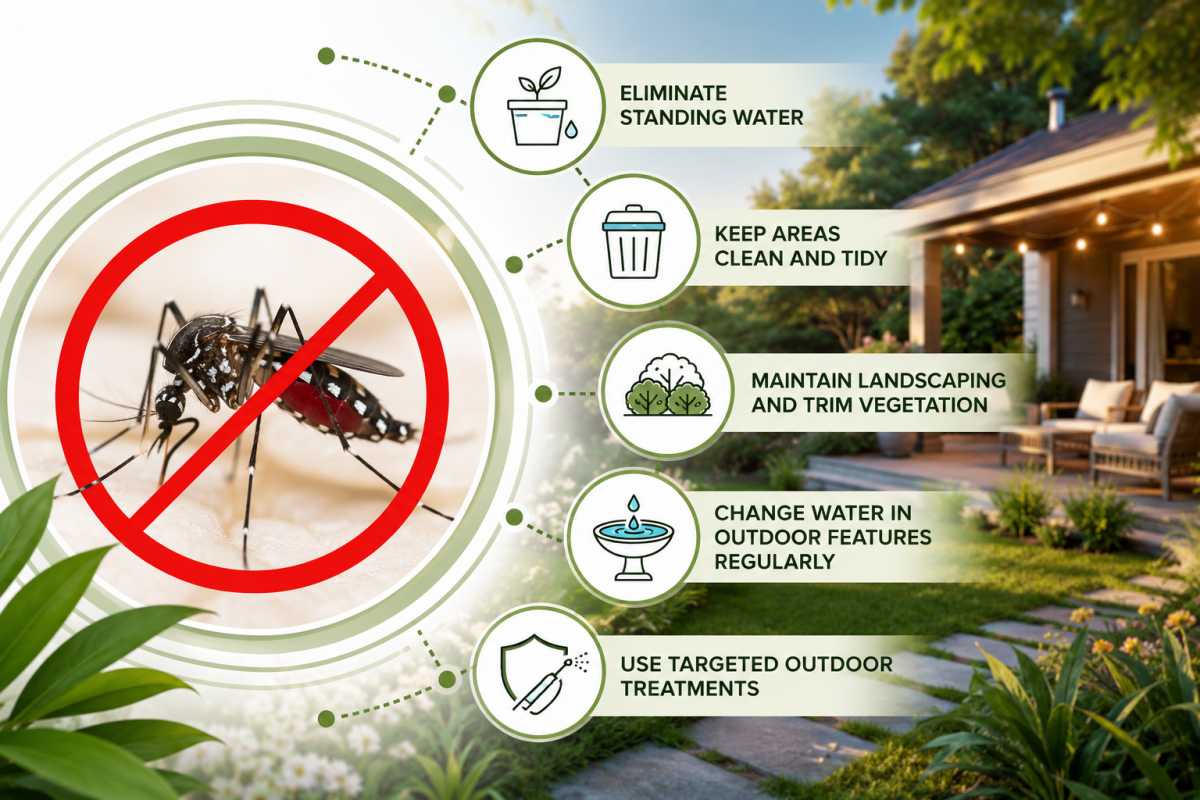
Which Outdoor Mosquito Control Practices Help Maintain Long-Term Mosquito Reduction?
Mosquitoes are more than just a seasonal annoyance. Their presence can make outdoor spaces uncomfortable, disrupt recreational activities, and create ongoing concerns for homeowners and businesses alike. While many people focus on quick fixes, long-term mosquito reduction requires a deeper understanding of mosquito behavior and the environmental conditions that support their survival.
Successful mosquito management is not about eliminating mosquitoes overnight. Instead, it involves creating an outdoor environment that becomes increasingly difficult for mosquitoes to use for breeding, resting, and feeding.
For property owners interested in effective outdoor mosquito control pembroke pines, understanding proven long-term practices can help create a more sustainable and comfortable outdoor environment. Organizations such as EntoLogic Pest Solutions often emphasize integrated approaches that focus on prevention and habitat reduction rather than relying solely on temporary measures.
Why Mosquitoes Thrive Outdoors
Before discussing control practices, it is important to understand why mosquitoes are attracted to certain outdoor environments.
Mosquitoes require three basic elements to survive:
- Water for breeding
- Shelter for resting
- Access to hosts for feeding
When these conditions exist together, mosquito populations can increase rapidly.
The Mosquito Life Cycle and Its Importance
Mosquitoes undergo four life stages:
- Egg
- Larva
- Pupa
- Adult
The first three stages occur in water. This is why even small amounts of standing water can support large mosquito populations. A single overlooked container can produce dozens or even hundreds of mosquitoes over time.
Understanding this life cycle highlights why prevention efforts often begin with water management.
Common Outdoor Breeding Areas
Many breeding sites are surprisingly small and easy to miss. Common examples include:
- Birdbaths
- Flowerpot saucers
- Clogged gutters
- Children’s toys
- Tarps
- Buckets
- Drainage ditches
- Old tires
Mosquitoes do not need ponds or lakes to reproduce. In many cases, just a few ounces of stagnant water are enough. There should also be rodent pest control.
Why Long-Term Mosquito Reduction Requires a Multi-Step Approach
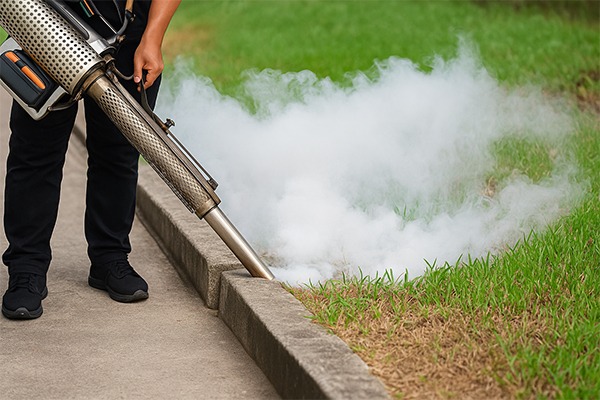
Many people expect a single treatment or intervention to solve mosquito issues permanently. Unfortunately, mosquito populations are influenced by weather, rainfall, vegetation, and neighboring properties.
Short-Term vs Long-Term Mosquito Control
Short-term strategies may temporarily reduce adult mosquito populations. However, if breeding habitats remain unchanged, new mosquitoes will continue emerging.
Long-term reduction focuses on:
- Habitat modification
- Water management
- Vegetation control
- Regular inspections
- Ongoing monitoring
Think of mosquito control like maintaining a healthy garden. Consistent attention produces lasting results, while occasional efforts provide only temporary improvements.
Environmental Factors That Influence Mosquito Activity
Several environmental factors contribute to mosquito abundance:
- Warm temperatures
- High humidity
- Frequent rainfall
- Dense vegetation
- Poor drainage
These conditions are commonly found in subtropical climates, making long-term prevention particularly important.
Eliminating Standing Water Sources
One of the most effective mosquito reduction practices is removing standing water wherever possible.
Since mosquitoes depend on water for reproduction, eliminating breeding sites interrupts their life cycle before adult mosquitoes emerge.
Inspecting Residential Properties Regularly
Regular inspections help identify potential problem areas before mosquito populations expand.
Property owners should inspect:
- Gutters
- Downspouts
- Outdoor containers
- Decorative features
- Equipment storage areas
Weekly inspections during warmer months can significantly reduce breeding opportunities.
Hidden Water Collection Areas
Some of the most productive mosquito breeding locations are hidden from plain view.
Examples include:
- Folded tarps
- Roof depressions
- Unused planters
- Tree holes
- Abandoned equipment
These areas often remain unnoticed for long periods, allowing mosquitoes to breed repeatedly.
Seasonal Maintenance Tips
Seasonal maintenance can reduce standing water accumulation.
Helpful practices include:
- Cleaning gutters regularly
- Removing debris from drainage systems
- Emptying unused containers
- Repairing leaks
- Adjusting irrigation systems
Small maintenance tasks often provide substantial long-term benefits.
Maintaining Healthy Landscaping Practices
Landscaping plays a significant role in mosquito activity.
Mosquitoes prefer cool, shaded, and humid resting areas. Overgrown vegetation provides ideal shelter during the day.
Managing Dense Vegetation
Dense plant growth can trap moisture and create favorable resting sites.
Consider:
- Reducing excessive ground cover
- Trimming dense shrubs
- Removing unnecessary vegetation
- Increasing airflow through landscaping
Improved air circulation makes outdoor spaces less attractive to mosquitoes.
Proper Lawn and Shrub Maintenance
Routine lawn care contributes to mosquito reduction.
Maintaining:
- Trimmed grass
- Pruned shrubs
- Clean landscape borders
helps reduce shaded, humid areas where mosquitoes often rest between feeding periods.
Encouraging Natural Mosquito Predators
Nature provides several allies that help keep mosquito populations under control.
While predators alone will not eliminate mosquitoes, they can contribute to a balanced ecosystem.
Beneficial Wildlife That Helps Control Mosquitoes
Natural mosquito predators include:
- Dragonflies
- Certain fish species
- Frogs
- Some bird species
- Bats
These animals consume mosquitoes or mosquito larvae and may help reduce local populations when suitable habitats are maintained.
Creating environmentally diverse landscapes often supports healthier predator populations.
Using Outdoor Water Features Responsibly
Water features add beauty to outdoor spaces, but they can also become mosquito breeding habitats if neglected.
Preventing Water Features from Becoming Breeding Sites
Proper maintenance is essential.
Helpful practices include:
- Keeping water circulating
- Cleaning debris regularly
- Maintaining filtration systems
- Monitoring water quality
Moving water is generally less attractive to mosquitoes than stagnant water.
Regular inspections ensure water features remain decorative rather than problematic.
Improving Drainage Around the Property
Poor drainage creates ideal breeding conditions after rainfall.
Even temporary puddles can support mosquito development.
Identifying Poor Drainage Problems
Common signs include:
- Standing water after rain
- Soggy lawns
- Water pooling near foundations
- Persistent wet spots
Addressing drainage issues not only helps reduce mosquitoes but also improves overall property health.
Potential improvements may involve:
- Regrading soil
- Installing drainage systems
- Maintaining swales
- Clearing blocked drains
Outdoor Sanitation and Waste Management
Clean outdoor environments tend to support fewer mosquito-friendly conditions.
Accumulated debris can trap moisture and create protected resting areas.
Reducing Mosquito-Friendly Conditions
Outdoor sanitation practices include:
- Removing yard debris
- Storing equipment properly
- Managing waste containers
- Cleaning storage areas
Think of sanitation as removing the welcome mat that encourages mosquitoes to stay.
The cleaner and drier the environment, the less attractive it becomes.
Seasonal Monitoring and Prevention Strategies
Mosquito activity changes throughout the year. Effective prevention adapts to seasonal conditions.
Spring and Summer Prevention
Spring and summer often bring increased rainfall and warmer temperatures.
Recommended actions include:
- Frequent property inspections
- Monitoring standing water
- Maintaining landscaping
- Checking drainage systems
Early intervention prevents population explosions later in the season.
Fall and Winter Maintenance
Although mosquito activity may decline, prevention should continue.
Fall and winter are excellent times to:
- Repair drainage issues
- Remove unnecessary containers
- Clean gutters
- Evaluate landscaping needs
Off-season maintenance lays the foundation for future mosquito control success.
Community-Wide Mosquito Reduction Efforts
Mosquitoes do not recognize property boundaries.
A well-maintained yard can still experience mosquito pressure if nearby properties contain breeding sites.
Why Neighborhood Participation Matters
Community-wide efforts often produce stronger results because they reduce breeding opportunities across larger areas.
Examples include:
- Neighborhood cleanup initiatives
- Public education programs
- Shared drainage maintenance
- Community awareness campaigns
When multiple properties participate, mosquito populations often decline more effectively than through isolated efforts.
The Role of Professional Monitoring and Inspection
Long-term mosquito management often benefits from professional assessments.
Trained professionals can identify breeding sources that property owners may overlook and provide recommendations based on environmental conditions.
In regions where mosquito activity remains persistent, professional monitoring programs can help evaluate population trends and identify emerging risk areas.
For those researching outdoor mosquito control in pembroke pines, educational resources from companies such as EntoLogic Pest Solutions frequently emphasize the importance of combining environmental management, habitat reduction, and ongoing monitoring to support sustainable mosquito reduction goals.
EntoLogic Pest Solutions Serving the SilverLakes Community and Beyond in Pembroke Pines
EntoLogic Pest Solutions is dedicated to serving the diverse needs of the local community of Pembroke Pines, including individuals residing in neighbourhoods like SilverLakes. With its convenient location near landmarks such as the Xtreme Gardens and major intersections like Pines Blvd and NW 172nd Ave (coordinates: 26.0102129, -80.3726066), we offer outdoor mosquito control services.
Get outdoor mosquito control services at SilverLakes Now
Call Us or Contact Us: +1 954-955-3031
Navigate from SilverLakes to EntoLogic Pest Solutions Now
Long-term mosquito reduction is rarely achieved through a single action. Instead, it requires a combination of consistent practices that address the factors mosquitoes need to survive. Eliminating standing water, maintaining healthy landscaping, improving drainage, encouraging natural predators, and conducting regular inspections all contribute to a more effective mosquito management strategy.
The most successful mosquito prevention plans focus on disrupting the mosquito life cycle before populations become established. By approaching mosquito control as an ongoing environmental management effort rather than a temporary fix, property owners can create outdoor spaces that remain more comfortable and less inviting to mosquitoes year after year.
Long-Term Mosquito Reduction: A Comparative Look at Outdoor Control Practices
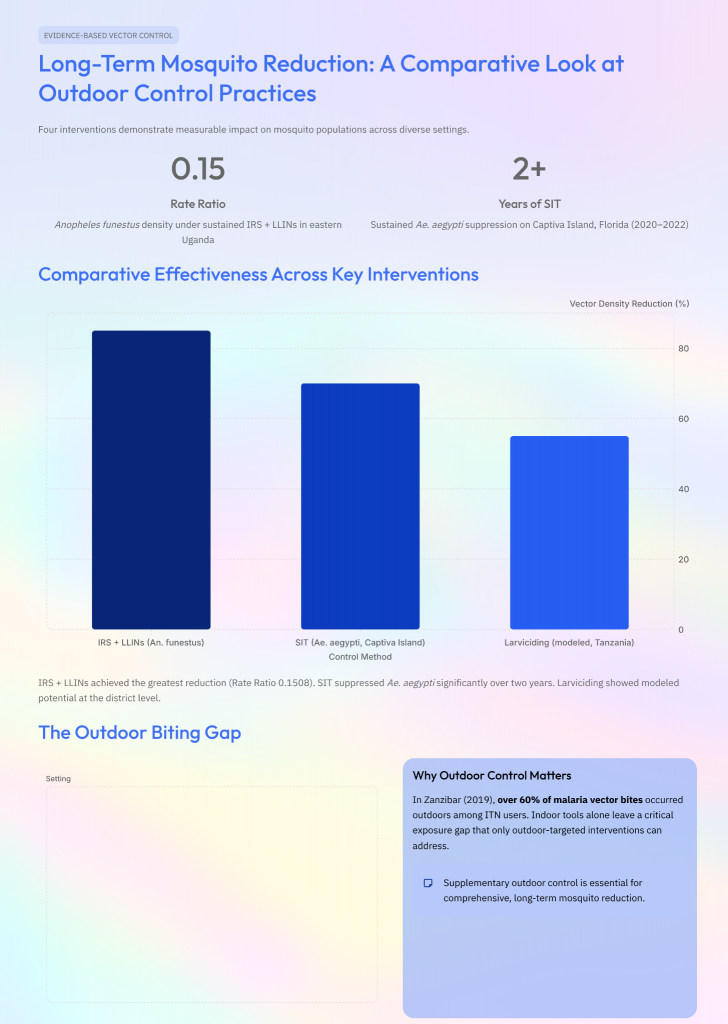
- Larviciding: Studies in rural south-eastern Tanzania (2026) have modeled larviciding as a supplementary intervention, showing its potential for district-level mosquito population control. While specific quantitative reduction percentages are still under simulation, the approach targets mosquito breeding sites directly, aiming for long-term impact by preventing adult emergence.
- Visual Idea: A bar chart showing simulated mosquito population reduction over time with and without larviciding.
- Sterile Insect Technique (SIT): On Captiva Island, Florida, USA, the sterile insect technique was employed against Aedes aegypti from 2020 to 2022. This method demonstrated significant suppression of the target mosquito population, indicating a promising approach for sustained reduction.
- Visual Idea: A line graph showing a sharp decline in Aedes aegypti populations during the SIT intervention period.
- Integrated Vector Management (IVM) with Indoor Residual Spraying (IRS) and Long-Lasting Insecticidal Nets (LLINs): In eastern Uganda, research from 2016 indicated that high coverage of LLINs combined with indoor residual spraying (IRS) significantly decreased malaria vector densities. The impact on Anopheles funestus was particularly notable, with a Rate Ratio of 0.1508, suggesting a substantial long-term reduction when these interventions are sustained.
- Visual Idea: A comparative bar chart showing the reduction in vector densities for different mosquito species under combined IRS and LLIN use versus baseline.
- Outdoor Biting Mosquito Control: Research in Zanzibar (2019) highlighted that a majority of exposure to malaria vector bites occurred outdoors, even for insecticide-treated net (ITN) users. This underscores the need for supplementary interventions targeting outdoor biting mosquitoes to achieve comprehensive, long-term reduction.
- Visual Idea: A pie chart illustrating the proportion of mosquito bites occurring indoors vs. outdoors, emphasizing the outdoor gap.
Sources: PLOS One (2026), PLOS Neglected Tropical Diseases (2025), Parasites & Vectors (2016), SCIENCE@home (2019)
Frequently Asked Questions
1. Why is standing water considered the biggest factor in mosquito breeding?
Mosquitoes require water to lay eggs and complete their early life stages. Removing standing water directly interrupts their reproductive cycle and helps reduce future mosquito populations.
2. How often should outdoor areas be inspected for mosquito breeding sites?
Weekly inspections are generally recommended during warm and rainy seasons because mosquito development can occur quickly under favorable conditions.
3. Can landscaping influence mosquito populations?
Yes. Dense vegetation provides shade, moisture, and shelter that mosquitoes prefer. Proper trimming and maintenance can make outdoor areas less attractive to them.
4. Do natural predators completely eliminate mosquitoes?
No. Natural predators help reduce mosquito numbers but usually work best as part of a broader mosquito management strategy.
5. What makes long-term mosquito reduction different from short-term mosquito control?
Long-term reduction focuses on eliminating breeding habitats and modifying environmental conditions, while short-term control typically targets existing adult mosquitoes for temporary relief.