
How Do Commercial Pest Control Services Support Food Safety Programs in Business Operations?
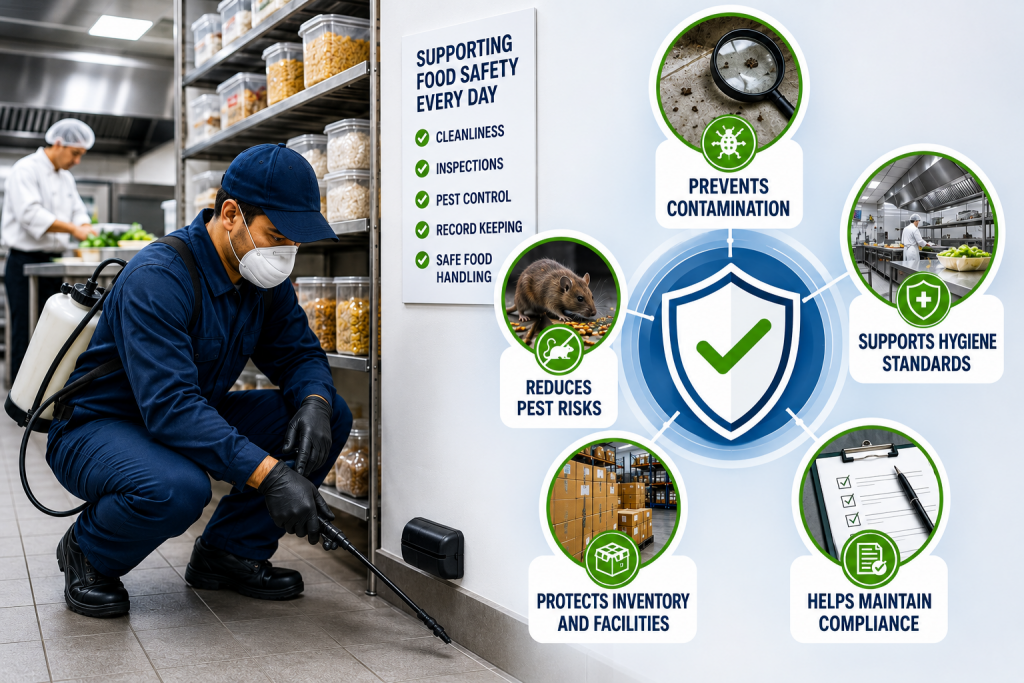
Food safety is one of the most critical responsibilities for any business that handles, stores, processes, distributes, or serves food. Whether it is a restaurant, food manufacturing plant, grocery store, warehouse, or catering facility, maintaining a safe environment is essential for protecting customers and preserving product quality.
One of the biggest threats to food safety is pest activity. Rodents, cockroaches, flies, and stored product insects can introduce harmful pathogens, contaminate food supplies, and damage a company’s reputation. This is why pest management has become an essential component of modern food safety programs.
Businesses that work with experienced providers such as EntoLogic Pest Solutions often incorporate pest prevention strategies into broader food safety initiatives. Understanding how commercial pest control services pembroke pines support these programs can help organizations build stronger, safer, and more compliant operations.
Why Food Safety Programs Require Effective Pest Management
Every successful food safety program focuses on risk prevention. Residential Pest control helps eliminate one of the most common contamination risks in food-related environments.
Regulatory Compliance and Pest Prevention
Many food businesses operate under strict health and safety regulations. Regulatory agencies and food safety standards often require businesses to demonstrate active pest management measures.
Routine inspections, monitoring systems, and documented prevention efforts help businesses maintain compliance and reduce operational risks.
Protecting Consumer Health
Consumers trust businesses to provide safe food products. Pest infestations can introduce harmful microorganisms that lead to foodborne illnesses.
Preventing pest activity protects customers from potential health risks while helping businesses maintain public confidence and trust.
Common Pests That Threaten Food Safety
Different pests create different challenges within food facilities. Understanding these threats is the first step toward effective prevention.
Rodents
Rodents are among the most destructive pests in food environments. Mice and rats contaminate food through urine, droppings, and nesting materials.
They can also chew electrical wiring, damage packaging, and create sanitation concerns throughout a facility.
Cockroaches
Cockroaches thrive in warm, moist environments and often hide in kitchens, storage rooms, and food preparation areas.
They can spread bacteria across surfaces and food-contact areas, increasing contamination risks.
Flies
Flies frequently travel between waste sources and food preparation areas. During this movement, they may carry harmful pathogens on their bodies and transfer them to food products.
Stored Product Pests
Beetles, moths, and weevils commonly infest grains, flour, cereals, and packaged foods.
These pests can cause extensive product losses and create serious quality control challenges.
How Commercial Pest Control Services Strengthen Food Safety Programs?

Professional pest management contributes to food safety in multiple ways.
Preventing Food Contamination
One of the primary goals of pest control is preventing contamination before it occurs.
By identifying risk areas, implementing preventive measures, and addressing pest activity early, businesses can significantly reduce threats to food safety.
Supporting Hazard Analysis and Risk Management
Food safety programs often rely on hazard analysis principles to identify and manage risks.
Pest management professionals help businesses recognize vulnerable areas, assess potential threats, and implement targeted prevention strategies that support overall risk management efforts.
Monitoring and Documentation
Food safety programs require consistent monitoring and recordkeeping.
Professional pest management programs typically include detailed reports, inspection findings, treatment records, and corrective action recommendations. These records support audits and demonstrate ongoing compliance efforts.
The Role of Inspection in Pest Prevention
Regular inspections are one of the most valuable components of a pest management program.
Identifying Entry Points
Pests enter facilities through surprisingly small openings. Cracks, gaps around doors, damaged screens, and utility penetrations can all provide access.
Routine inspections help identify these vulnerabilities before they become larger problems.
Detecting Early Signs of Infestation
Finding pest activity early can prevent major infestations.
Inspectors look for droppings, nesting materials, insect activity, damaged packaging, and other warning signs that indicate potential issues.
Early intervention often results in more effective and less disruptive solutions.
Integrated Pest Management and Food Safety
Many food businesses use Integrated Pest Management (IPM) as part of their food safety strategy.
IPM focuses on prevention, monitoring, and environmental management rather than relying solely on pesticide applications.
Prevention-Based Strategies
Preventing pests is generally more effective than reacting to infestations after they occur.
Sanitation Improvements
Clean facilities are less attractive to pests.
Proper waste management, routine cleaning, spill removal, and sanitation procedures help eliminate food and water sources that pests depend on.
Structural Exclusion Methods
Exclusion involves preventing pests from entering a facility.
Sealing cracks, repairing doors, installing screens, and maintaining building integrity can significantly reduce pest access.
Environmental Monitoring
Monitoring devices provide valuable information about pest activity trends.
These tools help identify high-risk areas and support data-driven decision-making.
Employee Awareness and Pest Prevention
Employees play a critical role in supporting food safety and pest prevention efforts.
Staff Reporting Procedures
Workers are often the first to notice signs of pest activity.
Establishing clear reporting procedures encourages prompt action and helps prevent small issues from becoming major infestations.
Good Housekeeping Practices
Simple housekeeping practices can make a significant difference.
Employees who properly store food, clean work areas, and manage waste contribute directly to a safer environment.
Pest Control Challenges in Different Food Businesses
Different sectors face unique pest management challenges.
Restaurants
Restaurants handle food continuously and often operate long hours.
Frequent deliveries, high customer traffic, and food waste can create opportunities for pest activity if preventive measures are not maintained.
Food Processing Facilities
Processing facilities handle large volumes of raw materials and finished products.
Maintaining strict sanitation standards and monitoring systems is essential for minimizing risks.
Warehouses and Storage Centers
Warehouses often store products for extended periods.
Stored product pests, rodents, and environmental conditions can create challenges that require ongoing monitoring and preventive maintenance.
Documentation and Audit Readiness
Food safety audits often evaluate pest management practices as part of overall compliance assessments.
Comprehensive documentation demonstrates that a business actively manages pest risks and follows established procedures.
Important records may include:
- Inspection reports
- Monitoring logs
- Corrective action records
- Trend analysis reports
- Sanitation recommendations
- Facility improvement documentation
Well-organized records help businesses prepare for inspections and demonstrate commitment to food safety.
How Technology Improves Modern Pest Control Programs
Technology has transformed pest management in food-related industries.
Digital monitoring systems, remote sensors, data analytics, and electronic reporting tools provide valuable insights into pest activity patterns.
These technologies help businesses identify trends, respond more quickly to risks, and maintain more accurate records.
Data-driven pest management also supports continuous improvement within food safety programs.
Long-Term Benefits of Professional Pest Management
Effective pest management delivers benefits that extend beyond immediate pest prevention.
Some of the most significant long-term advantages include:
- Improved food safety performance
- Reduced contamination risks
- Enhanced regulatory compliance
- Better audit outcomes
- Reduced product loss
- Improved operational efficiency
- Stronger consumer confidence
- Protection of business reputation
A proactive approach creates a safer environment for employees, customers, and products alike.
The Importance of Choosing Qualified Pest Control Providers
Food-related businesses often require specialized pest management expertise.
Qualified professionals understand industry regulations, food safety standards, pest biology, and facility-specific risks.
Organizations such as EntoLogic Pest Solutions may support businesses by providing structured pest management programs that align with food safety objectives.
Businesses exploring commercial pest control services in pembroke pines often focus on providers that emphasize prevention, monitoring, documentation, and long-term risk reduction as part of broader food safety efforts.
EntoLogic Pest Solutions Serving the SilverLakes Community and Beyond in Pembroke Pines
EntoLogic Pest Solutions is dedicated to serving the diverse needs of the local community of Pembroke Pines, including individuals residing in neighbourhoods like SilverLakes. With its convenient location near landmarks such as the Panther Run Elementary School and major intersections like NW 9th St and NW 170th Terrace (coordinates: 26.0124629, -80.3751102), we offer commercial pest control services services.
Get commercial pest control services at SilverLakes Now
Call Us or Contact Us: +1 954-955-3031
Navigate from SilverLakes to EntoLogic Pest Solutions Now
Food safety programs depend on multiple layers of protection, and pest management is one of the most important. Pests can introduce contamination risks, damage products, and compromise regulatory compliance if left unchecked.
Commercial pest control programs support food safety by preventing infestations, identifying risks early, improving monitoring practices, strengthening documentation, and supporting regulatory requirements. Through routine inspections, Integrated Pest Management strategies, employee awareness, and modern monitoring technologies, businesses can create safer environments and maintain higher food safety standards.
As food safety expectations continue to evolve, pest prevention remains a foundational component of responsible business operations and long-term success.
The Critical Role of Pest Management in Safeguarding Food Businesses
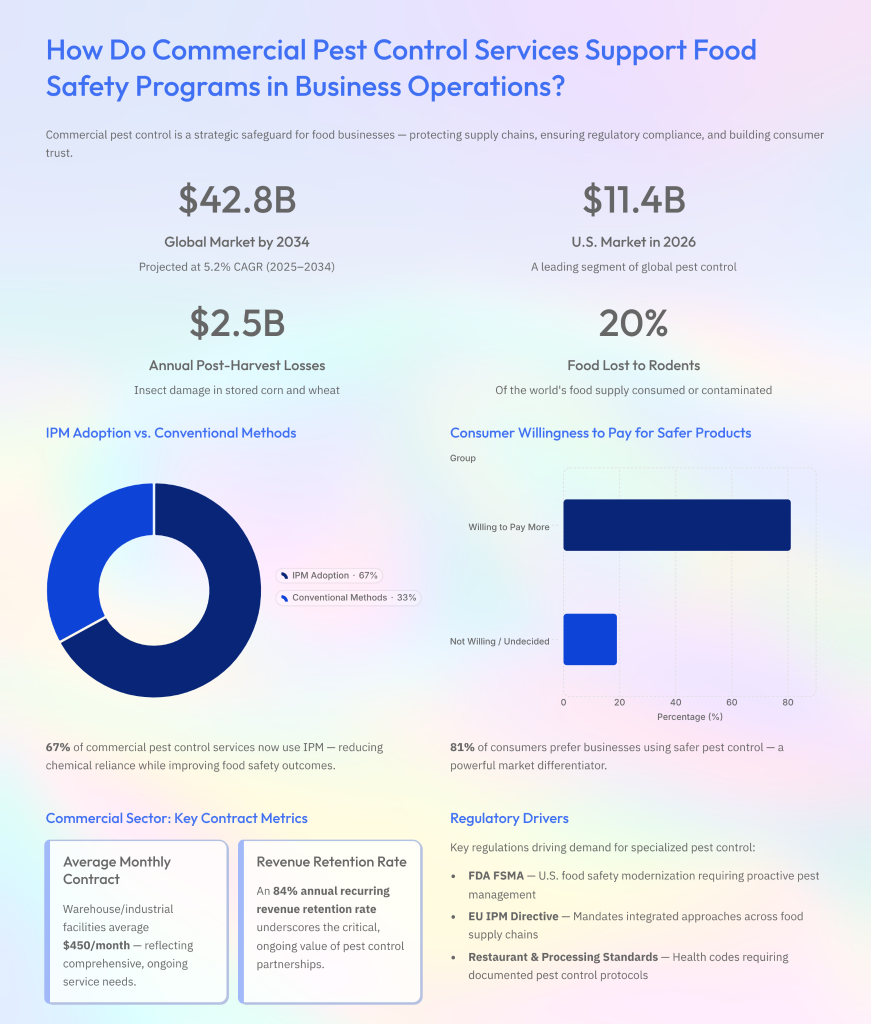
- Global Market Growth: The global pest control market is projected to reach USD $42.8 billion by 2034, with a steady 5.2% CAGR (2025-2034). The U.S. market alone was valued at USD $11.4 billion in 2026.
- (Chart Idea: Bar chart showing global market size projection from 2025-2034, with a distinct bar for the US market in 2026.)
- Economic Impact of Pests on Food: Insect damage in stored corn and wheat alone is estimated to cause up to USD $2.5 billion in post-harvest losses annually in the U.S. Rodents consume or contaminate approximately 20% of the world’s food supply.
- (Chart Idea: Infographic or pie chart illustrating the percentage of global food supply lost to rodents, alongside a bar chart showing annual post-harvest losses in the US.)
- Driving Force: Food Safety Regulations: Stringent regulations like the FDA Food Safety Modernization Act (FSMA) and the EU’s Integrated Pest Management Directive are major drivers for specialized pest control services in sectors like restaurants and food processing plants.
- (Chart Idea: A simple icon-based visual representing regulatory bodies and a growing arrow indicating increased demand for pest control services.)
- Adoption of Safer Practices:67% of commercial pest control services now adopt Integrated Pest Management (IPM) approaches. Furthermore, 81% of consumers are willing to pay more for pest control services that use safer products.
- (Chart Idea: A donut chart showing the adoption rate of IPM vs. conventional methods in commercial settings, and a separate bar chart illustrating consumer willingness to pay for safer products.)
- Commercial Sector Dominance: While the overall market is split, commercial pest control services are crucial for businesses, with an average commercial pest contract for warehouse/industrial facilities costing USD $450/month and an 84% annual recurring revenue retention rate.
- (Chart Idea: A stacked bar chart showing the commercial vs. residential revenue split, with a call-out box for the average commercial contract value and retention rate.)
Sources: Scayled Data (May 2026), Dataintelo (May 2026), Space Coast Daily (Oct 2025), Gitnux (Feb 2026), WifiTalents (Feb 2026).
FAQs
1. Why is pest control important for food safety programs?
Pest control helps prevent contamination, protects food products, reduces health risks, and supports compliance with food safety regulations.
2. What pests are most commonly found in food facilities?
Common pests include rodents, cockroaches, flies, beetles, moths, and other stored product insects that can contaminate food and storage areas.
3. How does Integrated Pest Management support food safety?
Integrated Pest Management focuses on prevention, monitoring, sanitation, exclusion, and targeted control measures to reduce pest risks while supporting food safety objectives.
4. What role do inspections play in food safety pest management?
Regular inspections help identify entry points, detect pest activity early, evaluate facility conditions, and prevent infestations before they become serious problems.
5. How do commercial pest control services contribute to audit readiness?
Professional pest management programs provide inspection reports, monitoring records, corrective action documentation, and compliance support that can assist businesses during food safety audits.