
How Does a Termite Control Company Determine the Source of a Termite Infestation?
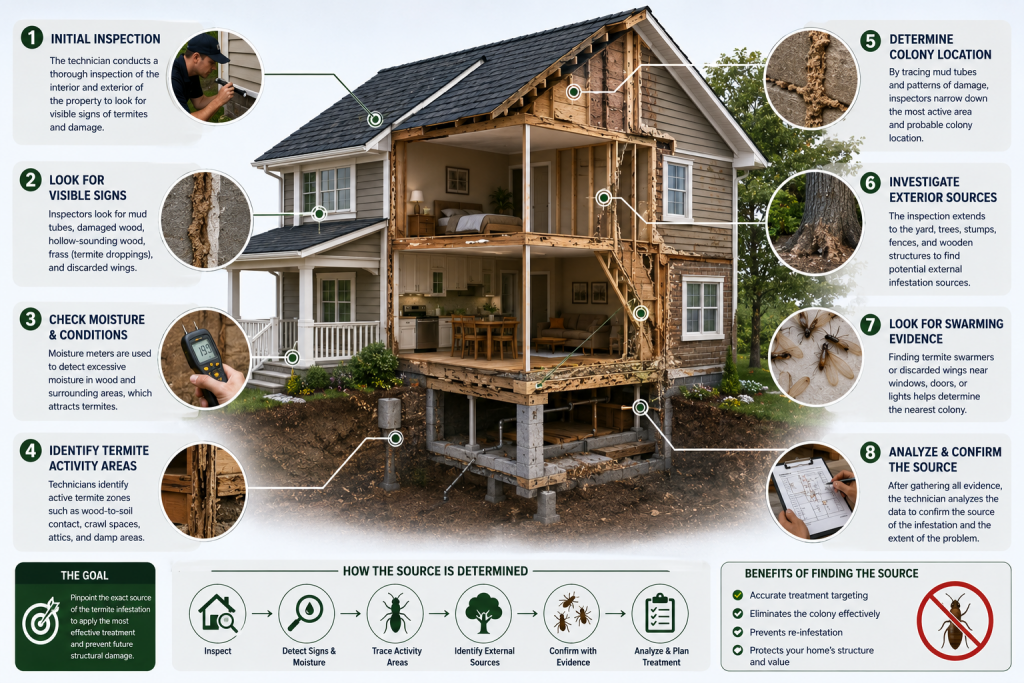
Termites are among the most destructive household pests because they often remain hidden until noticeable damage has already occurred. While many people focus on eliminating termites, professionals know that identifying where the infestation began is just as important. A termite control company pembroke pines typically follows a detailed inspection process to determine the source before recommending any treatment.
Companies such as EntoLogic Pest Solutions understand that every property is different. Factors such as moisture, landscaping, building materials, and construction style all influence where termites establish colonies. By identifying the origin of the infestation, professionals can better understand why termites entered the structure in the first place.
Why Finding the Source Matters
Treating visible termite activity without locating its source is similar to fixing a leaking ceiling without repairing the roof. The visible damage may disappear temporarily, but the underlying issue remains.
Finding the source helps professionals:
- Understand how termites entered the structure.
- Identify conditions supporting colony growth.
- Detect hidden areas of damage.
- Reduce the likelihood of recurring infestations.
How Termites Invade Properties?
Termites rarely appear randomly. They are attracted by environmental conditions that make survival easier.
Common Entry Points Around a Building
Subterranean termites commonly enter through:
- Foundation cracks
- Utility pipe openings
- Expansion joints
- Gaps beneath doors
- Wood that touches the soil
These small openings provide concealed pathways into the building.
Environmental Conditions That Attract Termites
Several conditions naturally encourage termite activity, including:
- Excess soil moisture
- Mulch placed against foundations
- Decaying tree stumps
- Firewood stacked near buildings
- Poor drainage
Each of these creates favorable conditions for termite colonies.
The First Step in a Professional Inspection
A thorough inspection begins long before damaged wood is examined.
Exterior Property Assessment
Professionals first inspect the outside because many termite infestations originate there.
They evaluate:
- Foundation walls
- Landscaping
- Wooden fences
- Deck supports
- Tree roots
- Crawl spaces
- Exterior siding
These observations often reveal the first clues about colony location.
Interior Inspection Process
Inside the property, inspectors carefully examine:
- Baseboards
- Window frames
- Door frames
- Flooring
- Ceiling beams
- Crawl spaces
- Attics
- Utility rooms
Instead of looking only for insects, they search for evidence that explains how termites reached these areas.
Signs That Help Identify the Infestation Source
Professional inspectors rely on multiple indicators rather than a single piece of evidence.
Mud Tubes and Shelter Tunnels
Subterranean termites build mud tubes to travel safely between the soil and wooden structures while maintaining moisture.
Following these tubes often helps inspectors trace termite movement back toward the colony.
Damaged Wood and Hollow Sounds
Wood may appear perfectly normal from the outside while being extensively damaged internally.
Inspectors gently tap wooden surfaces, listening for hollow sounds that indicate internal galleries.
Swarmers and Discarded Wings
Flying termites, known as swarmers, emerge when colonies mature.
Discarded wings near windows, doors, or light fixtures often suggest nearby nesting locations and help narrow the search area.
Moisture as a Key Indicator
Moisture is one of the strongest predictors of termite activity.
Plumbing Leaks and Drainage Problems
Inspectors frequently check:
- Leaking pipes
- Overflowing gutters
- Poor yard grading
- Standing water
- Faulty irrigation systems
Persistent moisture creates ideal conditions for subterranean termites.
Poor Ventilation and Humidity
High humidity inside crawl spaces or basements keeps wood damp for extended periods.
Poor airflow often contributes to conditions that termites prefer.
Identifying the Type of Termite
Not every infestation follows the same pattern. Determining the species helps identify where the infestation originated.
Subterranean Termites
Subterranean termites typically live underground and build mud tubes between the colony and food sources.
Finding soil contact usually helps inspectors locate their point of entry.
Drywood Termites
Drywood termites do not require soil contact.
Instead, they infest dry wooden materials directly and often enter through exposed wood, roof openings, or unfinished lumber.
Recognizing the termite species allows inspectors to understand the colony’s likely origin.
How Technology Improves Inspections
Modern inspections often combine experience with specialized tools.
Moisture Meters
Moisture meters identify damp wood hidden behind finished surfaces.
Elevated moisture readings frequently point toward conditions that support termite activity.
Thermal Imaging and Inspection Tools
Thermal imaging cameras can detect subtle temperature differences that may indicate hidden moisture or termite movement behind walls.
Although visual inspection remains essential, these tools provide valuable supporting information during complex investigations.
Structural Risk Factors Professionals Evaluate
Inspectors also evaluate building conditions that may increase the likelihood of infestation, including:
- Wood-to-soil contact
- Cracked foundations
- Aging construction materials
- Poor drainage systems
- Inadequate ventilation
- Untreated wooden structures
- Landscaping that traps moisture
These factors help explain why termites selected one property over another.
Seasonal Influences on Termite Activity
Weather influences termite behavior throughout the year.
Warm temperatures and increased rainfall often encourage colony expansion and swarming activity. During drier periods, termites may move deeper into the soil while continuing to access structures through protected underground tunnels.
Understanding seasonal patterns helps inspectors interpret signs that might otherwise be overlooked.
Why Accurate Source Detection Prevents Future Problems
Finding the origin of a termite infestation provides valuable information beyond immediate damage.
A careful inspection reveals:
- Hidden colony pathways
- Structural vulnerabilities
- Moisture issues
- Entry points
- Environmental conditions encouraging termite activity
This comprehensive understanding supports long-term property protection by addressing the factors that allowed termites to establish themselves.
EntoLogic Pest Solutions Serving the SilverLakes Community and Beyond in Pembroke Pines
EntoLogic Pest Solutions is dedicated to serving the diverse needs of the local community of Pembroke Pines, including individuals residing in neighbourhoods like SilverLakes. With its convenient location near landmarks such as the Panther Run Elementary School and major intersections like Pines Blvd and NW 172nd Ave (coordinates: 26.0102129, -80.3726066), we offer termite control company services.
Get termite control company services at SilverLakes Now
Call Us or Contact Us: +1 469-425-8406
Navigate from SilverLakes to EntoLogic Pest Solutions Now
<iframe src=”https://www.google.com/maps/embed?pb=!1m18!1m12!1m3!1d3668654.520139113!2d-84.12392658435402!3d26.109674864314222!2m3!1f0!2f0!3f0!3m2!1i1024!2i768!4f13.1!3m3!1m2!1s0x87c96e52feffc22d%3A0xe87b7b7de372420f!2sEntoLogic%20Pest%20Solutions!5e0!3m2!1sen!2sus!4v1784107136935!5m2!1sen!2sus” width=”600″ height=”450″ style=”border:0;” allowfullscreen=”” loading=”lazy” referrerpolicy=”strict-origin-when-cross-origin”></iframe>
Determining the source of a termite infestation requires much more than locating damaged wood. Professionals examine the property’s interior and exterior, evaluate moisture conditions, identify termite species, inspect structural vulnerabilities, and use specialized tools to trace termite activity back to its origin. A termite control company in Pembroke Pines follows a systematic inspection process because understanding where termites came from is essential for understanding how the infestation developed. Companies such as EntoLogic Pest Solutions recognize that successful termite management begins with careful investigation, accurate identification, and a complete assessment of the conditions that support termite activity.
FAQs
1. Why is finding the source of a termite infestation important?
Locating the source helps determine how termites entered the property, where the colony may be located, and what environmental conditions contributed to the infestation.
2. What is the most common sign inspectors use to trace termite activity?
Mud tubes are one of the strongest indicators because they often connect subterranean termite colonies to the structure they are feeding on.
3. Can termites remain hidden for years?
Yes. Termites frequently cause significant internal damage before visible signs appear, making routine inspections valuable.
4. Does moisture always indicate termites?
No. Moisture alone does not confirm termites, but damp conditions greatly increase the likelihood of termite activity and are carefully evaluated during inspections.
5. Do different termite species require different inspection methods?
Yes. Subterranean and drywood termites behave differently, so inspectors adjust their investigation based on the species and the evidence found during the inspection.