
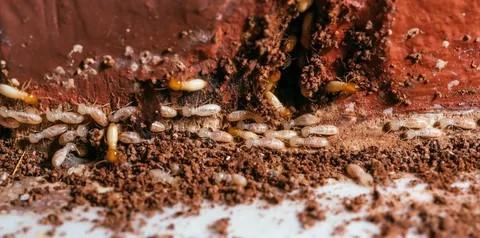
How Can Regular Home Maintenance Support Long-Term Termite Control and Prevention?
Termite prevention is not limited to treating an active infestation. What happens around a home every month can also affect how attractive that property is to termites. Moisture, damaged wood, poor drainage, cracks, and neglected exterior areas can create conditions that make termite activity harder to detect and manage.
Regular maintenance works much like closing small gaps in a boat before they become major leaks. A single maintenance issue may seem harmless, but several problems occurring together can create a much more favorable environment for termites.
For homeowners researching termite control Pembroke Pines, understanding this connection is especially useful. Routine maintenance can reduce conditions associated with termite activity while making potential warning signs easier to spot. Companies such as EntoLogic Pest Solutions can also use information from inspections to identify areas where maintenance and termite prevention overlap.
Why Home Maintenance Matters for Termite Prevention
A well-maintained home is easier to inspect, easier to monitor, and less likely to contain obvious conditions that can support termite activity.
Maintenance does not create an invisible shield around a property. Instead, it helps address factors such as excess moisture, deteriorating wood, blocked drainage, and inaccessible areas that may complicate termite detection.
How Termites Find Vulnerable Homes
Termites can take advantage of conditions that provide access to wood and suitable moisture. Depending on the species and situation, they may enter through soil near foundations, cracks, structural openings, or other concealed routes.
That means prevention involves more than simply looking for insects. The condition of the property matters, too.
Why Small Maintenance Problems Can Become Entry Points
A leaking pipe, damaged window frame, or clogged gutter may not seem related to termites. Over time, however, persistent moisture can contribute to wood deterioration and create conditions that deserve closer inspection.
The goal is to address these problems before they remain unnoticed for months.
1. Control Moisture Around the Home
Moisture management is one of the most practical parts of termite-conscious home maintenance. Water should not continually accumulate around structural wood or the foundation.
Fix Plumbing Leaks Promptly
Leaking pipes, faucets, air-conditioning components, and drains can introduce unwanted moisture into areas that are otherwise difficult to inspect.
Check under sinks, around bathrooms, near water heaters, and around HVAC equipment. Even a slow leak deserves attention if it continues long enough to keep nearby materials damp.
Check Hidden Moisture Sources
Some moisture problems are not immediately visible. Look for musty odors, staining, peeling finishes, swollen wood, or unexplained dampness.
These signs do not automatically mean termites are present. They indicate that the area should be investigated and the underlying moisture problem corrected.
Improve Drainage Around the Foundation
Water should drain away from the home’s foundation rather than repeatedly collecting beside it.
Check the slope of surrounding areas, inspect drainage paths, and make sure landscaping does not direct water toward the structure. Poor drainage can keep soil and nearby materials unnecessarily wet.
2. Keep Wood and Soil Properly Separated
Wood that remains in direct contact with soil deserves particular attention. Soil can conceal termite activity, making visual detection more difficult.
Why Soil-to-Wood Contact Creates Risk
Structural wood, fence components, steps, posts, or other wooden materials that touch soil can provide a potential pathway for termite activity.
During maintenance, look closely at places where landscaping, mulch, soil, or ground-level materials meet the home.
Inspect Siding, Posts, and Structural Wood
Examine lower sections of exterior wood for softness, deterioration, staining, or other unusual changes.
Do not assume every damaged piece of wood has termite damage. Weather, age, water, fungi, and other factors can produce similar symptoms. The important point is to investigate unexplained deterioration rather than ignoring it.
3. Maintain Gutters and Downspouts
Gutters do more than protect exterior walls from rainwater. They also help control where water lands around the property.
Prevent Water From Collecting Near the Foundation
Leaves, dirt, and other debris can restrict water flow. A blocked gutter may overflow against siding or near the foundation.
Clean gutters periodically and check whether downspouts discharge water far enough away from the structure. Extensions may be useful where existing drainage does not adequately move water away.
4. Repair Cracks and Damaged Exterior Areas
Routine exterior inspections can reveal deteriorated areas before they become larger maintenance concerns.
Inspect Foundation and Masonry Cracks
Small cracks can occur for many reasons, including normal settling and changes in building materials. Not every crack indicates a termite problem.
However, unusual or expanding cracks should be documented and evaluated appropriately, particularly when they occur alongside moisture problems or other signs of structural deterioration.
Seal Areas Where Utilities Enter the Home
Pipes, cables, vents, and other utilities create openings through walls and foundations. During maintenance, inspect these areas for deterioration or gaps.
Proper sealing can improve moisture management and reduce unnecessary openings around the structure.
5. Remove Wood Debris and Organic Material
Unused lumber, fallen branches, cardboard, and other organic debris should not accumulate against the house.
Store Firewood Away From the House
Firewood is particularly important because it contains wood that can potentially harbor insects. Store it off the ground where practical and keep it separated from the home’s exterior.
Avoid stacking firewood directly against walls, doors, or foundations. Periodically inspect stored wood for signs of deterioration or insect activity.
6. Maintain the Roof and Attic
Termite prevention should not stop at ground level.
Watch for Roof Leaks and Wood Damage
Roof problems can introduce moisture into attics, ceilings, insulation, and structural components. A damaged roof should therefore be repaired promptly.
During routine maintenance, pay attention to water stains, damp materials, damaged rafters, and areas where ventilation appears inadequate. These observations can help identify moisture problems before they become more extensive.
7. Inspect Crawl Spaces, Basements, and Other Hidden Areas
Hidden spaces can be easy to overlook during everyday cleaning and maintenance.
Why Hidden Areas Deserve Extra Attention
Basements, crawl spaces, utility areas, and enclosed structural spaces may contain plumbing, wood, insulation, and other materials that are not regularly examined.
Use routine maintenance as an opportunity to look for moisture, damaged wood, mud tubes, discarded wings, or other unusual evidence. When an area is difficult or unsafe to access, a qualified professional should handle the inspection.
8. Schedule Routine Termite Inspections
Home maintenance and professional inspections serve different purposes. Maintenance addresses property conditions, while an inspection can provide a more focused assessment for evidence of termite activity or conditions associated with it.
What a Professional Inspection Can Reveal
An inspection may identify concealed activity, damaged wood, moisture-related concerns, potential entry points, or areas that deserve monitoring.
This is particularly valuable because termites can remain hidden for extended periods. Finding a problem early may provide more options for addressing it than discovering significant damage later.
How Home Maintenance Supports Long-Term Termite Control

Long-term prevention works best when maintenance becomes a routine rather than a one-time project.
Maintenance Works Best as Part of a Larger Prevention Strategy
Think of termite prevention as several connected layers. Moisture control is one layer. Drainage is another. Wood maintenance, inspections, sanitation, and professional monitoring add additional layers.
If one layer fails, the others can still provide useful protection and help reveal problems sooner.
For homeowners considering termite control in Pembroke Pines, this broader approach is important. Termite management is not simply about eliminating visible insects; it also involves understanding the conditions surrounding the property and monitoring for changes.
Seasonal Home Maintenance for Termite Prevention
Different seasons can expose a home to different maintenance problems.
Spring and Summer Checks
Inspect gutters, drainage, exterior wood, landscaping, roof areas, and plumbing after periods of heavy rain.
Warm and humid conditions can also make moisture-related problems more noticeable, so check areas that remain damp longer than expected.
Fall and Winter Checks
Remove accumulated leaves and organic debris, check downspouts, inspect stored firewood, and look for areas where water can collect.
Even when termite activity is not obvious, maintaining the property throughout the year makes future inspections easier.
Common Maintenance Mistakes That Increase Termite Risk
Several simple mistakes can undermine otherwise good maintenance habits:
- Allowing leaks to continue because they appear minor.
- Leaving firewood directly against exterior walls.
- Allowing soil or landscaping materials to cover lower structural areas.
- Ignoring damaged or rotting wood.
- Letting gutters remain clogged.
- Directing downspouts toward the foundation.
- Neglecting crawl spaces and other hidden areas.
- Assuming a home is termite-free simply because no termites are visible.
The common thread is neglect. Termite prevention often depends on noticing small changes before they become difficult to investigate.
EntoLogic Pest Solutions Serving the Town Gate Community and Beyond in Pembroke Pines
EntoLogic Pest Solutions is dedicated to serving the diverse needs of the local community of Pembroke Pines, including individuals residing in neighbourhoods like Town Gate. With its convenient location near landmarks such as the FULLANA PROPERTY GROUP INC and major intersections like NW 168th Ave and NW 7th St (coordinates: 26.013227, -80.3694844), we offer termite control services.
Get termite control services at Town Gate Now
Call Us or Contact Us: +1 954-955-3031
Navigate from Town Gate to EntoLogic Pest Solutions Now
Termite Prevention in Numbers: What the Data Shows
The statistics behind termite damage explain why steady home maintenance matters so much:
- Annual damage: Termites cause an estimated $5 billion in property damage in the United States every year, according to the National Pest Management Association (NPMA).
- Homes affected: Roughly 600,000 U.S. homes sustain termite damage each year, and much of it stays hidden until it becomes expensive to repair.
- Insurance gap: Standard homeowners insurance generally does not cover termite damage or removal, so prevention and early detection carry the full financial weight.
- Colony size: A mature subterranean colony can contain from about 60,000 to more than 1,000,000 termites feeding around the clock (University of Florida IFAS Extension).
- Moisture link: Subterranean termites depend on moisture and soil contact — plumbing leaks, poor drainage, and damp wood near a foundation are among the strongest attractants a home can offer.
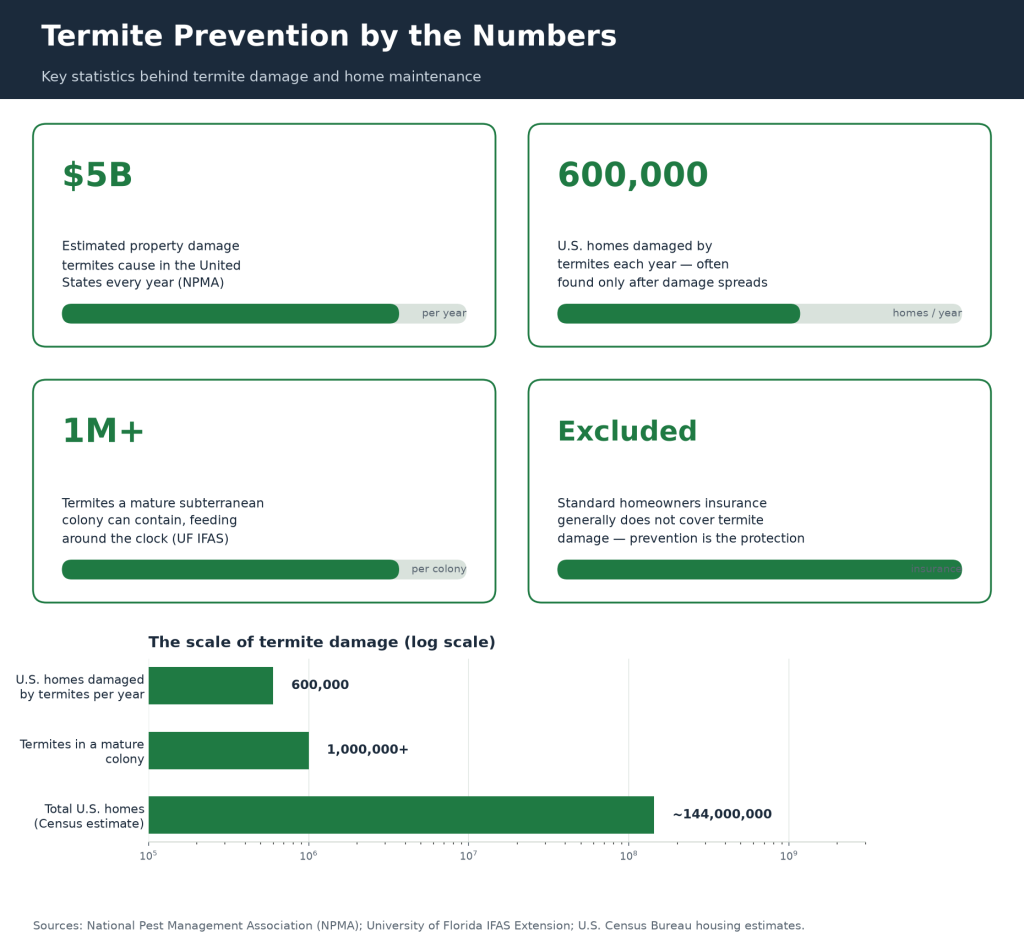
Measured against these numbers, routine maintenance is not cosmetic. Fixing leaks, managing moisture, and inspecting hidden areas removes the exact conditions colonies need to start.
Sources: National Pest Management Association (NPMA), termite damage estimates and insurance guidance; University of Florida IFAS Extension, subterranean termite biology; U.S. Census Bureau, housing unit estimates.
Regular home maintenance can play an important role in long-term termite prevention by reducing moisture problems, limiting favorable conditions, protecting vulnerable wood, improving drainage, and making warning signs easier to identify. It cannot guarantee that termites will never appear, but it can make the property easier to monitor and maintain. Combining consistent household maintenance with appropriate professional inspections gives homeowners a more complete way to approach termite control over time.
FAQs About Home Maintenance and Termite Prevention
1. Can regular home maintenance completely prevent termites?
No. Maintenance can reduce conditions that may contribute to termite problems, but it cannot guarantee complete prevention. Termites can enter properties through concealed pathways, so routine inspections remain useful.
2. How often should a home be checked for termite activity?
The appropriate frequency depends on the property, construction, environmental conditions, previous termite history, and other risk factors. Regular visual checks can be performed during normal maintenance, while professional inspections can provide a more detailed assessment.
3. Does moisture attract termites to a home?
Moisture can contribute to conditions that make some areas more suitable for termite activity, particularly when it is associated with damp or deteriorating wood. Fixing leaks and improving drainage are therefore sensible maintenance practices.
4. Should firewood be stored away from the house?
Yes. Keeping firewood away from the home’s exterior and off the ground where practical makes it easier to inspect and reduces direct contact between potentially infested wood and the structure.
5. Can maintenance help after termites have already been found?
Maintenance can help address conditions such as leaks, drainage problems, damaged wood, and access points, but it should not be considered a substitute for addressing an active termite infestation. Professional assessment can help determine what additional measures are appropriate.