
How Do Professional Termite Control Experts Locate Hidden Termite Colonies?
Finding a termite is usually much easier than finding the colony it came from. A few insects may appear near a window, along a wall, or around damaged wood, but that visible activity can represent only a small part of the problem.
Termites are built for staying hidden. They can move through soil, wood, wall cavities, foundations, and other protected spaces while remaining almost completely unnoticed. That is why professional termite inspections involve more than simply looking for insects.
Professionals such as those associated with EntoLogic Pest Solutions use a combination of visual clues, structural knowledge, moisture observations, damage patterns, and specialized inspection tools to understand where termite activity is coming from. The goal is not simply to find a termite. It is to piece together the evidence that reveals where the hidden activity is concentrated.
Why Hidden Termite Colonies Are Difficult to Find
Termites Often Stay Out of Sight
Termites spend much of their lives away from open areas. Subterranean termites, for example, commonly travel through soil and protected pathways before reaching wooden structures.
Drywood termites present a different challenge because colonies can exist directly inside wooden components. In either situation, the insects may be working behind the scenes while the homeowner sees little or nothing.
It is similar to seeing a small crack in a wall and wondering what is happening behind it. The visible sign gives you a clue, but not necessarily the complete story.
Why Visible Damage Does Not Show the Whole Problem
A damaged piece of wood does not automatically reveal where the colony is located. Termites may move from one area to another, and the most obvious damage may be where activity has been occurring for some time rather than where the colony originally established itself.
This makes patterns important. Inspectors look at where damage occurs, how it is distributed, whether the wood contains moisture, and whether other signs of activity appear nearby.
How Experts Start a Termite Colony Investigation
Reviewing Signs of Termite Activity
The inspection usually begins with visible evidence. This can include discarded wings, live termites, damaged wood, mud tubes, droppings, hollow-sounding wood, or small openings associated with termite activity.
No single sign tells the entire story. Instead, inspectors compare multiple observations to determine whether they point toward active termites and where those termites may be traveling.
Understanding the Building and Property
The structure itself provides important clues. Inspectors consider foundations, exterior walls, wooden framing, landscaping, plumbing areas, roof structures, crawl spaces, and other locations where termites might gain access or remain protected.
Moisture and Structural Conditions
Moisture deserves particular attention because damp conditions can make certain areas more attractive to termites and can also create conditions that contribute to wood deterioration.
Plumbing leaks, poor drainage, condensation, roof leaks, and moisture around foundations can therefore become useful pieces of the inspection puzzle.
How Termite Inspectors Trace Activity Back to the Colony
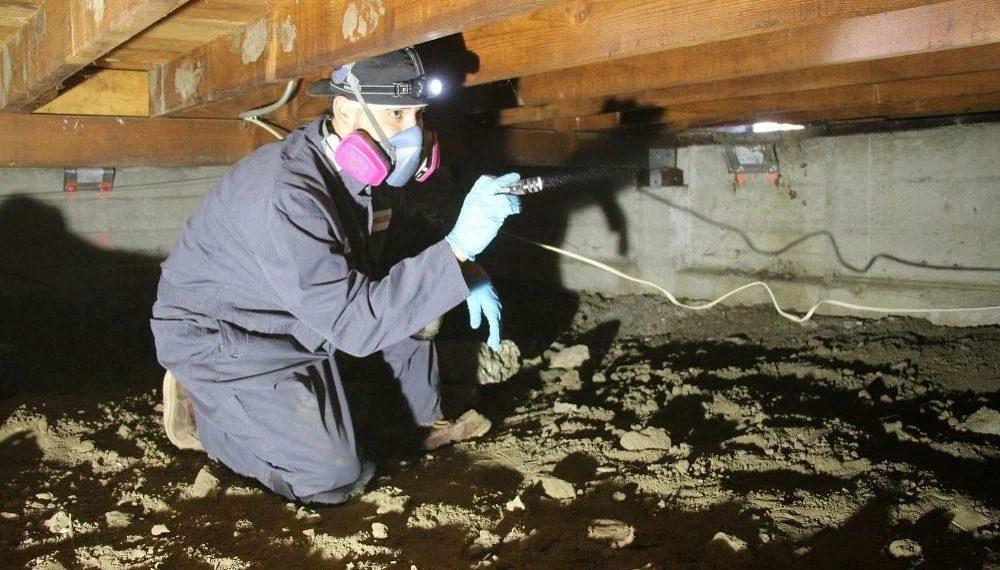
Following Mud Tubes and Shelter Tubes
Subterranean termites may create mud tubes that allow them to travel between soil and wooden structures while maintaining protection from environmental conditions.
An inspector can follow these pathways to determine where termites may be entering a building. A tube near a foundation, for example, can provide a much stronger clue about termite movement than an isolated damaged board inside the house.
Examining Wood Damage Patterns
Wood damage can also reveal how termites have been moving. Professionals examine areas where wood has been hollowed, weakened, or altered.
The location and pattern of damage may help distinguish termite activity from other causes of deterioration. This matters because moisture damage, fungal decay, carpenter ants, and physical damage can sometimes look confusingly similar.
Checking Soil and Foundation Areas
For subterranean termites, the soil surrounding a structure can be an important part of the investigation.
Inspectors may examine foundation edges, expansion joints, cracks, utility penetrations, and other potential access points. The objective is to understand how termites could be traveling between their underground environment and the structure.
Tools Used to Locate Hidden Termites
Moisture Meters
Moisture meters help identify areas with elevated moisture levels inside or around building materials. While moisture does not prove termite activity, unusual readings can help inspectors identify locations that deserve closer examination.
Infrared Inspection
Infrared equipment can sometimes identify temperature differences associated with concealed conditions. It does not magically reveal termites through a wall, but it can help highlight areas that warrant additional investigation.
This is important because technology works best as part of a broader inspection rather than as a replacement for professional judgment.
Acoustic and Detection Devices
Some termite inspections may use acoustic or specialized detection equipment to identify activity that is difficult to observe directly.
These tools can be useful when termites are concealed inside wood or structural cavities. However, readings still need to be interpreted in context. A device can provide evidence, but the surrounding conditions help determine what that evidence means.
Targeted Visual Inspection
Despite advances in technology, direct inspection remains fundamental. Professionals examine accessible structural components, joints, cracks, wood surfaces, and other likely activity zones.
Think of specialized equipment as a flashlight that reveals another layer of information. It makes the investigation more effective, but the inspector still has to understand what they are seeing.
How Different Termite Species Affect the Search
Subterranean Termites
Subterranean termites typically maintain connections with soil or other protected environments. Their inspection often focuses on foundations, soil conditions, moisture, shelter tubes, and potential entry points.
Because the colony may be underground, finding termites inside a building does not necessarily mean the colony itself is inside the structure.
Drywood Termites
Drywood termites can establish colonies within dry wood. That changes the inspection process because activity may be concealed inside roof timbers, framing, furniture, or other wooden components.
Small piles of drywood termite droppings, known as frass, can sometimes provide a clue to activity hidden inside wood.
Dampwood Termites
Dampwood termites are associated with moist wood. When these termites are suspected, inspectors pay close attention to areas affected by water intrusion, leaks, decay, or persistent dampness.
Understanding the likely termite species helps determine where an inspector should spend the most time looking.
Why Termite Colony Location Matters
Finding the Source of Activity
Locating where termites are entering or traveling through a structure provides valuable information about the infestation.
For example, activity inside an interior wall could potentially be connected to an exterior foundation pathway. Without tracing the evidence, treating only the visible area may fail to address the larger pattern of activity.
Distinguishing Active From Old Damage
Not every damaged board means termites are currently feeding there. Wood can retain evidence of previous activity long after termites have moved elsewhere.
Professionals therefore look for indicators that help determine whether the activity is current. Live insects, fresh droppings, new shelter tubes, and other recent signs can be more meaningful than old structural damage alone.
Common Places Hidden Termite Colonies May Be Found
Wall Voids and Structural Cavities
Walls can provide protected routes for termites. Plumbing penetrations, utility openings, framing connections, and other concealed spaces may allow activity to remain unnoticed.
Because these areas are difficult to see directly, inspectors rely on surrounding evidence to determine where further investigation may be appropriate.
Attics, Roof Structures, and Eaves
Wooden roof components can provide hiding places for certain termite species, particularly when moisture or other favorable conditions are present.
Inspectors may examine rafters, trusses, roof sheathing, eaves, and other accessible wooden components for damage or other evidence.
Basements, Crawl Spaces, and Foundations
These areas can be especially important when subterranean termites are suspected. Foundation walls, wooden supports, soil contact, moisture, cracks, and concealed entry points can all provide useful clues.
How Professional Termite Control Pembroke Pines Inspections Differ From Basic Checks
Combining Multiple Signs
A basic inspection might focus on whether termites are visible. A professional investigation goes further by asking how the evidence connects.
For someone researching professional termite control Pembroke Pines, this distinction is important. Effective termite detection is less like checking a single box and more like assembling a puzzle. One clue may mean very little by itself, while several matching clues can reveal a clear activity pattern.
Building a Complete Activity Map
Professionals may document where termites, damage, moisture, tubes, or other evidence occur throughout the property. Mapping these observations helps identify relationships between different areas. It can show whether several signs appear to be connected or whether separate areas require individual attention.
What Homeowners Should Know Before an Inspection
Why One Visible Termite Does Not Reveal the Whole Colony
Seeing one termite is not the same as locating its colony. Worker termites can travel away from the main colony while searching for food and suitable conditions.
That means the insect you see may be closer to the end of the trail than the beginning.
Why Delayed Inspection Can Complicate Detection
Termite activity can remain unnoticed for extended periods because termites often work inside concealed spaces. Over time, damage can become more extensive while some visible evidence may change or disappear.
An inspection is therefore most useful when it considers both current signs and the structural conditions that could support continued activity.
EntoLogic Pest Solutions Serving the SilverLakes Community and Beyond in Pembroke Pines
EntoLogic Pest Solutions is dedicated to serving the diverse needs of the local community of Pembroke Pines, including individuals residing in neighbourhoods like SilverLakes. With its convenient location near landmarks such as the CVS and major intersections like NW 172nd Ave and Pines Blvd (coordinates: 26.008727, -80.3769956), we offer professional termite control services.
Get professional termite control services at SilverLakes Now
Call Us or Contact Us: +1 469-425-8406
Navigate from SilverLakes to EntoLogic Pest Solutions Now
Locating a hidden termite colony requires more than spotting insects. Professionals study termite behavior, structural pathways, wood damage, moisture conditions, soil, foundations, and other evidence to determine how activity is moving through a property. Specialized tools can add another layer of information, but the strongest inspections combine technology with careful observation and knowledge of termite biology. Understanding that process helps explain why a thorough termite investigation can uncover problems that are not immediately visible. A professional termite control expert in Pembroke Pines can easily handle all these termites.
FAQs About Hidden Termite Colonies
Can termites live inside walls without being visible?
Yes. Termites can travel through concealed structural spaces and may remain inside wood or wall cavities without appearing in open areas. Evidence around the surrounding structure can provide clues about hidden activity.
How do professionals know if termite damage is active?
They look for current evidence such as live termites, fresh shelter tubes, recent droppings, and other indicators. They also consider the condition and location of the damage rather than assuming every damaged area is currently infested.
Can moisture help experts locate termite activity?
Moisture can provide useful information during an inspection. Elevated moisture may identify areas that deserve closer attention, although moisture alone does not confirm termite activity.
Do all termite species build visible mud tubes?
No. Mud tubes are strongly associated with subterranean termites. Other termite species, such as drywood termites, can live inside wood without constructing the same type of external shelter tubes.
Can a termite inspection find the entire colony?
An inspection can identify evidence that helps determine where termite activity originates or how termites are accessing a structure, but the colony itself may remain concealed, particularly when it is underground or deep within structural materials.