
How Do Pest Control Services Protect Your Home from Infestations?
A pest infestation can start quietly. A few ants around the kitchen, an occasional cockroach in the bathroom, or scratching sounds behind a wall may seem like minor problems. But pests rarely enter a home without a reason. They are usually looking for food, water, shelter, warmth, or a safe place to reproduce.
This is where professional pest management becomes important. Pest control services do more than remove insects or rodents that are already visible. A well-planned approach looks at how pests entered the property, where they are hiding, what is attracting them, and what can be done to reduce the chance of their return.
From detailed inspections and entry-point identification to targeted treatments and preventive recommendations, pest management uses several layers of protection. Understanding these methods can help homeowners recognize problems earlier and make smarter decisions about protecting their properties.
Why Pest Infestations Are More Than a Nuisance
Pests can affect a home in several ways. Some contaminate food and surfaces, while others damage wood, insulation, wiring, stored materials, or structural components. Rodents can chew through various materials, while termites and other wood-destroying insects can gradually affect wooden structures.
There is also the issue of reproduction. One pest sighting may not represent the entire problem. Cockroaches, ants, rodents, and other household pests can establish hidden populations in areas that are difficult to see.
That is why simply removing the pest you can see may not solve the underlying issue. Effective pest management focuses on the larger picture.
Common Signs of a Pest Problem
Recognizing early warning signs can make pest problems easier to manage. Some common indicators include:
- Repeated sightings of insects or rodents
- Droppings near food, cabinets, or appliances
- Gnaw marks on materials or packaging
- Damaged wood
- Unusual odors
- Nesting materials
- Shed insect skins
- Small holes or entry points
- Scratching or movement sounds inside walls
- Grease or rub marks along frequently used pathways
A single insect does not automatically mean there is a serious infestation. However, repeated activity or several signs appearing together should not be ignored.
Droppings, Damage, and Unusual Odors
Pest evidence can sometimes reveal more than the pest itself. Rodent droppings may indicate areas where rodents regularly travel or feed. Insect droppings, shed skins, damaged packaging, and nesting material can similarly point toward hidden activity.
Odors can also provide clues. Some infestations produce noticeable musty, stale, or unpleasant smells, especially when pests are concentrated in enclosed areas.
The location of these signs matters. Finding evidence beneath a sink, behind an appliance, inside a cabinet, or near a wall opening can help identify where an infestation may be developing.
How Pest Control Services Prevent Infestations
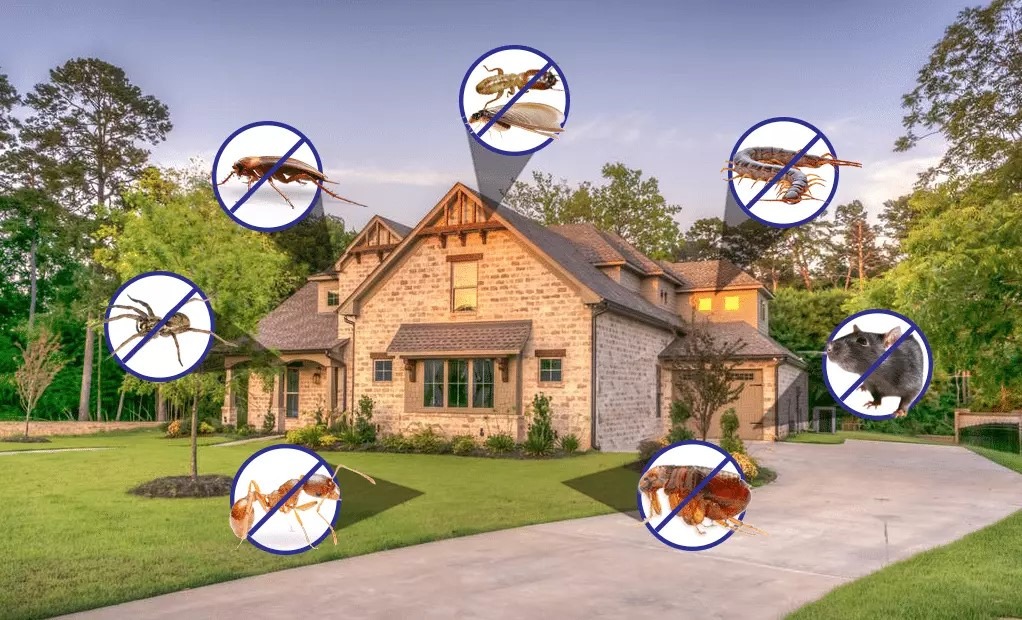
Effective pest management generally combines several methods instead of relying on a single treatment. The process often begins with identifying the pest and understanding the property’s conditions.
Professionals may look at the building’s exterior, interior rooms, landscaping, moisture sources, food storage areas, and potential entry points. This helps create a more complete picture of why pests are present.
Prevention is especially important because treating an infestation without addressing its cause can lead to recurring activity.
Property Inspection and Pest Identification
Inspection is one of the most important parts of pest management. Different pests behave differently, so accurate identification helps determine the appropriate control strategy.
An inspection may involve checking kitchens, bathrooms, garages, attics, crawl spaces, storage areas, wall openings, foundations, windows, doors, and exterior areas.
For example, an ant problem may require locating a colony or identifying an entry route. Rodent activity may require checking gaps around pipes, vents, doors, and foundations. Wood-destroying insects may require closer examination of wooden components.
Correct identification prevents homeowners from relying on the wrong treatment for the wrong pest.
Finding Entry Points and Vulnerable Areas
Pests are remarkably good at finding weaknesses in a structure. A small crack, damaged screen, gap around a pipe, or opening beneath a door can provide access.
During pest management, identifying these vulnerabilities is important because eliminating pests inside the home does not necessarily stop new pests from entering.
Cracks, Gaps, Doors, and Windows
Common entry points include:
- Cracks around foundations
- Gaps beneath doors
- Damaged window screens
- Openings around plumbing
- Utility-line penetrations
- Garage-door gaps
- Roof and vent openings
- Damaged exterior seals
Sealing these areas can make the structure less accessible to insects and rodents.
Even a simple door sweep or repaired screen can remove an easy pathway. Larger structural openings may require more extensive maintenance.
Moisture and Food Sources
Pests need resources to survive. Food crumbs, leaking plumbing, standing water, damp wood, overflowing trash, pet food, and poorly maintained drainage can all contribute to pest activity.
Moisture is particularly important. Leaks beneath sinks, condensation around appliances, clogged gutters, and water collecting near foundations can create attractive conditions.
Reducing these resources is a major part of prevention. In simple terms, the less welcoming the environment is, the harder it becomes for pests to establish themselves.
Targeted Pest Treatment Methods
Once a pest has been identified and the conditions contributing to the problem are understood, treatment can be selected accordingly.
The method depends on the species, infestation level, location, and characteristics of the property. Some situations may require monitoring, while others may require targeted applications or a combination of control techniques.
Baits and Traps
Baits and traps can play an important role in pest management. Baits may be used for certain insects or rodents because they can target pests based on their feeding behavior.
Traps can also help monitor or control specific pest populations. Placement matters, though. A trap located away from a pest’s normal travel route may accomplish very little.
Understanding where pests feed, hide, and move is therefore just as important as selecting the control device itself.
Liquid and Barrier Treatments
Certain pest problems can be managed using carefully selected liquid treatments or barrier applications. These may be used around specific areas where pests enter or travel.
Exterior applications can sometimes help reduce pest pressure before insects enter the building. Interior treatments may be considered when activity has already moved indoors.
Treatment should always be appropriate for the pest and applied according to product requirements. More treatment does not automatically mean better pest control.
Integrated Pest Management
Integrated Pest Management, commonly known as IPM, takes a broader approach to pest prevention.
Instead of relying entirely on pesticides, IPM combines several strategies, including:
- Inspection
- Pest identification
- Monitoring
- Sanitation
- Exclusion
- Habitat modification
- Targeted treatment
Think of it like fixing both a leaking roof and the bucket underneath it. Removing the water from the bucket helps temporarily, but repairing the leak addresses the source.
The same principle applies to pest control. Removing visible pests is useful, but reducing the conditions that attract them provides longer-term protection.
How Pest Control Protects Different Areas of Your Home
Different areas of a house create different pest risks. A kitchen offers food and water. A bathroom provides moisture. An attic can provide shelter. A garage may contain clutter and direct access to the outdoors.
Understanding these differences allows prevention measures to be more specific.
Kitchen and Food Storage Areas
Kitchens are attractive to many household pests because food is readily available.
Crumbs, spills, open food packages, pet food, garbage, and moisture around plumbing can all contribute to pest activity.
Keeping food in sealed containers, cleaning surfaces regularly, fixing plumbing leaks, and removing garbage promptly can reduce these opportunities.
Cabinets and spaces behind appliances also deserve attention because pests may use these quiet areas as hiding places.
Bedrooms, Living Areas, and Bathrooms
Pests can spread beyond kitchens and storage areas. Insects may travel through wall voids, flooring gaps, vents, furniture, and other pathways.
Bathrooms can be attractive to moisture-loving pests because of plumbing and humidity. Bedrooms and living rooms may become affected when pests move from another part of the structure.
Regular cleaning helps, but inspection is also useful when activity continues despite normal household maintenance.
Why Local Conditions Matter in Pest Prevention
Pest activity is influenced by the environment surrounding a home. Temperature, rainfall, humidity, vegetation, drainage, construction, and seasonal changes can all affect pest behavior.
Warm environments can support pest activity for extended periods. Moist conditions can also create favorable habitats for certain insects and other pests.
That means pest prevention should not focus exclusively on what happens inside the house. The exterior environment matters too.
Pest Activity in Pembroke Pines
Homes in Pembroke Pines can experience pest pressures associated with warm weather, humidity, vegetation, moisture, and outdoor pest habitats.
Landscaping close to the structure, standing water, damaged screens, cracks, and moisture around the foundation can create opportunities for pests to approach or enter a home.
For homeowners researching pest control services Pembroke Pines, understanding these environmental factors is useful because effective prevention considers the entire property rather than just the rooms where pests have been noticed.
How Often Should a Home Be Inspected for Pests?
There is no universal inspection schedule for every property. Factors such as the home’s age, construction, location, previous pest activity, moisture conditions, landscaping, and nearby properties can influence how frequently inspections may be useful.
Homes with a history of recurring pest problems may benefit from closer monitoring. Properties with fewer risk factors may require less frequent attention.
The important idea is consistency. Waiting until an infestation becomes obvious can make the problem more difficult to understand and manage.
What Homeowners Can Do Between Treatments
Homeowners have a significant role in pest prevention. Professional pest management can address pest activity, but everyday property maintenance helps reduce the conditions that encourage pests.
Small changes can make a meaningful difference when they are performed consistently.
Sanitation and Food Storage
Food should be stored in sealed containers whenever possible. Crumbs and spills should be cleaned promptly, and garbage should not be allowed to accumulate.
Pet food should also be managed carefully because it can become an accessible food source for insects and rodents.
Regular cleaning does not guarantee a pest-free home, but it reduces some of the resources pests need to survive.
Sealing and Maintenance
Regularly inspect doors, windows, screens, vents, foundations, and utility penetrations.
Look for:
- Cracks
- Damaged seals
- Gaps around pipes
- Broken screens
- Door gaps
- Leaking fixtures
- Standing water
- Poor drainage
Keeping vegetation from becoming excessively close to the structure can also reduce contact between outdoor pest habitats and the building.
When Professional Pest Control Becomes Important
Professional assessment can be particularly useful when pest activity keeps returning, appears in several areas, or continues despite routine cleaning and maintenance.
It can also be important when homeowners cannot determine what type of pest they are dealing with. Different species can require very different management strategies.
Randomly applying products may not address hidden nests, entry points, moisture problems, or structural vulnerabilities. A systematic assessment can provide a clearer understanding of what is happening.
How Pest Control Services Pembroke Pines Help Protect Homes
Pest control services in Pembroke Pines can involve a combination of inspection, identification, exclusion, monitoring, prevention, and targeted treatment.
The protective process typically begins by understanding the pest problem rather than immediately treating every visible area. Where are the pests coming from? What are they feeding on? Where are they hiding? Is moisture contributing to the problem? Are there structural gaps allowing them inside?
Answering these questions creates a more complete pest-management strategy.
This approach is important because pest control is not simply about eliminating today’s visible pests. The bigger objective is to make the property less suitable for future infestations.
The Role of EntoLogic Pest Solutions in Understanding Pest Prevention
EntoLogic Pest Solutions is a pest control business associated with the Pembroke Pines area. From an informational standpoint, homeowners can evaluate pest management by looking at the fundamentals of the process rather than focusing only on the treatment itself.
A comprehensive approach should consider accurate pest identification, inspection, potential entry points, environmental conditions, appropriate treatment methods, and preventive measures.
These factors help explain why professional pest management can be more involved than simply spraying an area where an insect was seen.
EntoLogic Pest Solutions Serving the SilverLakes Community and Beyond in Pembroke Pines
EntoLogic Pest Solutions is dedicated to serving the diverse needs of the local community of Pembroke Pines, including individuals residing in neighbourhoods like SilverLakes. With its convenient location near landmarks such as the Calidad inspections and major intersections like NW 10th St and NW 170th Terrace (coordinates: 26.013227, -80.3744919), we offer pest control services.
Get pest control services at SilverLakes Now
Call Us or Contact Us: +1 469-425-8406
Navigate from SilverLakes to EntoLogic Pest Solutions Now
Protecting a home from pests requires more than removing the insects or rodents that happen to be visible. Effective pest management looks underneath the surface to identify entry points, food sources, moisture, nesting areas, and other conditions that allow infestations to develop.
Inspection helps identify the problem. Exclusion reduces access. Sanitation removes attractants. Monitoring reveals changes in pest activity, while targeted treatments can address established populations.
When these methods work together, pest control becomes a preventive process rather than a short-term reaction. The goal is simple: create a home that offers pests fewer opportunities to enter, survive, and establish a lasting infestation.
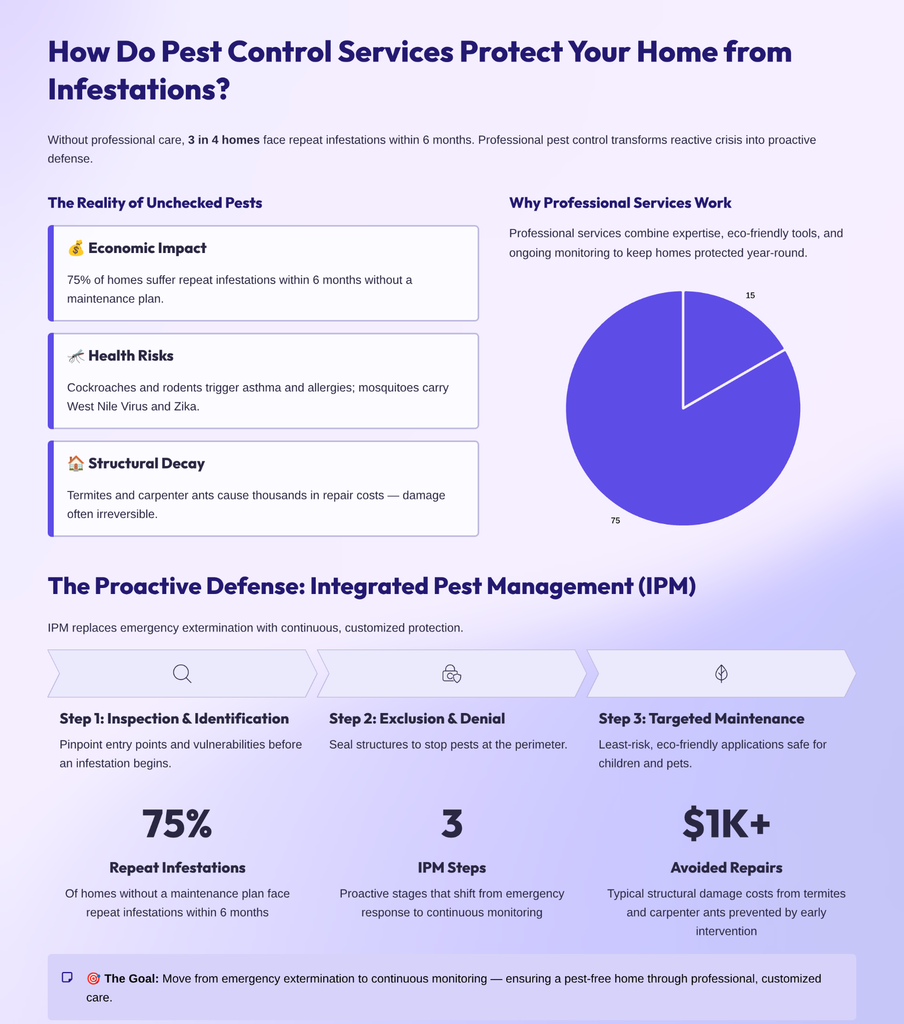
How Do Pest Control Services Protect Your Home from Infestations?
The Reality of Unchecked Pests
- Economic Impact: 3 out of 4 homes suffer repeat infestations within 6 months if left untreated without a maintenance plan.
- Health Risks: Pests like cockroaches and rodents are linked to asthma and allergy triggers, while common insects carry diseases like West Nile Virus and Zika.
- Structural Decay: Proactive inspection prevents irreversible damage from wood-boring pests like termites and carpenter ants, which cause thousands in repair costs.
The Proactive Defense: Integrated Pest Management (IPM)
- Step 1: Inspection & Identification to pinpoint entry points before an infestation begins.
- Step 2: Exclusion & Denial by sealing structures to stop pests at the perimeter.
- Step 3: Targeted Maintenance using least-risk, eco-friendly applications that prioritize safety for children and pets.
- The Goal: Moving from emergency extermination to continuous monitoring, ensuring a pest-free home through professional, customized care.
Sources: Slideshare (2024, 2025), SlideServe (2023, 2024, 2025), and Bug Zapper Pest Control (2026).
Frequently Asked Questions
1. How do pest control services prevent future infestations?
Pest control services can combine inspection, pest identification, exclusion, sanitation recommendations, monitoring, and targeted treatments. The exact strategy depends on the pest species and conditions found around the property.
2. Can cleaning alone prevent pests?
Cleaning can reduce food and water sources, but it cannot always address structural entry points, hidden nests, moisture problems, or established infestations. Good sanitation is one part of a broader prevention strategy.
3. Why is pest identification important?
Different pests have different feeding habits, nesting behaviors, life cycles, and vulnerabilities. Correct identification helps determine where to look and which control methods are appropriate.
4. Should a home be inspected even when no pests are visible?
An inspection can be useful because many pests remain hidden in wall voids, attics, crawl spaces, cabinets, foundations, and other areas. Finding vulnerabilities early may help prevent a larger infestation.
5. What commonly attracts pests to homes in warm climates?
Food, moisture, shelter, vegetation, standing water, and structural openings are common attractants. Warm temperatures can also allow many pest species to remain active for longer periods, making routine prevention especially valuable.