How Can Commercial Rodent Control Protect Your Business Property?
Rodents may be small, but the problems they create inside a commercial property can be surprisingly large. A few mice or rats can damage wiring, contaminate stored goods, create unpleasant odors, and interfere with normal business operations. That is why commercial rodent control Pembroke Pines is best understood as a property-protection strategy, not simply a response to seeing a rodent. Effective control combines inspection, prevention, exclusion, monitoring, and sanitation. For businesses, the goal is straightforward: identify risks early, remove conditions that attract rodents, and reduce opportunities for them to establish themselves inside the building.
Why Rodents Are a Serious Commercial Property Concern
Commercial buildings often contain exactly what rodents need: food, water, warmth, shelter, and concealed spaces. Warehouses, restaurants, offices, retail stores, and storage facilities can all provide suitable conditions. Once rodents find a reliable source of food or shelter, they may continue using the same property unless the underlying conditions are addressed.
Property Damage Goes Beyond Chewed Materials
Rodents constantly gnaw because their incisors continue growing. They may chew wood, insulation, plastic, cardboard, and other materials. More concerning, however, is their ability to damage electrical wiring. Gnawed insulation can expose wires and potentially contribute to electrical faults or fire hazards.
Nesting materials can also accumulate around equipment, ceilings, wall cavities, and other concealed areas. What looks like a minor pest issue can therefore become a maintenance and property-protection concern.
Rodents Can Disrupt Daily Operations
A rodent problem can turn a normal workday into a series of interruptions. Employees may discover droppings in storage areas, customers may notice evidence of activity, or contaminated materials may need to be discarded.
In some businesses, even a small infestation can require certain areas to be cleaned, inspected, or temporarily taken out of use. The longer the problem continues, the more opportunities rodents have to spread into additional areas.
How Rodents Enter Commercial Buildings
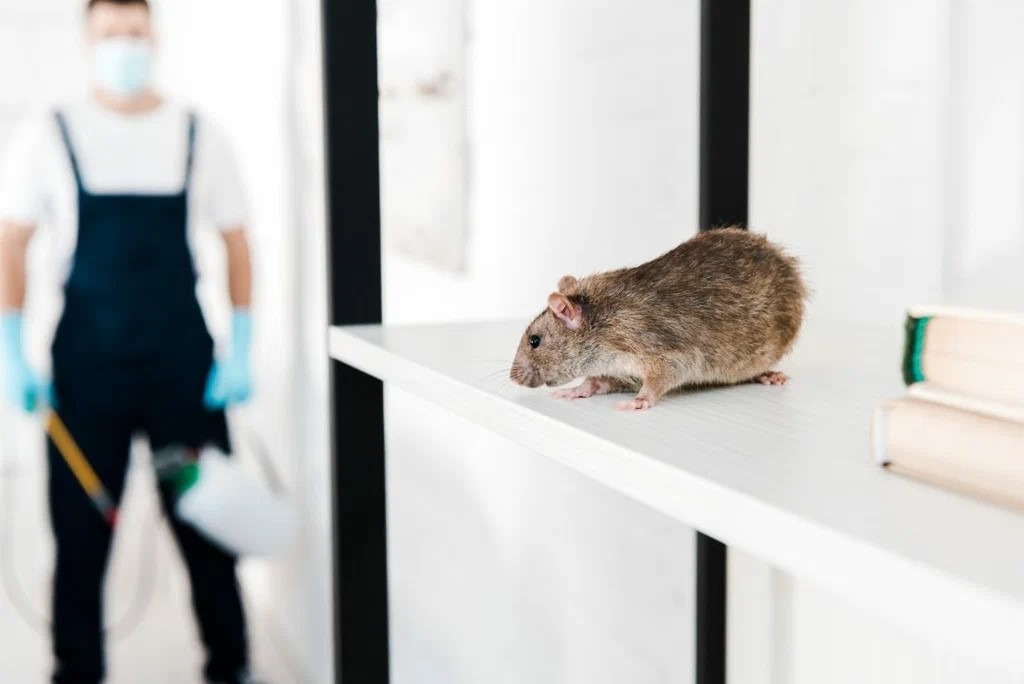
Rodents do not need a wide-open doorway to get inside. They can exploit gaps around pipes, utility lines, vents, doors, windows, roof structures, and foundations. Poorly sealed construction joints can also create access points.
Once inside, rodents often move through wall voids, ceilings, storage areas, and utility spaces where they are difficult to spot.
Small Gaps Can Become Major Entry Points
Mice are particularly capable of squeezing through surprisingly small openings. Rats can also take advantage of gaps that may appear insignificant during a routine walk-through.
This makes exclusion an important part of commercial rodent management. Removing rodents without addressing access points is like mopping a floor while leaving the faucet running—the immediate problem may disappear, but the source remains.
Common Areas to Inspect
Businesses should pay close attention to loading docks, exterior doors, utility penetrations, roof edges, drains, crawl spaces, trash areas, storage rooms, and foundation-level openings.
Door sweeps and weather seals deserve particular attention because damaged seals can leave convenient pathways into the building. Regularly checking these areas can reveal vulnerabilities before they become major entry routes.
How Commercial Rodent Control Protects Property
A comprehensive rodent control program protects a business by addressing both existing activity and the conditions that allow it to continue. Instead of focusing only on removing visible rodents, the process examines where they are coming from, what attracts them, where they are nesting, and how they are moving through the property.
Reducing Structural Damage
Early rodent management can reduce chewing, nesting, and contamination in vulnerable areas. Sealing entry points and correcting building weaknesses can also help prevent repeated access.
This is especially important in older commercial structures where gaps and deteriorated materials may develop over time.
Protecting Electrical Systems and Equipment
Electrical infrastructure deserves special attention because rodents may chew wiring hidden behind walls, above ceilings, or around equipment.
A control program that includes inspection and monitoring can help identify areas where rodent activity presents a greater risk to electrical components and machinery.
Protecting Stored Products and Materials
Rodents can contaminate food, packaging, paper products, fabrics, and other stored materials through droppings, urine, hair, and nesting debris.
Even materials that are not directly eaten may become unusable if contamination occurs. Proper storage, sanitation, inspection, and rodent exclusion can therefore help reduce unnecessary inventory loss.
Rodent Control and Business Health Standards
Rodent activity is also a sanitation concern. Businesses that handle food, packaging, supplies, or customer-facing products have a greater need to maintain clean and controlled environments.
Rodent contamination can create unpleasant odors and unsanitary conditions while raising concerns about the overall cleanliness of the facility.
Contamination Is a Hidden Business Risk
Droppings are often the most visible evidence, but contamination can occur in less obvious places. Rodents may travel across shelves, equipment, countertops, storage containers, and other surfaces.
Their urine, feces, saliva, and nesting materials can leave behind contaminants that require appropriate cleanup and sanitation procedures.
Why Prevention Matters More Than Reactive Control
Waiting until employees see rodents is not always a reliable strategy. Rodents are primarily active in concealed areas, and a visible sighting may indicate that they have already established access to food, water, or shelter.
Preventive control focuses on identifying vulnerabilities before they develop into a larger problem.
Routine Inspections Catch Problems Earlier
Regular inspections can reveal fresh droppings, gnaw marks, nesting materials, damaged seals, tracks, unusual odors, and other indicators.
Early detection gives property managers an opportunity to correct conditions before rodent activity becomes more widespread.
Signs Businesses Should Never Ignore
Warning signs include droppings near food or storage areas, shredded paper or insulation, gnaw marks, grease or rub marks along walls, scratching sounds, damaged packaging, and unexplained odors.
One sign does not always prove a major infestation, but it deserves investigation rather than dismissal.
Commercial Rodent Control Pembroke Pines: What Businesses Should Consider
Businesses in Pembroke Pines need to consider both building conditions and the surrounding environment when evaluating rodent risks.
Commercial properties may have multiple access points, shared walls, landscaping, dumpsters, parking areas, storage spaces, and utility connections that create opportunities for rodents to move between exterior and interior environments.
Climate and Building Conditions Can Influence Rodent Activity
Warm conditions can support pest activity for much of the year, while rain and changing outdoor conditions may encourage rodents to seek protected spaces.
Buildings with accessible food waste, standing water, dense vegetation near structures, or poorly maintained exterior areas may become more attractive to rodents.
Different Businesses Face Different Rodent Risks
A restaurant may have greater food-related risks, while a warehouse may have extensive storage and loading areas.
An office building may have fewer food sources but still provide shelter through ceiling voids, utility spaces, and storage rooms. The right prevention approach therefore depends on how the property is used.
What a Comprehensive Rodent Control Program Includes
Effective commercial rodent management is usually more than placing a few traps. A well-designed program considers the entire property and connects several prevention methods.
Inspection and Identification
The first step is understanding what is happening. An inspection can identify evidence of rodent activity, possible nesting areas, food and water sources, structural vulnerabilities, and pathways rodents may be using.
Correct identification also matters because different rodent species can behave differently.
Exclusion and Structural Repairs
Exclusion focuses on preventing rodents from entering or re-entering the property.
Depending on the building, this can involve sealing gaps, improving door sweeps, repairing damaged screens, securing vents, and addressing openings around utility penetrations.
Monitoring and Follow-Up
Monitoring helps determine whether control measures are working. Tracking activity over time can reveal recurring problem areas and show whether new entry points or attractants need attention.
Follow-up is particularly useful for larger properties where conditions can change frequently.
How Businesses Can Reduce Rodent Attractants
Property managers can make commercial spaces less appealing to rodents by controlling the basics: food, water, shelter, and access.
Good housekeeping is not a substitute for professional pest management when an infestation exists, but it is an important part of long-term prevention.
Food, Waste, Water, and Storage
Keep food in appropriate sealed containers, clean spills promptly, maintain waste containers, avoid unnecessary clutter, repair leaks, and keep stored materials organized.
Where possible, storage should be kept elevated and separated from walls to make inspection easier. Outdoor dumpsters and waste areas should also be managed carefully because they can become persistent food sources.
The Role of EntoLogic Pest Solutions in Understanding Rodent Prevention
EntoLogic Pest Solutions is a useful example of why commercial rodent control in Pembroke Pines should be viewed as an integrated process rather than a single treatment.
For businesses researching rodent management, the key concepts remain the same: identify activity, locate attractants and entry points, reduce access, monitor results, and maintain conditions that discourage rodents from returning.
The important lesson is that effective prevention addresses the environment as well as the pest.
EntoLogic Pest Solutions Serving the SilverLakes Community and Beyond in Pembroke Pines
EntoLogic Pest Solutions is dedicated to serving the diverse needs of the local community of Pembroke Pines, including individuals residing in neighbourhoods like SilverLakes. With its convenient location near landmarks such as the CVS Pharmacy and major intersections like NW 172nd Ave and Pines Blvd (coordinates: 26.008727, -80.3769956), we offer commercial rodent control services.
Get commercial rodent control services at SilverLakes Now
Call Us or Contact Us: +1 469-425-8406
Navigate from SilverLakes to EntoLogic Pest Solutions Now
Commercial rodent control can protect far more than a building’s appearance. It can help reduce structural damage, protect electrical systems, limit inventory contamination, support sanitation, and prevent disruptions to normal operations.
The strongest approach combines early detection with exclusion, monitoring, and sensible property maintenance. Think of it as building several layers of protection around the business: if one barrier fails, the others can still help keep rodents from becoming a larger problem.
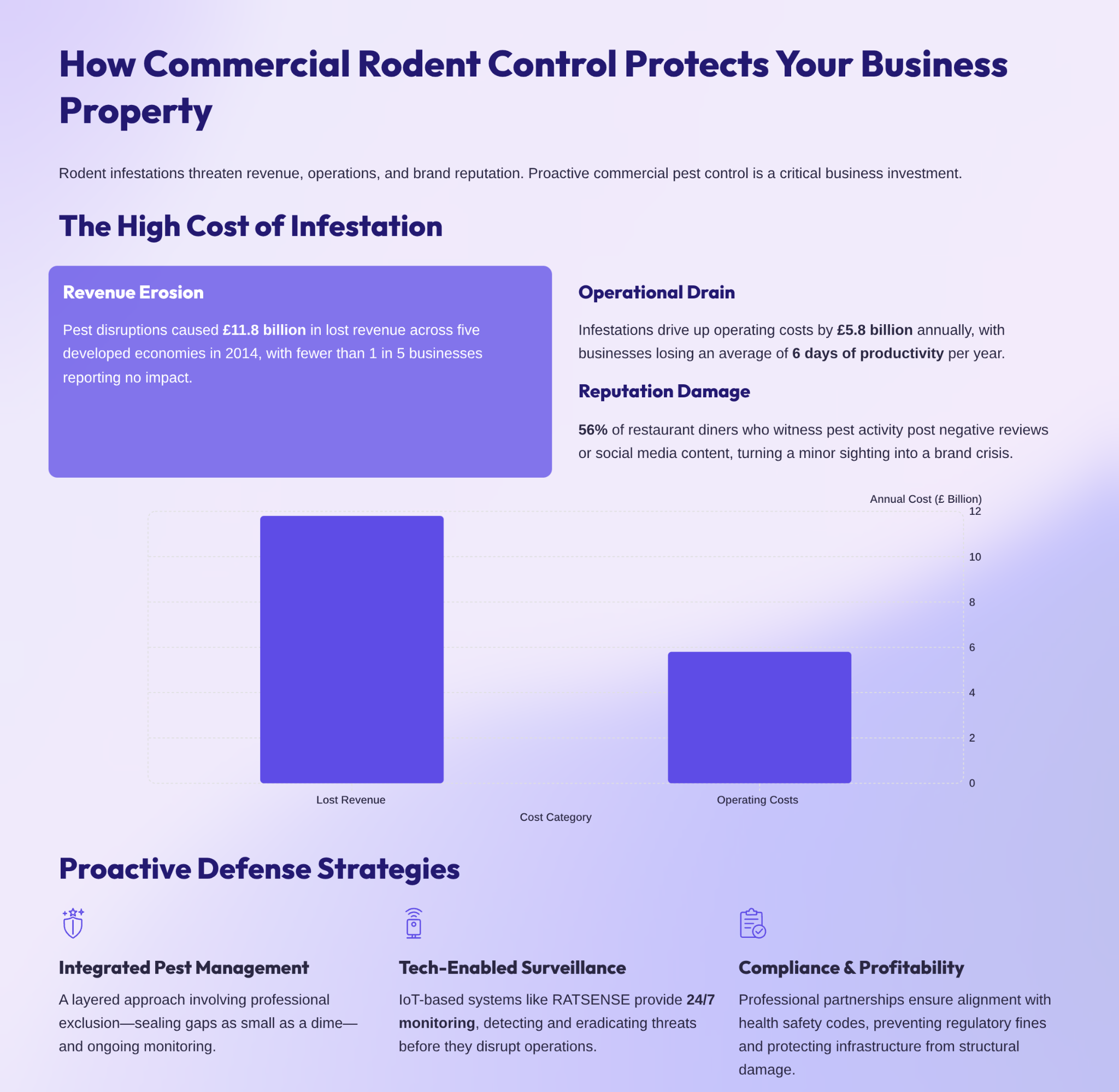
How Commercial Rodent Control Protects Your Business Property
The High Cost of Infestation
- Revenue Erosion: Pest disruptions caused an estimated £11.8 billion in lost revenue across five developed economies in 2014, with less than 1 in 5 businesses reporting no impact.
- Operational Drain: Infestations drive up operating costs by £5.8 billion annually, as businesses lose an average of 6 days of productivity per year due to disruptions.
- Reputation Damage: 56% of restaurant diners who witness pest activity are likely to post negative reviews or social media content, turning a minor sighting into a brand-damaging crisis.
Proactive Defense Strategies
- Integrated Pest Management: Moving beyond DIY fixes to a layered approach involving professional exclusion sealing gaps as small as a dime and monitoring.
- Tech-Enabled Surveillance: Deploying IoT-based systems like RATSENSE to provide 24/7 monitoring, enabling businesses to detect and eradicate threats before they disrupt operations.
- Compliance & Profitability: Proactive professional partnerships ensure alignment with health safety codes, preventing expensive regulatory fines and protecting physical infrastructure from structural damage.
Sources: Cebr / Rentokil Initial research (2014); Orkin Commercial Insights (2025); ORIGIN Exterminators Data (2025).
Frequently Asked Questions
Can rodents cause serious damage to commercial buildings?
Yes. Rodents can chew wiring, insulation, wood, plastic, packaging, and other materials. Their nesting and waste can also contaminate areas and create sanitation concerns. The severity depends on the size of the infestation, the building, and how long the activity continues.
How do rodents usually enter a business?
Common entry routes include gaps around doors, pipes, utility lines, vents, foundations, roofs, loading areas, and damaged screens or seals. Mice can exploit very small openings, which is why detailed exclusion inspections are important.
Why is rodent prevention important for businesses?
Prevention reduces the chance that rodents will establish reliable access to food, water, and shelter. It can also help limit property damage, contamination, inventory loss, and operational disruptions before they become more difficult to manage.
How often should a commercial property be inspected for rodents?
Inspection frequency depends on the property’s size, industry, construction, surrounding conditions, previous pest activity, and sanitation risks. Properties with a history of rodent activity may benefit from more frequent monitoring than buildings with minimal risk.
Does commercial rodent control help protect stored inventory?
Yes. Rodent control can help reduce the risk of contamination and physical damage to stored products and materials. Combining pest monitoring with sealed storage, organized inventory, sanitation, and exclusion creates stronger protection than relying on any single measure.