
What Role Does Heat Treatment Play in Modern Bed Bugs Control Services?
Bed bugs have become one of the most persistent household pests in modern urban and suburban environments. Once largely controlled in many regions, these insects have made a significant comeback over the past few decades. Increased travel, the movement of secondhand furniture, and growing resistance to certain pesticides have all contributed to their resurgence.
Unlike many pests that remain outdoors, bed bugs thrive in close proximity to humans. They hide in bedrooms, living rooms, hotels, apartments, and even office spaces. Their ability to remain concealed during daylight hours often allows infestations to grow unnoticed for weeks or months. As a result, modern pest management professionals have been forced to develop more advanced treatment strategies.
Among the various tools available today, heat treatment has emerged as one of the most effective methods used by professionals. Many providers offering bed bugs control services pembroke pines incorporate heat treatment into comprehensive management programs because of its ability to target bed bugs throughout an entire structure. There should be proper bed bug control.
What Are Bed Bugs and Why Are They Difficult to Eliminate?
Bed bugs are small parasitic insects that survive exclusively on blood meals. Their flattened bodies allow them to squeeze into tiny hiding places, making detection and treatment challenging.
What makes bed bugs particularly difficult to control is their remarkable adaptability. They can survive for several months without feeding, hide in locations that are difficult to access, and spread rapidly from room to room. Unlike ants or cockroaches that may be attracted to food debris, bed bugs are attracted primarily to human hosts.
Their secretive behavior means that by the time visible signs appear, the infestation may already be well established.
The Life Cycle of Bed Bugs
Understanding the life cycle of bed bugs helps explain why complete elimination can be difficult.
Bed bugs begin as tiny eggs deposited in hidden locations. These eggs hatch into immature nymphs, which must feed on blood before progressing through multiple developmental stages. Eventually, they become reproductive adults capable of producing hundreds of offspring during their lifespan.
Because eggs, nymphs, and adults may all exist simultaneously within an infestation, effective treatment must target every life stage rather than focusing solely on visible adults.
Common Places Where Bed Bugs Hide
Bed bugs are experts at concealment. While mattresses and box springs are common hiding locations, infestations are rarely limited to beds alone.
They frequently hide in:
- Furniture seams
- Bed frames
- Baseboards
- Electrical outlets
- Upholstered chairs
- Curtains
- Wall cracks
- Behind artwork
- Carpet edges
Their ability to occupy dozens of hiding places throughout a structure is one reason why modern treatment methods must provide broad coverage.
Traditional Methods Used for Bed Bug Management
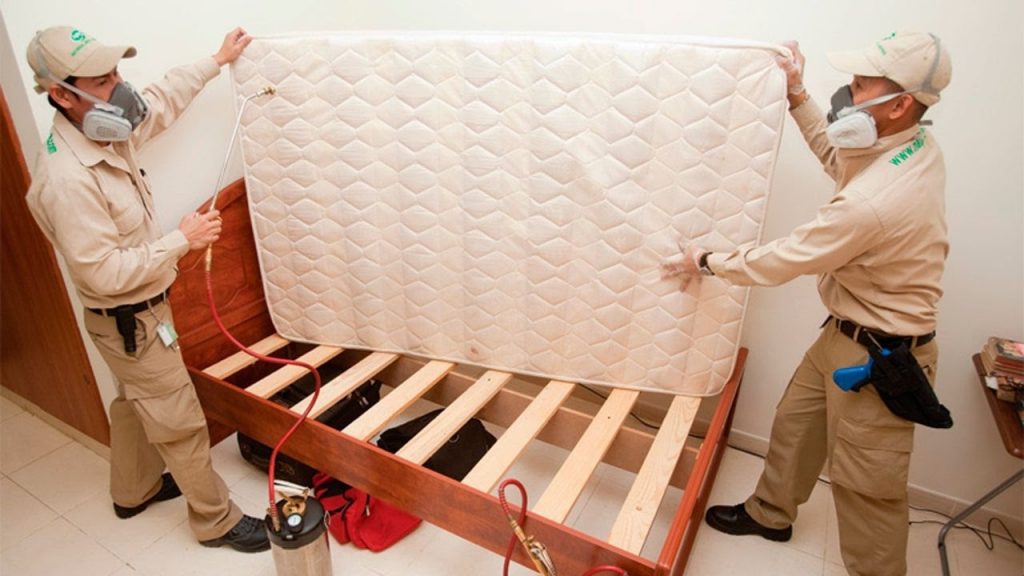
Before heat treatment gained widespread popularity, pest management professionals relied heavily on traditional control methods.
These approaches are still used today, often as components of integrated treatment plans.
Chemical Treatments
Chemical applications have historically served as a primary tool for managing bed bug infestations. Products are applied to cracks, crevices, and other locations where bed bugs are likely to hide.
While pesticides remain useful, some bed bug populations have demonstrated resistance to specific active ingredients. This resistance has encouraged professionals to adopt alternative strategies that do not rely exclusively on chemicals.
Physical Removal Techniques
Physical control methods include vacuuming, laundering infested fabrics, steam applications, mattress encasements, and clutter reduction.
These techniques can help reduce populations and support larger treatment programs. However, physical methods alone often struggle to reach every hidden bed bug within a structure.
What Is Heat Treatment in Bed Bug Control?
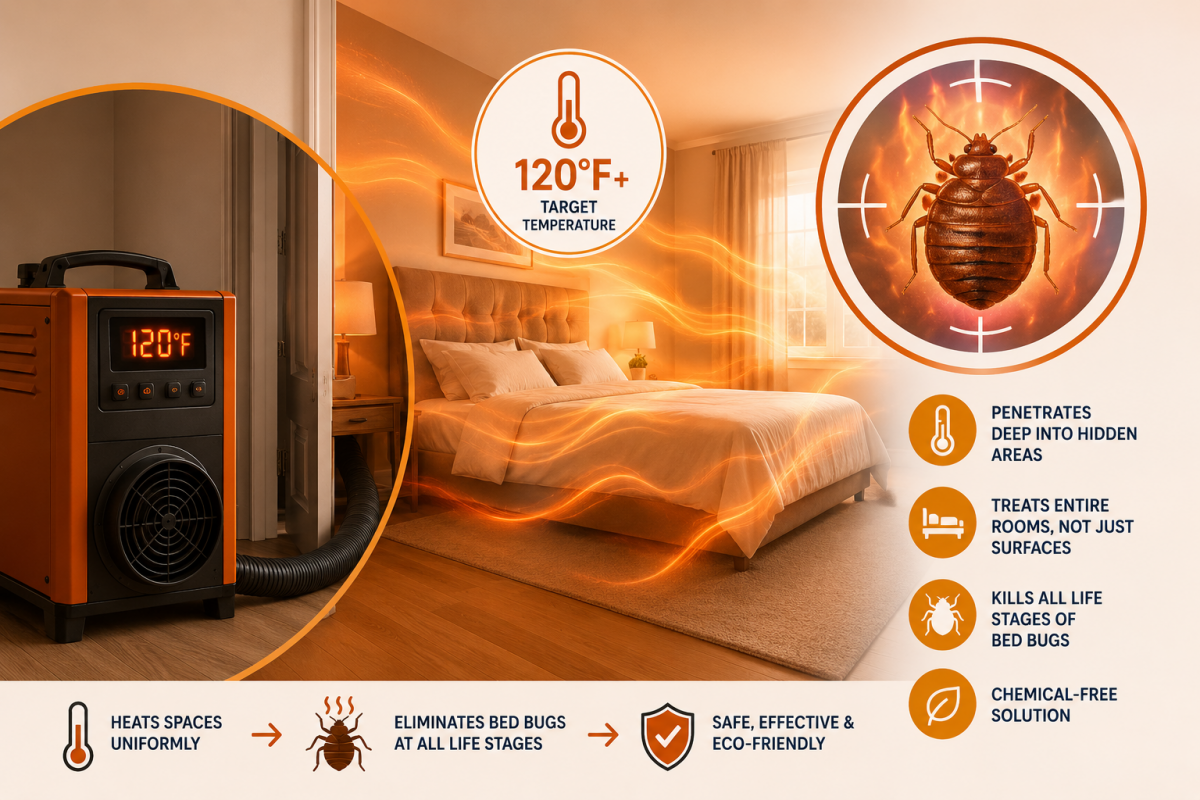
Heat treatment is a specialized pest management technique that raises temperatures throughout an infested environment to levels lethal to bed bugs.
Unlike spot treatments that focus on specific locations, heat treatment addresses the entire affected area. Specialized equipment distributes heated air throughout rooms, furniture, and structural voids.
The goal is to create conditions that bed bugs cannot survive, regardless of where they are hiding.
How Heat Treatment Works
Professional technicians use industrial heating systems and high-capacity fans to gradually increase temperatures within the treatment area.
The heat is distributed evenly to ensure that all parts of the structure reach target temperatures. Monitoring devices continuously track conditions throughout the process.
This controlled approach allows technicians to eliminate bed bugs while protecting the integrity of the structure and its contents.
The Science Behind Thermal Elimination
Heat affects biological systems at a cellular level. When bed bugs are exposed to sufficiently high temperatures, proteins begin to denature, cellular processes break down, and survival becomes impossible.
Research has shown that sustained temperatures above approximately 118°F (48°C) can kill bed bugs. Higher temperatures maintained for specific periods can eliminate eggs, nymphs, and adults alike.
This scientific principle forms the foundation of modern heat treatment programs.
Why Heat Is Effective Against Bed Bugs
Heat offers several advantages that distinguish it from many traditional treatment methods.
Rather than requiring direct contact with individual insects, heat works by transforming the environment itself into a lethal condition.
Impact on Eggs, Nymphs, and Adults
One of the most significant advantages of heat treatment is its ability to affect every developmental stage of the bed bug life cycle.
Many treatment methods struggle to eliminate eggs because they are protected by outer shells. Heat penetrates these defenses more effectively, helping ensure that future generations are not left behind.
This whole-life-cycle impact contributes to the effectiveness of heat-based treatment strategies.
Reaching Hidden Infestation Areas
Bed bugs frequently hide in locations that are difficult or impossible to access directly.
Heat naturally moves through spaces and materials, reaching areas such as:
- Furniture joints
- Wall voids
- Floor cracks
- Upholstered surfaces
- Hidden structural gaps
Because heat can penetrate many of these locations, it helps address infestations that would otherwise remain concealed.
The Heat Treatment Process Explained
Heat treatment is a carefully planned procedure that requires preparation, monitoring, and evaluation.
Inspection and Preparation
Before treatment begins, professionals conduct a detailed inspection to assess infestation severity and identify key harborages.
Preparation often includes organizing belongings, removing heat-sensitive items, and improving airflow throughout treatment areas.
Proper preparation helps maximize treatment effectiveness.
Heating and Monitoring Procedures
Once preparations are complete, heating equipment is activated.
Technicians place temperature sensors throughout the structure to monitor conditions continuously. These sensors help ensure that all areas reach lethal temperatures.
Careful monitoring prevents cold spots that could allow bed bugs to survive.
Post-Treatment Evaluation
Following treatment, professionals evaluate results and inspect previously infested areas.
Monitoring devices may be used to detect any remaining activity and verify treatment success.
Benefits of Heat Treatment in Modern Pest Management
Reduced Dependence on Chemicals
Heat treatment offers a non-chemical approach that can reduce reliance on pesticide applications.
Faster Results Compared to Some Alternatives
Many heat treatments can address infestations in a single treatment session rather than requiring multiple visits over several weeks.
Comprehensive Coverage
Because heat reaches throughout the structure, it provides broader coverage than many localized treatment methods.
Challenges and Considerations of Heat Treatment
Temperature Requirements
Achieving and maintaining lethal temperatures requires specialized equipment and professional expertise.
Property Preparation Needs
Some household items require special handling before treatment to prevent damage from elevated temperatures.
Combining Heat Treatment with Integrated Pest Management
Monitoring and Prevention Strategies
Long-term management depends on early detection, monitoring devices, occupant education, and preventive practices.
Follow-Up Inspections
Follow-up inspections help confirm treatment success and identify potential reintroductions before they become major infestations.
How Professionals Determine When Heat Treatment Is Appropriate
Pest management professionals evaluate infestation size, property characteristics, accessibility, and occupancy patterns before selecting treatment methods.
Companies such as EntoLogic Pest Solutions often assess these factors carefully to determine whether heat treatment should be incorporated into an overall management plan.
The Future of Heat-Based Bed Bug Management
Advances in thermal technology, temperature monitoring systems, and integrated pest management strategies continue to improve treatment effectiveness.
Future innovations may further enhance the precision and efficiency of heat-based bed bug control programs.
EntoLogic Pest Solutions Serving the SilverLakes Community and Beyond in Pembroke Pines
EntoLogic Pest Solutions is dedicated to serving the diverse needs of the local community of Pembroke Pines, including individuals residing in neighbourhoods like SilverLakes. With its convenient location near landmarks such as the CEMEX Hollywood Pembroke Pines Concrete Plant and major intersections like Pines Blvd and NW 172nd Ave (coordinates: 26.0079629, -80.3776137), we offer bed bug control services.
Get bed bugs control services at SilverLakes Now
Call Us or Contact Us: +1 954-955-3031
Navigate from SilverLakes to EntoLogic Pest Solutions Now
<iframe src=”https://www.google.com/maps/embed?pb=!1m28!1m12!1m3!1d14343.384380600986!2d-80.38960761325863!3d26.00585852040159!2m3!1f0!2f0!3f0!3m2!1i1024!2i768!4f13.1!4m13!3e6!4m5!1s0x88d9a3e10e38808d%3A0x6bf033395ae1df0d!2sSilverLakes%2C%20Pembroke%20Pines%2C%20FL%2033029%2C%20USA!3m2!1d25.9981318!2d-80.38256679999999!4m5!1s0x87c96e52feffc22d%3A0xe87b7b7de372420f!2sEntoLogic%20Pest%20Solutions%2C%20827%20NW%20170th%20Terrace%2C%20Pembroke%20Pines%2C%20FL%2033028%2C%20United%20States!3m2!1d26.0121342!2d-80.3731643!5e0!3m2!1sen!2s!4v1781415298266!5m2!1sen!2s” width=”600″ height=”450″ style=”border:0;” allowfullscreen=”” loading=”lazy” referrerpolicy=”no-referrer-when-downgrade”></iframe>
Heat treatment has become one of the most valuable tools in modern bed bug management. Its ability to eliminate bed bugs at every life stage, penetrate hidden harborages, and provide comprehensive coverage makes it a key component of many contemporary treatment programs. As infestations continue to challenge property owners and pest management professionals alike, heat treatment will remain an important strategy used in bed bugs control services in pembroke pines and beyond.
The Science of Heat: Temperature & Time for Bed Bug Elimination
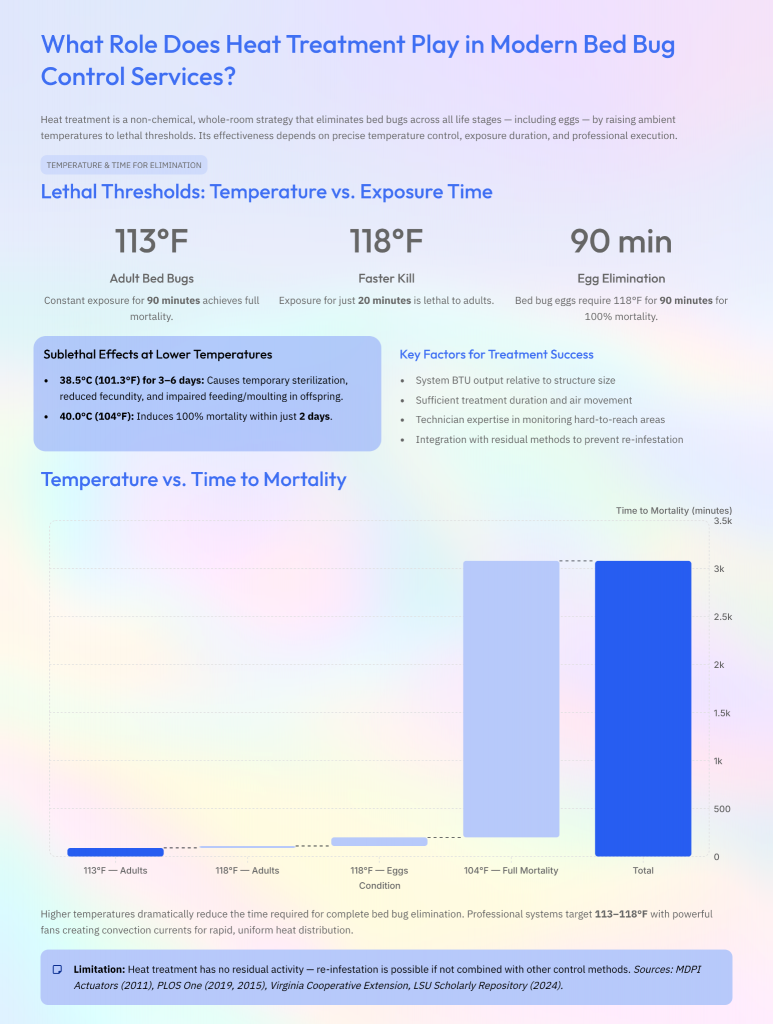
- Lethal Thresholds: Bed bugs require specific temperatures and exposure times to die.
- 113°F (45°C): Constant exposure for 90 minutes can kill bed bugs.
- 118°F (47.8°C): Exposure for just 20 minutes can be lethal.
- Bed Bug Eggs: Require 118°F (47.8°C) for 90 minutes for 100% mortality.
- Effective Treatment Temperatures: Professional whole-room heat treatments aim for temperatures around 113°F (45°C), utilizing powerful fans to create convection currents that heat bed bugs rapidly, increasing mortality rates.
- Sublethal Effects: Even lower temperatures (e.g., 34.0°C – 40.0°C) can have significant impacts:
- 38.5°C (101.3°F) for 3-6 days: Can lead to temporary sterilization, reduced fecundity (fewer eggs, lower hatching success), and impaired feeding/moulting ability in offspring.
- 40.0°C (104°F): Can induce 100% mortality within 2 days.
- Limitations: Heat treatment is non-toxic and kills all life stages, including eggs, but it has no residual activity, meaning re-infestation is possible if not combined with other control methods.
- Key Factors for Success: Effective heat treatment depends on the system’s BTU output, structure size, treatment duration, air movement (fans), and technician expertise in monitoring hard-to-reach areas.
Sources: MDPI Actuators (2011), PLOS One (2019, 2015), Virginia Cooperative Extension, LSU Scholarly Repository (2024).
Frequently Asked Questions
1. Can heat treatment kill bed bug eggs?
Yes. Properly applied heat treatment can eliminate eggs, nymphs, and adult bed bugs.
2. Why is heat treatment considered effective?
Heat reaches hidden areas and affects all life stages of bed bugs, including difficult-to-target eggs.
3. How long does professional heat treatment typically take?
Treatment times vary depending on infestation size and property conditions but generally require several hours.
4. Is heat treatment part of Integrated Pest Management?
Yes. Heat treatment is often combined with monitoring, inspections, and preventive strategies.
5. Why are follow-up inspections important after treatment?
Follow-up inspections help verify treatment success and identify any remaining activity before populations can rebound.