Which Areas of a Home Need the Most Attention During Pest and Rat Control?
Every home has areas that naturally attract insects and rodents. While many homeowners notice pests only after they become visible, infestations usually begin in hidden locations long before they are discovered. Understanding where pests prefer to live makes prevention much easier and helps reduce the risk of damage to your home.
Whether you’re learning about pest and rat control pembroke pines or simply trying to make your property less attractive to unwanted visitors, knowing which areas deserve extra attention is the first step. Companies like EntoLogic Pest Solutions often educate homeowners on identifying these high-risk locations because prevention starts with awareness.
Why Certain Areas Attract More Pests and Rats
Pests are driven by three basic needs:
- Food
- Water
- Shelter
If any part of your home consistently provides these essentials, it becomes an attractive environment for insects or rodents. Dark, humid, cluttered, and undisturbed areas are especially appealing because they offer protection from predators and weather.
How Pests Enter a Home
Even well-maintained homes have small openings that pests can use.
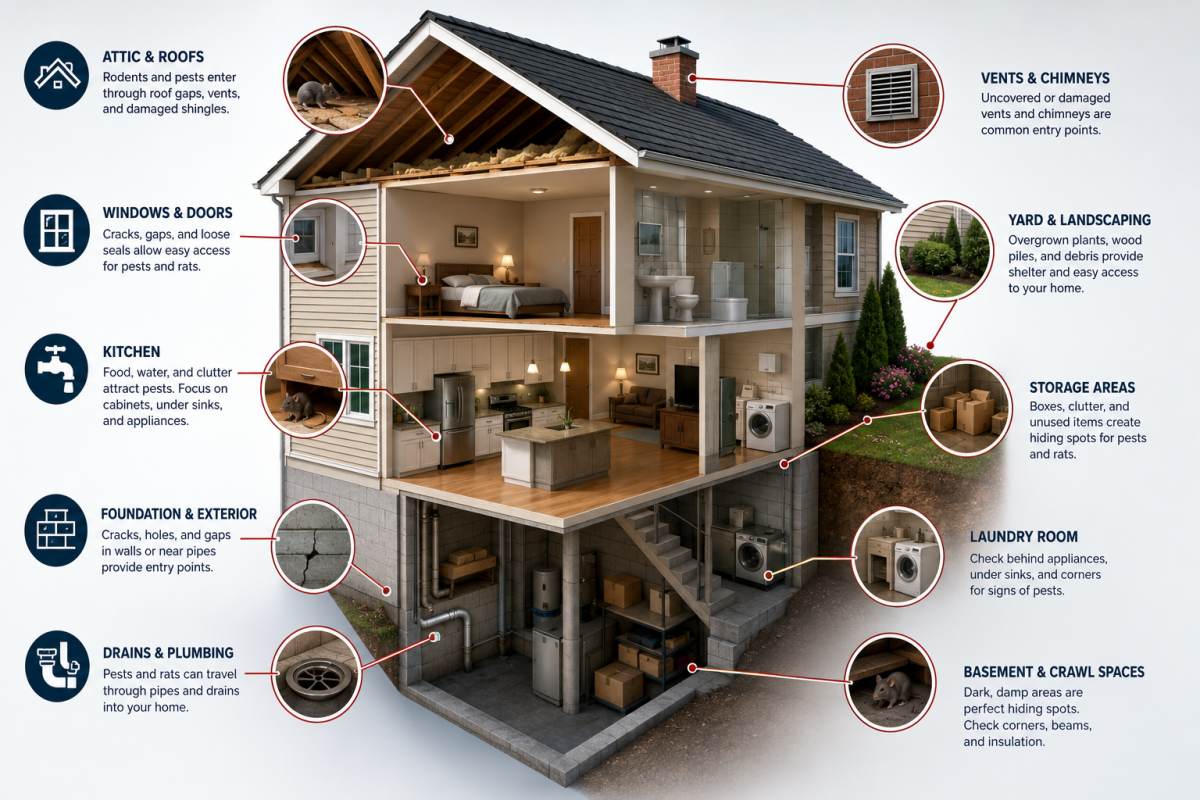
Common Entry Points Around the Exterior
Common access points include:
- Gaps beneath doors
- Cracks in foundations
- Open utility penetrations
- Roof vents
- Damaged window screens
- Spaces around pipes
Small mice can squeeze through openings barely larger than a dime, making even tiny gaps worth monitoring.
Hidden Gaps That Often Go Unnoticed
Many homeowners overlook spaces behind air conditioning lines, cable entries, plumbing pipes, and exterior vents. These locations often provide direct access into walls and ceilings.
The Kitchen: The Biggest Attraction for Household Pests
The kitchen is usually the most active area for household pests because food and moisture are readily available.
Food Storage Areas
Pantries should be inspected regularly for:
- Open food packages
- Crumbs
- Pet food
- Spilled grains
- Expired products
Proper food storage significantly reduces the likelihood of attracting ants, cockroaches, and rodents.
Under Appliances and Cabinets
The spaces beneath refrigerators, ovens, and dishwashers collect grease, crumbs, and moisture over time. Since these areas are cleaned less frequently, they often become ideal hiding places.
Bathrooms and Laundry Rooms
Bathrooms provide steady moisture that attracts many insects.
Moisture-Related Pest Problems
Leaking faucets, damp cabinets, slow drains, and poor ventilation create favorable conditions for:
- Silverfish
- Cockroaches
- Drain flies
- Ants
Laundry rooms may also develop moisture issues from washing machines, utility sinks, or condensation.
Basements and Crawl Spaces
Basements remain cool, dark, and humid throughout much of the year.
Why Rodents Prefer Dark Spaces
Rodents often travel along walls rather than crossing open areas. Basements and crawl spaces provide protection while allowing easy movement through utility lines, insulation, and stored materials.
Cardboard boxes, old furniture, and clutter also create excellent nesting opportunities.
Attics and Roof Spaces
Attics are among the least disturbed areas inside most homes, making them attractive shelters.
Signs of Rat Activity in the Attic
Common indicators include:
- Scratching sounds
- Droppings
- Chewed insulation
- Gnawed wood
- Nesting materials
- Strong odors
Roof openings, damaged vents, and loose shingles may provide easy access.
Garages and Storage Rooms
Garages often contain items that unintentionally attract pests.
Examples include:
- Bird seed
- Pet food
- Cardboard boxes
- Firewood
- Gardening supplies
Keeping these materials sealed and reducing clutter makes garages less inviting.
Bedrooms and Living Areas
Although these rooms usually contain fewer food sources, pests may still enter while searching for shelter.
Bed bugs, spiders, and occasional ants can hide behind furniture, inside closets, beneath beds, and around baseboards. Regular vacuuming and minimizing clutter help reduce hiding places.
Outdoor Spaces Around the Home
Many pest problems begin outside before moving indoors.
Landscaping and Vegetation
Shrubs touching exterior walls provide bridges for insects. Overgrown vegetation also traps moisture and creates shaded environments.
Keeping plants trimmed improves airflow while reducing access to windows and siding.
Trash and Compost Areas
Garbage bins should remain tightly sealed and cleaned regularly.
Food waste, standing liquids, and overflowing containers attract rodents, flies, cockroaches, and other scavenging pests.
Seasonal Changes That Affect Pest Activity
Pest behavior changes throughout the year.
During warmer months, insects become more active as breeding increases. In cooler seasons, rats and mice often seek indoor shelter where temperatures remain stable and food is available.
Weather events like heavy rain may also force pests from underground burrows into homes.
Simple Habits That Help Reduce Pest Problems
Consistent home maintenance plays a major role in prevention.
Helpful practices include:
- Sealing cracks and openings
- Repairing plumbing leaks
- Cleaning food spills promptly
- Storing food in airtight containers
- Removing clutter
- Keeping trash containers sealed
- Trimming vegetation near the home
- Inspecting attics, basements, and crawl spaces regularly
These small habits reduce the conditions that pests depend upon.
EntoLogic Pest Solutions Serving the SilverLakes Community and Beyond in Pembroke Pines
EntoLogic Pest Solutions is dedicated to serving the diverse needs of the local community of Pembroke Pines, including individuals residing in neighbourhoods like SilverLakes. With its convenient location near landmarks such as the Flanigan’s Seafood Bar and Grill and major intersections like Pines Blvd and NW 172nd Ave (coordinates: 26.0102129, -80.3751102), we offer pest and rat control services.
Get pest and rat control services at SilverLakes Now
Call Us or Contact Us: +1 469-425-8406
Navigate from SilverLakes to EntoLogic Pest Solutions Now
Successful pest management begins with understanding where pests and rodents are most likely to hide. Kitchens, bathrooms, basements, attics, garages, and outdoor spaces each offer unique conditions that attract unwanted visitors if left unchecked. By recognizing these high-risk areas and maintaining a clean, well-sealed home, homeowners can significantly lower the chances of infestations. Whether researching pest and rat control in pembroke pines or learning general prevention strategies, understanding how pests use different parts of a home provides a strong foundation for long-term protection. Educational resources shared by professionals such as EntoLogic Pest Solutions also help homeowners better understand these common risk areas and preventive practices.
Frequently Asked Questions
1. Which room in a home attracts the most pests?
The kitchen typically attracts the most pests because it provides easy access to food, water, and shelter.
2. Why do rats prefer attics and basements?
These areas are usually quiet, dark, and rarely disturbed, making them ideal locations for nesting and movement.
3. How often should homeowners inspect their homes for pests?
A thorough inspection every few months, along with seasonal checks, helps identify potential issues before they become larger infestations.
4. Can outdoor landscaping increase pest activity?
Yes. Overgrown plants, dense shrubs, wood piles, and standing water create favorable environments for many insects and rodents.
5. What is the most effective way to reduce pest activity inside a home?
Maintaining cleanliness, sealing entry points, eliminating moisture, storing food properly, and reducing clutter are among the most effective long-term prevention strategies.