What Role Do Commercial Pest Control Services Play in Food Safety Management?
Introduction to Food Safety and Pest Control
Why Food Safety Is a Critical Concern
Food safety is the backbone of any operation that handles, prepares, or distributes food. It’s not just about cleanliness it’s about preventing invisible risks that can cause serious health consequences. Contaminated food can lead to outbreaks, legal complications, and irreversible damage to a business’s reputation. In industries where trust is everything, even a small lapse can have wide-reaching consequences.
The Overlooked Threat: Pests
While hygiene protocols often focus on surfaces and storage, pests remain one of the most underestimated threats. Rodents, insects, and birds don’t just exist in the background, they actively compromise food safety. They invade unnoticed, contaminate silently, and multiply quickly. This is where commercial pest control services pembroke pines become essential in maintaining a controlled and safe environment.
Understanding Commercial Pest Control Services
What Are Commercial Pest Control Services?
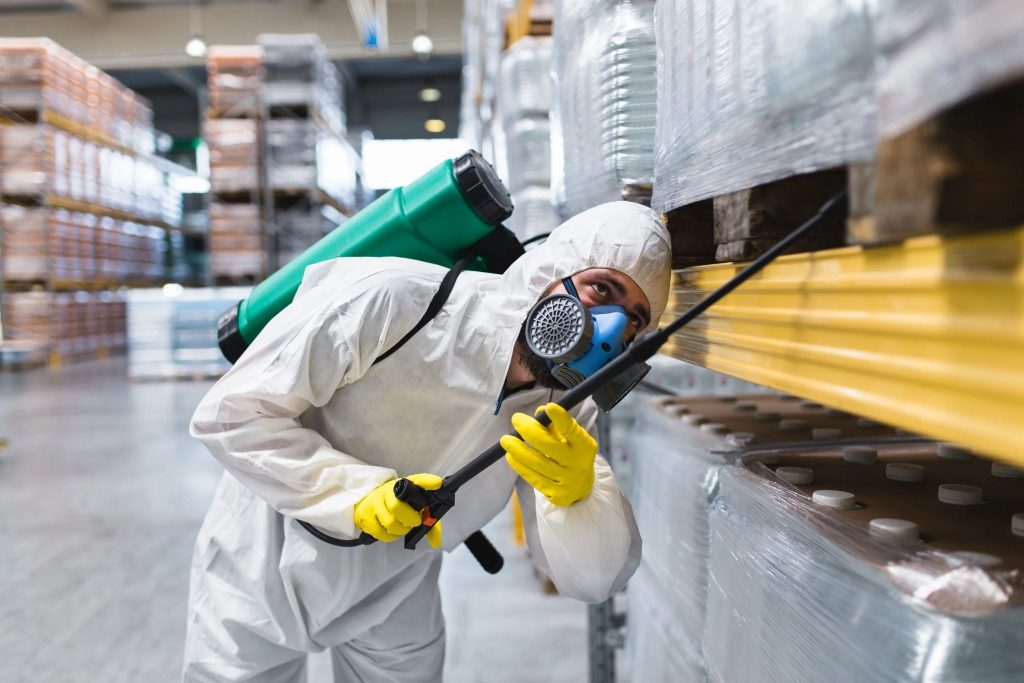
Commercial pest control services in pembroke pines are structured systems designed specifically for businesses. Unlike basic treatments, these services focus on long-term prevention, compliance with regulations, and detailed monitoring. They are tailored to environments like restaurants, warehouses, and food processing units where the stakes are significantly higher.
Key Features of Professional Pest Management
Professional pest management includes regular inspections, customized strategies, and continuous monitoring. It also involves detailed documentation, which is critical during audits. These services go beyond eliminating pests, they create a sustainable system to keep them out permanently.
The Link Between Pests and Food Contamination
Types of Pests Common in Food Environments
Rodents
Rodents are among the most destructive pests in food environments. They chew through packaging, leave droppings, and spread harmful bacteria. Their ability to squeeze through tiny openings makes them particularly difficult to control without professional help.
Insects
Insects such as cockroaches, flies, and ants are highly mobile and can quickly spread contamination. They move between waste areas and food surfaces, carrying pathogens with them.
Birds
Birds often nest in storage or roofing areas. Their droppings can contaminate food and surfaces, introducing bacteria and parasites into the environment.
How Pests Spread Diseases
Pests act as carriers of disease-causing organisms. They travel through unsanitary areas and transfer pathogens onto food, equipment, and surfaces. This cross-contamination is one of the leading causes of foodborne illnesses.
Regulatory Standards and Compliance
Food Safety Regulations and Pest Control
Food safety regulations require strict pest management protocols. Systems like HACCP emphasize identifying and controlling hazards, including pests. Failure to meet these standards can result in penalties, closures, or legal action.
Role of Inspections and Audits
Inspections and audits are essential for ensuring compliance. Pest control reports provide documented evidence that a facility is actively managing risks, which is crucial during regulatory evaluations.
Preventive Pest Management Strategies
Integrated Pest Management (IPM)
Integrated Pest Management is a proactive approach that focuses on prevention rather than reaction. It combines multiple strategies biological, physical, and chemical to control pests effectively while minimizing risks.
Monitoring and Early Detection
Early detection is key to preventing infestations. Monitoring tools such as traps and sensors help identify pest activity before it becomes a larger issue.
Sanitation and Structural Maintenance
Maintaining cleanliness and repairing structural gaps significantly reduces pest access. Proper waste management and sealed entry points are simple yet powerful preventive measures.
Role of Commercial Pest Control Services in Risk Reduction
Identifying Vulnerabilities
Professionals assess the facility to identify weak points such as cracks, moisture buildup, or improper storage practices. These vulnerabilities are often the root cause of infestations.
Implementing Control Measures
Once risks are identified, targeted measures are implemented. These may include sealing entry points, installing traps, and applying safe treatments where necessary.
Documentation and Reporting
Detailed documentation ensures transparency and accountability. It also helps track pest activity trends and measure the effectiveness of control strategies over time.
Impact on Business Reputation and Consumer Trust
Public Health Implications
Pest-related contamination can lead to serious health risks. Even a single incident can result in widespread consequences, affecting both consumers and the business.
Brand Protection
In the digital age, reputation spreads quickly. A single pest sighting can lead to negative reviews and loss of customer trust. Effective pest control acts as a safeguard for brand integrity.
Technology and Innovation in Pest Control
Smart Monitoring Systems
Modern pest control uses digital tools to monitor activity in real time. These systems provide accurate data, allowing quicker and more effective responses.
Eco-Friendly Pest Solutions
There is a growing emphasis on environmentally friendly pest control methods. These solutions reduce chemical usage while maintaining high levels of effectiveness.
Case Context: Commercial Pest Control Services Pembroke Pines
Local Challenges in Pest Management
Pembroke Pines presents unique challenges due to its warm climate and humidity. These conditions create an ideal environment for pests to thrive year-round, making consistent pest management essential.
Example: EntoLogic Pest Solutions Approach
EntoLogic Pest Solutions focuses on preventive strategies tailored to food safety environments. Their approach includes continuous monitoring, compliance support, and customized plans that align with industry standards. This structured method highlights how professional services contribute directly to safer food handling practices.
Challenges in Pest Control Implementation
Resistance and Adaptation
Pests can develop resistance to certain treatments over time. This requires ongoing adjustments in pest control strategies to remain effective.
Environmental Factors
External factors such as weather, building design, and surrounding areas can influence pest behavior. Effective pest management must adapt to these changing conditions.
Future Trends in Pest Control and Food Safety
Automation and AI
Artificial intelligence is beginning to play a role in pest control by predicting activity patterns and optimizing treatment strategies.
Sustainable Practices
Sustainability is becoming a priority, with a shift toward methods that balance effectiveness with environmental responsibility.
EntoLogic Pest Solutions Serving the Cooper City Community and Beyond in Pembroke Pines
EntoLogic Pest Solutions is dedicated to serving the diverse needs of the local community of Pembroke Pines, including individuals residing in neighbourhoods like Cooper City. With its convenient location near landmarks such as the JW Pastry and major intersections like Privtate Rd and SW 82nd Ave (coordinates: 26.050736, -80.2524731), we offer commercial pest control services.
Get commercial pest control services Services at Cooper City Now
Call Us or Contact Us: (954) 955-3031
Navigate from Cooper City to EntoLogic Pest Solutions Now
Commercial pest control services play a fundamental role in food safety management. They help prevent contamination, ensure compliance, and protect public health. By addressing risks proactively and maintaining strict control measures, these services support the integrity of food systems.
In environments like Pembroke Pines, where pest activity is naturally high, integrating professional pest management into food safety strategies is not optional, it is essential. Businesses that prioritize this approach are better equipped to maintain standards, reduce risks, and build long-term trust.
What Role Do Commercial Pest Control Services Play in Food Safety Management?
[image] Split screen: Left side shows a magnified image of a cockroach on a food preparation surface. Right side shows a clean, professional kitchen with a pest control technician inspecting equipment. Text overlay on the right side: “Proactive Prevention: The Key to Food Safety.”
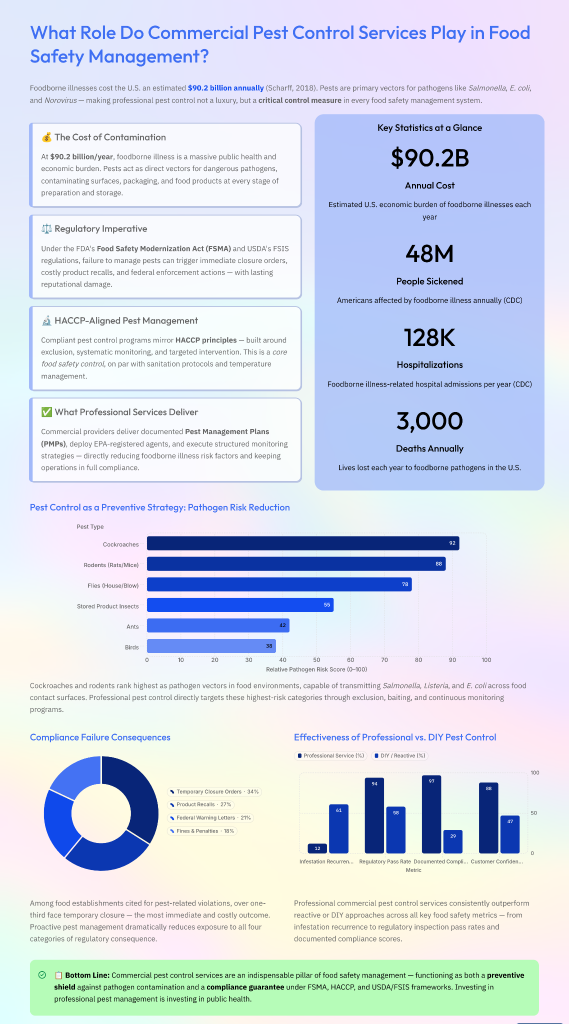
- The High Cost of Contamination: Foodborne illnesses cost the U.S. an estimated $90.2 billion annually (Scharff, 2018), with pathogens like Salmonella, E. coli, and Norovirus being major contributors. Pests are significant vectors for these pathogens.
- Regulatory Imperative: Food service establishments are high-risk categories. Failure to manage pests can lead to immediate closure orders, product recalls, and federal enforcement actions under frameworks like the FDA’s Food Safety Modernization Act (FSMA) and USDA’s FSIS regulations.
- Pest Management as a Critical Control Point: Compliant pest control programs are structured around exclusion, monitoring, and intervention, mirroring HACCP principles. This is not discretionary but a core food safety control measure alongside sanitation and temperature management.
- Impact of Professional Services: Commercial pest control services provide documented Pest Management Plans (PMPs), utilize EPA-registered agents, and implement systematic monitoring and intervention strategies, directly reducing the occurrence of foodborne illness risk factors and ensuring compliance.
Sources: USDA, FDA, Economic Research Service, National Pest Control Authority.
FAQs
1. Why are pests considered a major risk in food safety?
Pests carry harmful bacteria and can easily contaminate food and surfaces, leading to serious health risks.
2. What is Integrated Pest Management (IPM)?
It is a preventive approach that combines monitoring, sanitation, and targeted treatments to control pests effectively.
3. How often should pest control services be conducted in commercial spaces?
The frequency depends on the facility, but regular inspections—typically monthly—are recommended.
4. Do pest control services help with compliance?
Yes, they provide documentation and ensure that pest management practices meet regulatory standards.
5. Why is pest control more critical in warm climates?
Warm and humid conditions allow pests to reproduce and survive more easily, increasing the risk of infestations.
One reply on “What Role Do Commercial Pest Control Services Play in Food Safety Management?”
[…] Tiny cracks, gaps around windows, and poorly sealed doors act as entryways. Ants don’t need much space, just an opportunity. These can also be treated by commercial pest control services. […]