When Should You Start Residential Pest Control Treatments in Spring?
Spring feels like a fresh start. Flowers bloom, temperatures rise, and homeowners begin spending more time outdoors. But while people enjoy the warmer weather, pests become active too. Ants start marching across kitchen counters, mosquitoes begin breeding in standing water, and termites quietly search for new places to invade.
That’s why spring is one of the most critical seasons for pest prevention. Waiting until you already see insects inside your home is a little like waiting for smoke before checking for fire. By then, the problem may already be growing behind the scenes.
For homeowners looking into residential pest control pembroke pines solutions, understanding the right timing can make a major difference. Companies like EntoLogic Pest Solutions often emphasize preventive care because spring is when pest populations begin expanding rapidly.
Why Spring Is the Most Important Season for Pest Activity
Winter forces many pests into survival mode. Some hide underground, others settle into wall voids, attics, or damp crawl spaces. But once temperatures begin climbing in spring, pests wake up hungry and ready to reproduce.
Think of spring as the grand opening of pest season.
Insects and rodents become more active because warmer conditions help them find food, water, and nesting areas more easily. This is especially true in warm and humid climates where pest activity rarely fully disappears during winter.
Spring also marks breeding season for many pests. A small issue in March can quickly become a major infestation by summer if left untreated.
Understanding the Pest Life Cycle in Spring
How Rising Temperatures Affect Pest Behavior
Temperature changes directly influence insect metabolism and movement. As the air warms, pests become more mobile and begin searching for shelter and food sources.
Ant colonies expand rapidly during spring. Mosquito eggs begin hatching. Termites swarm to establish new colonies. Roaches move toward moisture-rich environments.
It’s almost like nature flips a switch.
The earlier pest control measures begin, the easier it becomes to interrupt these cycles before populations explode.
Why Moisture Creates Ideal Pest Conditions
Spring rain creates another major factor: moisture.
Wet soil, puddles, leaking gutters, and humid air provide excellent breeding conditions for insects. Mosquitoes can reproduce in tiny amounts of standing water, while termites thrive in damp wood conditions.
Even indoor humidity can attract pests into bathrooms, kitchens, and laundry areas.
Signs Your Home Needs Spring Pest Control

Sometimes pests announce themselves loudly. Other times, they work quietly behind the walls.
Here are common signs homeowners should watch for during spring.
Indoor Warning Signs
- Small ant trails near sinks or food
- Droppings in cabinets or storage areas
- Scratching noises in walls
- Musty odors from hidden infestations
- Dead insects near windowsills
- Increased sightings of roaches at night
If you notice these signs repeatedly, pests may already be establishing nests nearby.
Outdoor Warning Signs
Outside your home, warning signs can include:
- Mud tubes along foundations
- Mosquito activity around standing water
- Damaged plants or grass
- Ant hills near walkways
- Wood damage around decks or fences
These outdoor issues often become indoor infestations later if ignored.
The Best Time to Begin Residential Pest Control Treatments
The best time to start spring pest control is usually early spring — before pest populations peak.
Many homeowners wait until late spring or summer because that’s when pests become noticeable. But prevention works best before infestations become visible.
Imagine trying to stop weeds after they spread across your entire lawn. Early action always requires less effort.
Early Spring vs Late Spring Treatments
Early spring treatments focus on prevention. These applications target pests before nesting and reproduction intensify.
Late spring treatments often become reactive instead of preventive because colonies are already active and growing.
Starting earlier can help reduce:
- Indoor infestations
- Structural damage
- Mosquito breeding
- Seasonal pest population growth
Why Timing Matters for Prevention
Timing matters because pests multiply quickly.
A single termite colony can contain thousands of insects. Mosquitoes reproduce rapidly in warm conditions. Ant colonies expand continuously during spring and summer.
Early intervention disrupts this growth cycle before it becomes difficult to control.
Common Spring Pests Homeowners Encounter
Different pests become active at different points in spring.
Ants
Ants are among the first pests homeowners notice during spring. Rising temperatures push worker ants to search for food and water indoors.
Kitchens become prime targets because crumbs and moisture attract colonies quickly.
Mosquitoes
Mosquito activity increases dramatically after spring rain. Standing water in flowerpots, gutters, birdbaths, and yard debris becomes breeding territory.
Besides being annoying, mosquitoes can also carry harmful diseases.
Termites
Spring termite swarms are a major concern for homeowners. Swarming termites leave colonies to establish new nests, often targeting homes with moisture problems or untreated wood.
Unfortunately, termite damage often remains hidden until it becomes severe.
Roaches
Cockroaches thrive in warm, humid environments. Spring conditions increase their movement and breeding activity.
They commonly hide in:
- Kitchens
- Bathrooms
- Basements
- Utility rooms
- Drains
Because roaches reproduce quickly, small infestations can grow fast.
Why Preventive Pest Control Works Better Than Reactive Treatments
Preventive pest control is similar to regular home maintenance. Fixing a small roof leak early costs far less than repairing major water damage later.
The same principle applies to pests.
Preventive treatments focus on stopping infestations before pests establish nests or colonies. Reactive treatments, on the other hand, address problems after they become noticeable.
Prevention typically involves:
- Barrier treatments
- Moisture reduction
- Entry-point sealing
- Routine inspections
- Yard maintenance
This proactive approach often reduces long-term pest pressure significantly.
How Weather Conditions Influence Pest Problems
Weather patterns strongly affect pest populations each spring.
Warm Winters and Increased Pest Populations
Mild winters allow more pests to survive into spring. Instead of dying off during cold months, insects remain active longer and reproduce earlier.
This can create heavier infestations during spring and summer.
Rainfall and Moisture Issues
Heavy rain increases standing water and soil moisture, both of which support pest activity.
Moisture-related issues often attract:
- Mosquitoes
- Termites
- Roaches
- Silverfish
- Earwigs
Managing drainage and humidity becomes essential during wet seasons.
How Often Should Spring Pest Treatments Be Scheduled?
Treatment frequency depends on several factors:
- Climate
- Home location
- Existing pest activity
- Landscaping conditions
- Nearby water sources
Some homes benefit from quarterly treatments, while others may require more frequent inspections during peak seasons.
Consistent monitoring is often more effective than one-time treatments because pest activity changes throughout the year.
Indoor and Outdoor Areas That Need Attention
Pests rarely stay in one location. Effective spring prevention involves inspecting both indoor and outdoor environments.
Kitchens and Bathrooms
These areas provide two things pests love most: food and water.
Even small leaks under sinks can attract ants and roaches. Regular cleaning and moisture control help reduce activity significantly.
Garages and Storage Spaces
Garages often become overlooked pest hiding spots. Cardboard boxes, clutter, and dark corners create ideal nesting environments.
Rodents and spiders commonly settle in these areas during spring.
Yards and Landscaping
Your yard acts like the first line of defense.
Overgrown vegetation, standing water, mulch buildup, and wood piles can all encourage pest activity near the home.
Keeping landscaping trimmed and clean helps reduce shelter opportunities for insects and rodents.
Natural Ways to Reduce Pest Activity During Spring
Professional treatments are important, but homeowners can also support prevention naturally.
Helpful habits include:
- Eliminating standing water
- Sealing cracks and gaps
- Storing food properly
- Repairing leaks quickly
- Cleaning gutters regularly
- Trimming bushes away from the home
- Removing yard debris
These small actions work like closing the door before pests walk inside.
Mistakes Homeowners Make With Spring Pest Prevention
Many homeowners accidentally make pest problems worse without realizing it.
Common mistakes include:
- Waiting until infestations become severe
- Ignoring moisture issues
- Leaving pet food exposed
- Storing firewood against the home
- Skipping routine inspections
- Assuming one treatment solves everything
Pest control works best as an ongoing strategy rather than a one-time reaction.
The Role of Professional Inspections in Spring
Professional inspections help identify hidden issues before visible infestations appear.
Experienced technicians often spot warning signs homeowners miss, including:
- Entry points
- Moisture damage
- Early termite activity
- Nesting locations
- Vulnerable structural areas
For homeowners researching residential pest control in pembroke pines services, routine inspections can help maintain a healthier living environment year-round.
Professionals from companies like EntoLogic Pest Solutions frequently evaluate environmental conditions around the property to identify factors contributing to pest activity.
How Residential Pest Control Pembroke Pines Homeowners Use Helps Year-Round
Spring may be the starting point, but pest control should continue throughout the year.
Different seasons bring different pest challenges:
- Spring: ants, termites, mosquitoes
- Summer: flies, roaches, fleas
- Fall: rodents seeking shelter
- Winter: indoor nesting activity
Consistent maintenance helps reduce seasonal infestations before they grow.
In humid climates, year-round prevention becomes especially valuable because pests remain active longer than in colder regions.
Why Early Action Matters More Than Waiting
The biggest mistake homeowners make is assuming pests are only a summer issue.
By the time insects become highly visible, colonies may already be established inside walls, crawl spaces, or yards.
Early spring treatments work like setting up a protective shield around the home before pest pressure intensifies.
It’s easier to prevent a problem than to undo one that has already spread.
That’s why many pest professionals recommend beginning treatments as temperatures consistently rise in early spring rather than waiting until infestations become obvious.
EntoLogic Pest Solutions Serving the SilverLakes Community and Beyond in Pembroke Pines
EntoLogic Pest Solutions is dedicated to serving the diverse needs of the local community of Pembroke Pines, including individuals residing in neighbourhoods like SilverLakes. With its convenient location near landmarks such as the Panther Run Elementary School and major intersections like NW 172nd Ave and Pines Blvd (coordinates: 26.0102129, -80.3751102), we offer residential pest control services.
Get residential pest control services at SilverLakes Now
Call Us or Contact Us: +1 469-425-8406
Navigate from SilverLakes to EntoLogic Pest Solutions Now
Spring is the ideal time to begin residential pest control treatments because it aligns with the start of increased pest activity and reproduction cycles. Early prevention helps reduce infestations, protects property, and minimizes long-term pest problems before they escalate during warmer months.
From ants and mosquitoes to termites and roaches, spring pests become active quickly once temperatures rise and moisture levels increase. Homeowners who take preventive steps early often experience fewer pest-related headaches later in the year.
For those exploring residential pest control pembroke pines solutions, understanding seasonal timing can play a major role in maintaining a healthier and more comfortable home environment. Companies like EntoLogic Pest Solutions often stress the importance of preventive inspections and ongoing monitoring because spring sets the tone for pest activity throughout the rest of the year.
When Should You Start Residential Pest Control Treatments in Spring?
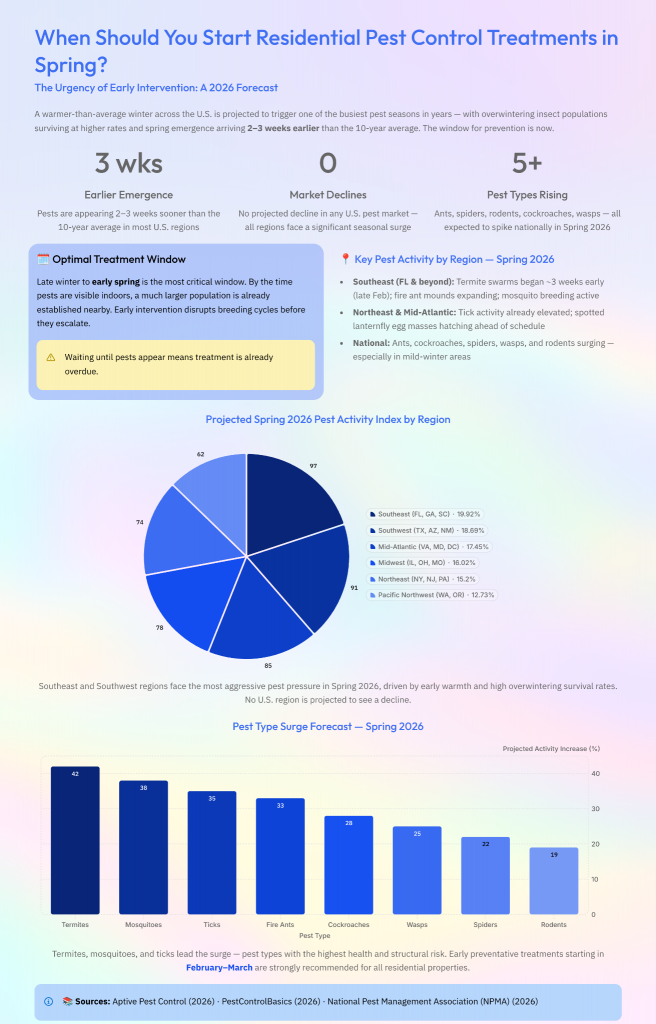
- Widespread Seasonal Surge: A warmer-than-average winter across the U.S. is predicted to cause one of the busiest pest seasons in years, with no projected declines in any market. (Aptive Pest Control, 2026)
- Earlier Emergence: Overwintering insect populations survived at higher rates, leading to spring emergence 2-3 weeks earlier than the 10-year average in many regions. (PestControlBasics, 2026)
- Key Pest Activity by Region (Spring 2026):
- Southeast: Termite swarm season began ~3 weeks early (late Feb in FL); Fire ants are highly active with larger mounds; Mosquito breeding is underway due to standing water and early warmth. (PestControlBasics, 2026)
- Northeast & Mid-Atlantic: Tick activity is already elevated; Spotted lanternfly egg masses are hatching. (PestControlBasics, 2026)
- National Trends: Ants, spiders, rodents, cockroaches, and wasps are all expected to see a significant rise, particularly in areas with milder winters. (Aptive Pest Control, 2026)
- The Cost of Waiting: By the time pests are visible indoors, a larger population is often nearby. Winter and early spring are the most critical windows for preventative action. (Aptive Pest Control, 2026)
Sources: Aptive Pest Control (2026), PestControlBasics (2026), National Pest Management Association (NPMA) (2026)
FAQs
1. What month should spring pest control treatments begin?
Most homeowners should begin treatments in early spring, typically when temperatures consistently start warming up and pests become more active.
2. Why do pests become more active during spring?
Warmer temperatures, increased moisture, and breeding cycles make spring an ideal season for pest activity and reproduction.
3. Can spring rain increase pest problems?
Yes. Rain creates standing water and moisture buildup that attract mosquitoes, termites, roaches, and other pests.
4. Is preventive pest control more effective than reactive treatments?
Preventive treatments are usually more effective because they stop infestations before colonies grow and spread.
5. How can homeowners naturally reduce spring pest activity?
Reducing moisture, sealing entry points, cleaning regularly, trimming landscaping, and eliminating standing water can help lower pest activity naturally.